.svg)
%2Bcopy.avif)

.svg)


%20(1).jpg)



.webp)

Slowly but surely, Germany has become a cycling powerhouse. While the Netherlands or Denmark might still grasp the public’s attention when it comes to two-wheelers, Germany is a bit more in the background. But it’s putting up numbers. Huge, huge numbers.
What’s particularly fascinating is this success hasn’t been limited to just a single type of bicycle, it’s something that’s seen across multiple categories. And one of the most impressive is cargo bikes.
We’ve recently written about how cargo bikes are currently having a bit of a moment, but it appears they’re having an even bigger one in Germany. So let’s have a look at what’s going on over there.
The state of play
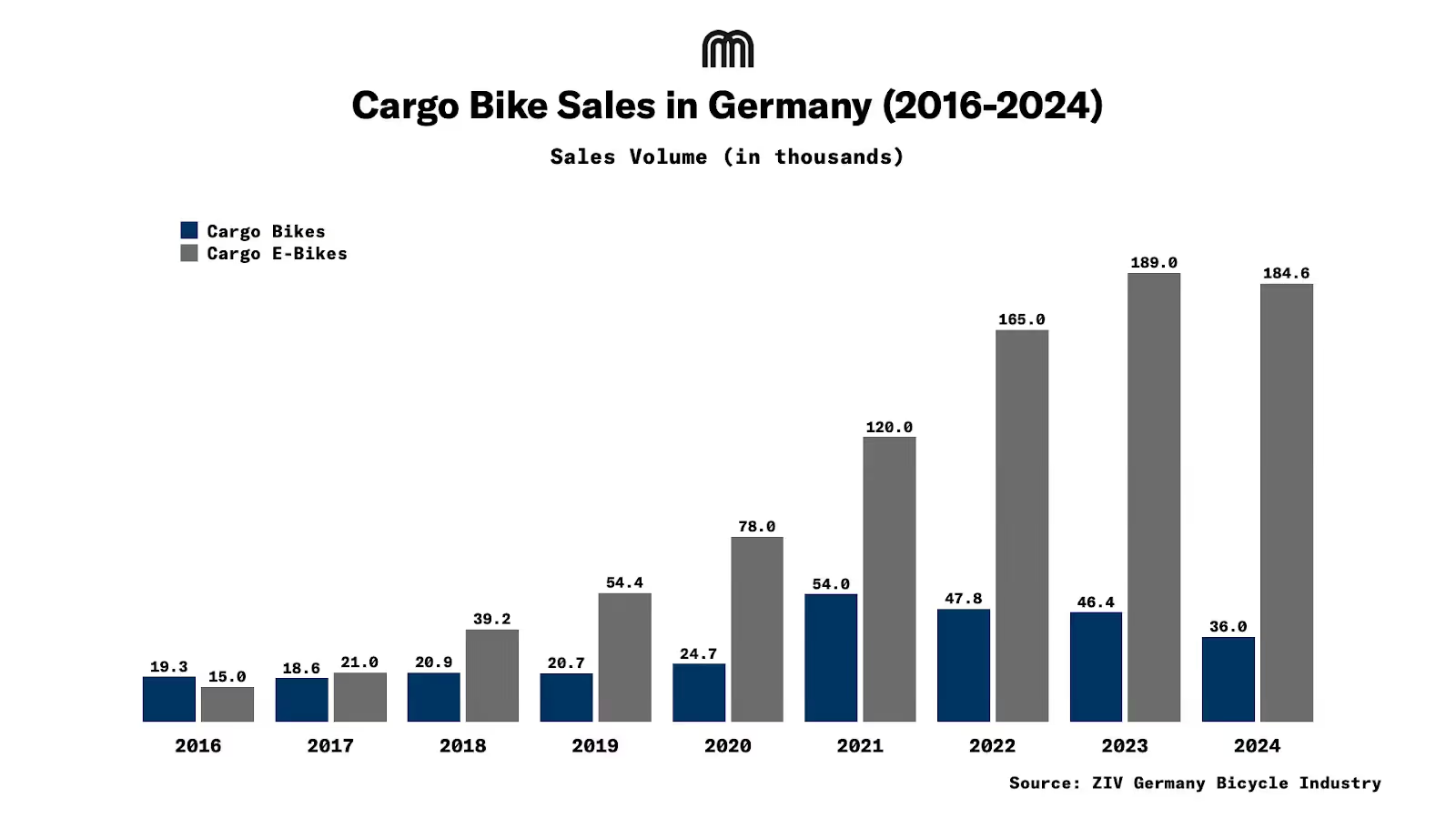
Since 2016, cargo bikes in Germany have gone from strength-to-strength. Driven almost entirely by electric models, annual cargo bike sales went from around 34,000 units in 2016 to around 210,000 in 2024. In regards to electric cargo bikes, these numbers were 15,000 to 185,000 respectively.
Fascinatingly, sales continued to be strong post-pandemic. In the regular cycling industry there was a big drop off around 2022 and 2023, as the bike boom died down and people returned to other forms of transport, but cargo e-bikes skirted this entirely in Germany.
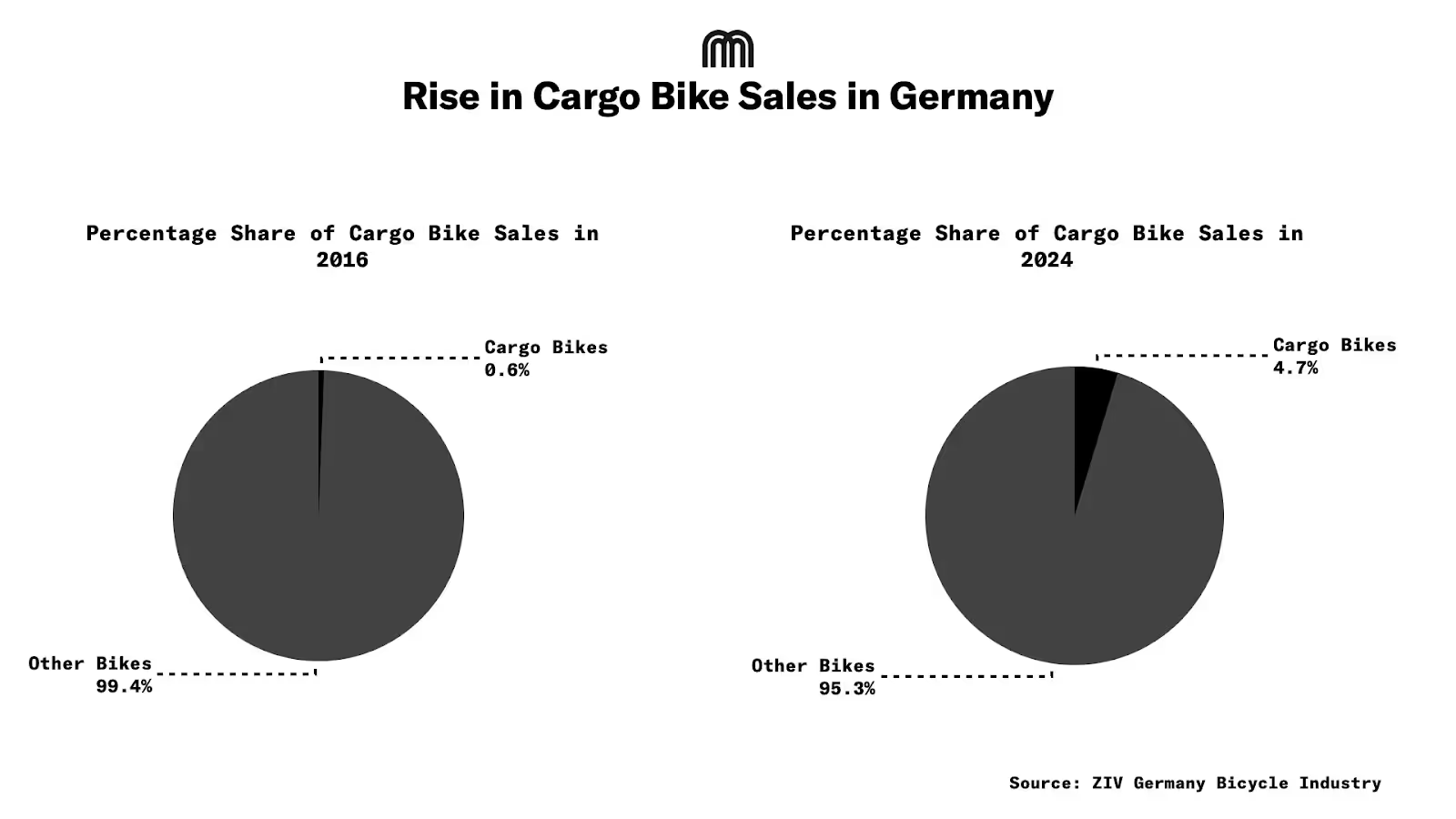
The ratio of cargo bikes to regular bikes also shot up in this period. From 2016 to 2024, cargo bikes went from making up 0.6% of bicycle sales to 4.7%.
Sure, you could make an argument that this remains a small piece of the pie, but that’d be misguided. Although cargo bikes are similar to regular bikes, it’s a little like comparing cars and vans — they’re both important parts of the vehicular ecosystem, but serve different purposes and come in at different costs.
A cargo bike, and especially an electric one, is far more of an investment than even a top-of-the-range e-bike. For example, the 2024 ZIV report points out that the major drivers for cargo bike demand in Germany arise from families and businesses, with the replacement of a household car and delivery logistics being some of the most common usage.
The fact they make up almost 5% of total bicycle sales in Germany is a small miracle.
How does Germany stack up to its neighbours?
Of course, all these stats don’t mean much unless we draw a direct comparison to what else is happening across Europe. With this in mind, you’ll be happy to hear that Germany has the continent’s largest cargo bike market — and by some margin.
The next biggest country is the Netherlands, with an estimated 40,000 units sold in 2022, although this figure has been cobbled together by industry experts on account of how the different types of vehicles are categorised. In that same year, Germans purchased around 213,000.
Culturally, cargo bikes play a big role in the Netherlands, with the bikes playing a central role in the way many people in cities live their lives, but it can’t really hold a candle to the sheer scale of Germany’s market. Even if you adjust for population (Germany has around 4.5 times as many people as the Netherlands), there were more cargo bikes sold per person in the former than the latter, something that surprised me.
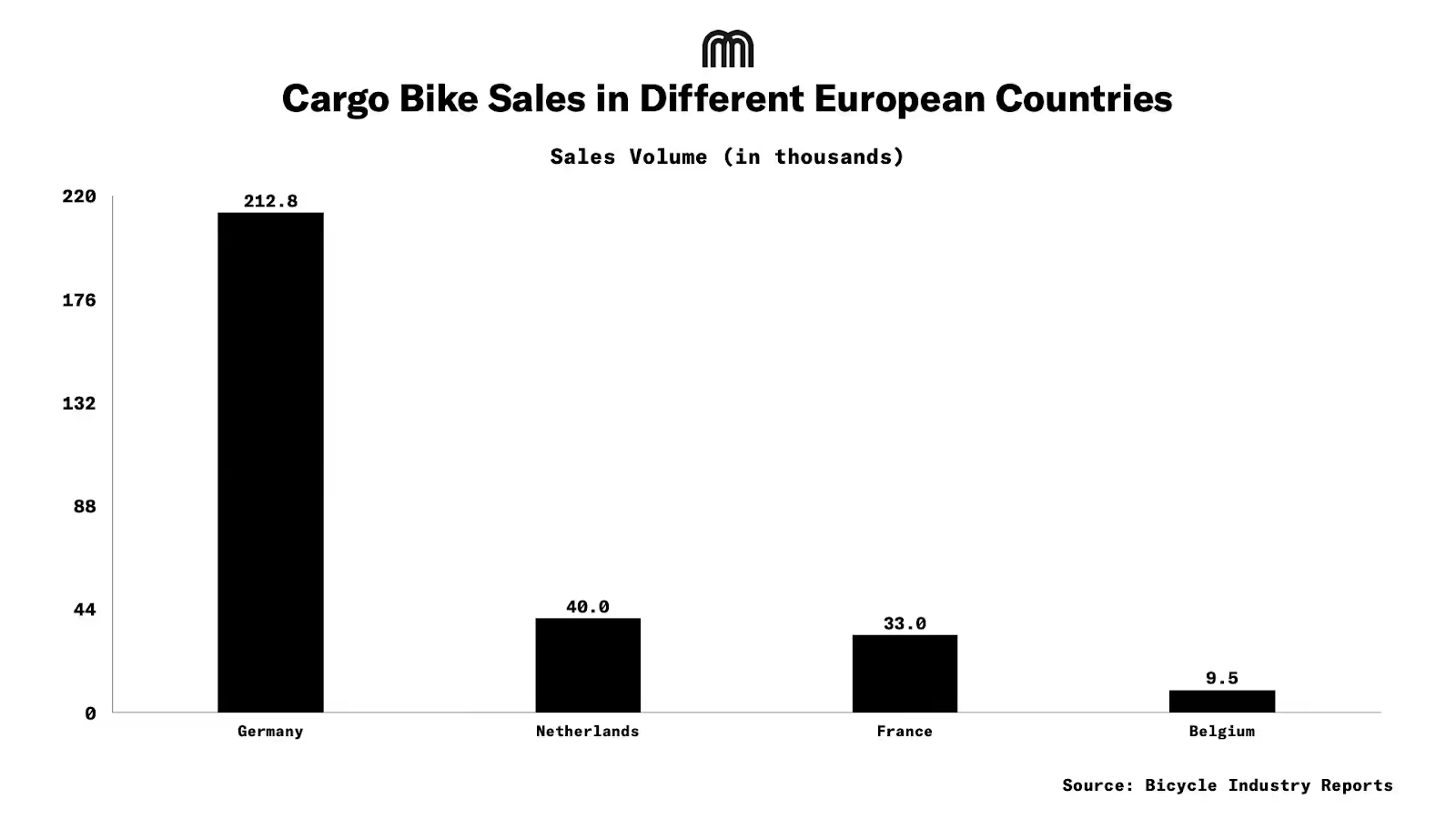
The other two big countries in the cargo space in Europe are France and Belgium. In the former, there were around 33,000 of them sold in 2022, of which around 22% (7,200) were produced in the country. While Belgium has seen a huge rise in cargo bike sales, hitting 9,500 units in 2022, something that was up nearly eight times from 2021.
Success stories? Definitely. These are encouraging signs, but they’re blown out of the water by the success of cargo bikes in Germany. This raises an intriguing question… why?
What’s driving cargo bike growth in Germany?
One big reason is that, unlike e-bikes, the federal German government subsidises cargo bikes. Rather than being on a consumer level though, the focus is very much on businesses.
In 2021, the government offered a 25% purchase grant (up to €2,500) for commercial cargo e-bikes. This targeted any sort of business that did short-haul logistics. Beyond this, the program also introduced funding of up to 40% for the construction of micro-depots to last-mile delivery in urban areas. Both the vehicles and part of the infrastructure needed for them to work were funded in the country.
This continued in 2024 when the German Federal Ministry for Economic Affairs and Climate Action (BMWK) continued the cargo e-bike subsidy program. Although the percentage of the grant stayed the same at 25%, the cost was now capped at €3,500 per vehicle. The desire was to make urban deliveries greener.
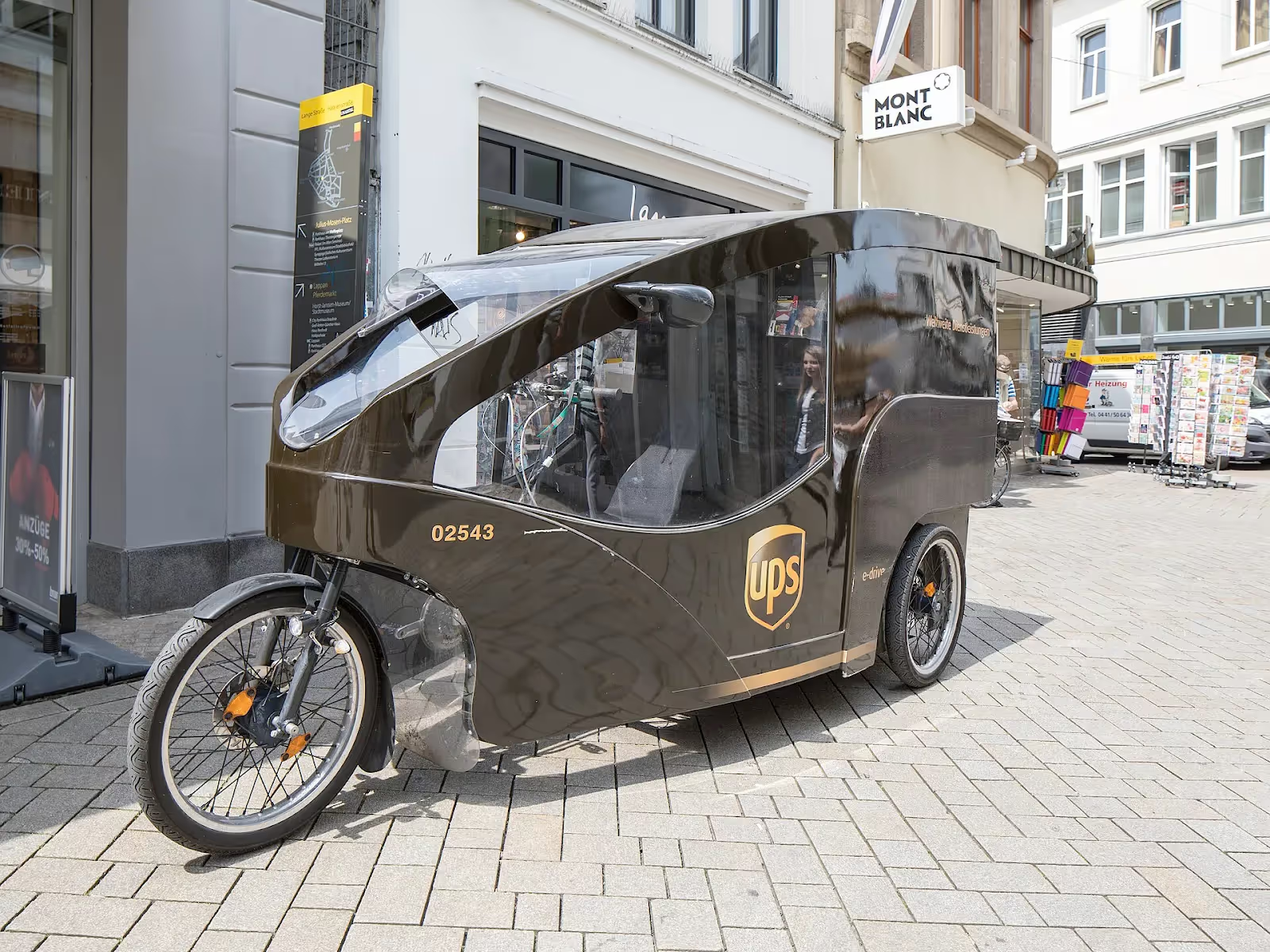
The goal of decarbonising small-scale logistics has been successful, with over 11,800 successful funding commitments totaling €17.5 million since the program began. This is a big reason why Germany has been so successful in getting people to adopt cargo bikes.
Outside of the federal element of cargo bikes in the country, lots of specific areas also support the use of the vehicles with subsidies or funding, with North Rhine-Westphalia, Stuttgart, Berlin, and many others offering schemes on top of what the local government is doing. Again, a big focus of this is for commercial use.
Another push is coming from larger companies looking to overhaul their logistics. For example, DHL in Germany plans to have 14,000 cargo bikes operating in the country, one of the largest fleets in the nation. This is with the goal of converting as many of its deliveries to greener methods as possible. Amazon has also been pushing this in the country, with Frankfurt being a testing ground for cargo bikes.
Effectively, through a combination of federal financial support and desire to shift to more sustainable forms of transportation, Germany has undergone a cargo bike transition.
The impact
Germany didn’t become Europe’s leader in cargo bike sales by accident. It relied on careful planning and the careful use of investment to help this shift. This is something other nations can learn from.
Although for some changes to happen you can rely on cultural factors, such as families liking to use cargo bikes more, the real change arrives when you offer incentives to get people and, importantly, companies using bikes.
Businesses are a vital tool in all this. Not only can they shift huge numbers of units, but they can also support the movement to greener local transportation culturally. If people see cargo bikes around, they get used to the idea of them, making them easier to see in their own lives. This can lead to more adoption and, vitally, more infrastructure.
Germany didn’t become a world leader in cargo bikes through luck, it was through effort and clever decision making. We can all take some inspiration from that.
Image Credits: Pexels.com