.svg)
%2Bcopy.avif)

.svg)

.jpg)
%20(1).jpeg)
.jpg)


.webp)

When London launched its first rental e-scooter trial in June 2021, it started in a handful of boroughs with a straightforward question about whether e-scooters could work safely and practically as part of a city’s transport network. 5 years on, London runs the largest e-scooter trial in the UK, spanning 300km², operating across 11 boroughs, and supporting more than 1.6k parking bays.
The scale of what London has built
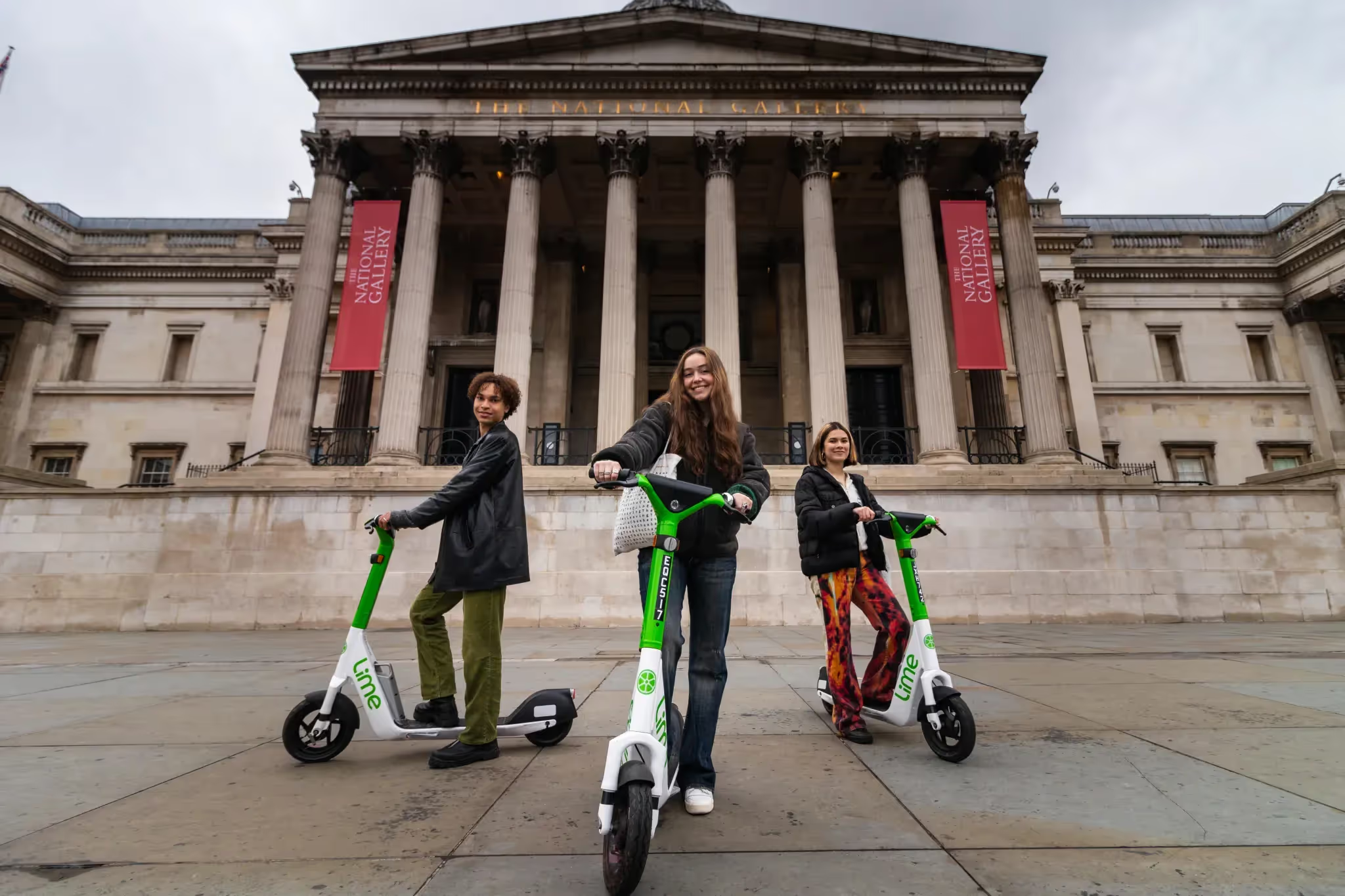
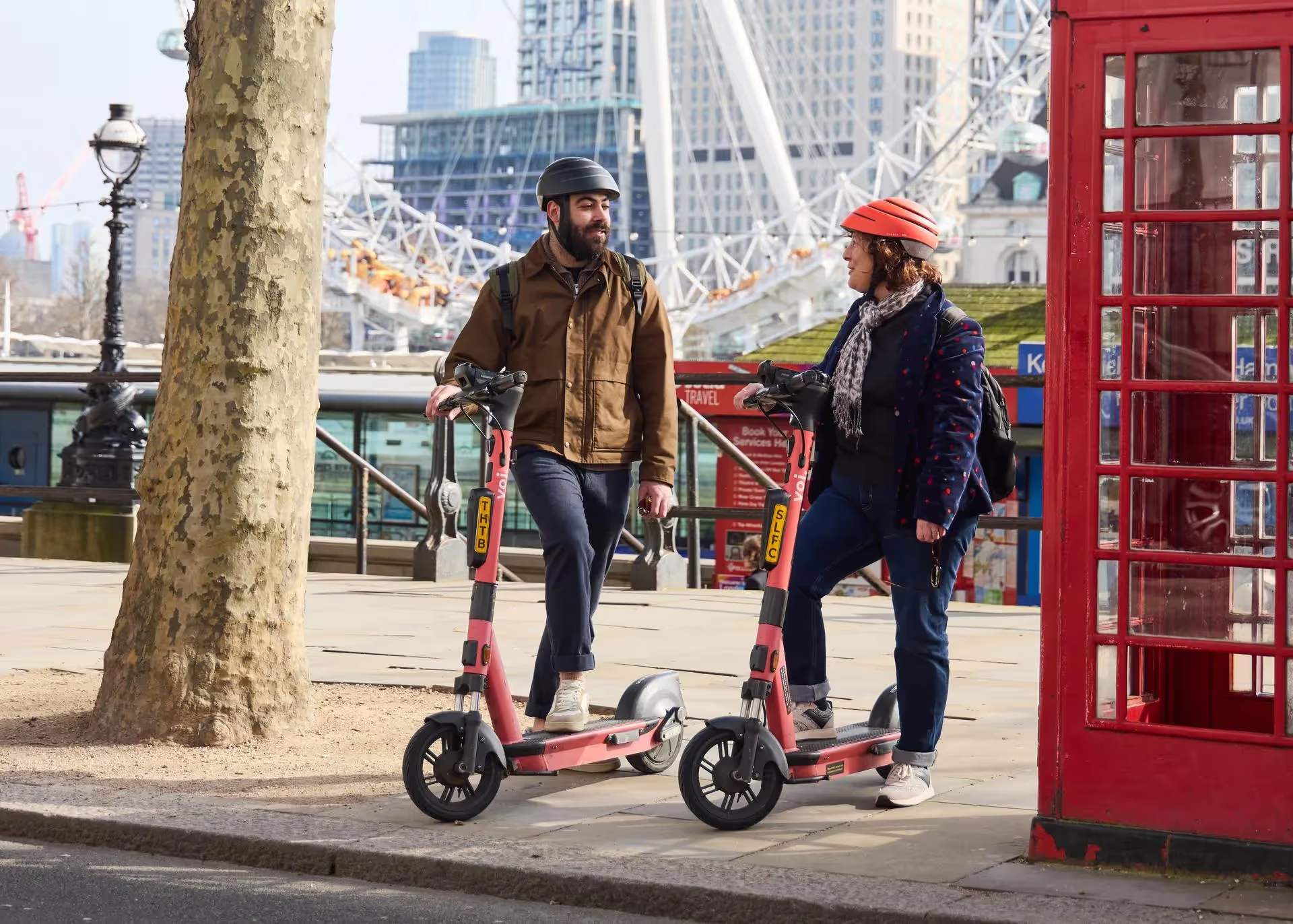
The trial runs in partnership with London Councils and the participating boroughs, with current operators Lime and Voi providing the fleet. Riders must be 18 or over, hold at least a provisional driving license, and complete mandatory in-app safety education before their first ride. Scooters are capped at 12.5 mph, lights stay on throughout every rental, and vehicles are maintained to standards that go beyond national requirements.
The boroughs currently participating are Camden, City of London, Ealing (East only), Hammersmith & Fulham, Kensington and Chelsea, Lambeth, Richmond upon Thames, Southwark, Tower Hamlets, Wandsworth, and Westminster. A Traffic Order enables e-scooters to operate on TfL cycle tracks within these areas, extending their usable network beyond standard roads.
One detail that often gets overlooked is how London structured this trial. It is explicitly a concession, not a subsidy. Operators pay TfL an annual administration charge plus a per-bay charge for every parking bay in operation. TfL does not pay operators, and neither do the boroughs. The trial is designed to be financially self-sustaining from the operator side.
From 1.3M to Over 2M in a Year
TfL published new trial data on March 3, 2026, covering the 12 months from September 2024 to September 2025. The headline figure is a 54% rise in total trips, from 1.3m to more than 2m in a single year. Utilization climbed alongside demand, average usage moved from 1.0 to 1.5 trips per vehicle per day, peaking at 2 trips per vehicle per day during the summer months.
The safety numbers are notable. Serious injuries occurred in just 0.0007% of trips, and zero fatalities were recorded across the entire period. Operators have delivered more than 200 safety awareness events since the trial began, and 95% of trips ended in a designated parking bay, a compliance figure that matters both for street management and for the case TfL is making to regulators about how rental micromobility can be effectively governed.
20% of the trial’s parking bays sit in areas with fewer public transit connections, which positions e-scooters as a first and last mile option in parts of the city that buses and the Underground don’t reach as well. About 3k people have signed up to operators’ access schemes, which offer reduced pricing for disabled people and those on lower incomes, a small but meaningful indicator that the scheme is reaching beyond its most obvious user base.
"The data clearly shows that the rental e-scooter trial has helped to boost sustainable travel in our city - but crucially it also shows strong rider safety and parking compliance,” said Will Norman, London’s Walking and Cycling Commissioner.
The legal tightrope
It is worth being precise about what London’s trial actually is. Privately owned e-scooters remain illegal to ride on public roads in the UK. The trial is the only legal way to ride an e-scooter on London’s streets, and even then only within the participating boroughs. National legislation currently permits these trials to run until May 31, 2028, which gives Phase 3 a defined window within which to operate.
Both TfL and the Mayor of London have backed the English Devolution Bill, which would give cities the power to license and regulate shared micromobility schemes. If passed, and if e-scooters are legalised under separate future legislation, the bill could eventually allow London to move from running a time-limited trial to managing a permanent, regulated scheme. The trial is directly feeding into that legislative process, with TfL describing Phase 3 as an opportunity to continue generating learning that can shape future policy.
Phase 3 and what changes
TfL published the Phase 3 tender on February 26, 2026, opening a competitive procurement for up to 2 operators under the Procurement Act 2023. The contract is estimated at £35.28m excluding VAT over its full term, which reflects the maximum aggregate revenue accessible to operators rather than a payment from TfL. Phase 3 is expected to start by September 2026 and will run for an initial 24-month period, with TfL holding an option to extend by up to 4 years, taking the possible end date to September 2032.
The evaluation framework tells you something about what TfL is prioritising. Safety carries 45% of the total scoring weight, the single largest category by some distance. Operational conduct accounts for 15%, with responsible procurement, environment, and cyber security at 10% each. Community and customer-related criteria each carry 5%. Before any of that is assessed, operators must first pass a capability assessment on a pass/fail basis covering financial capacity and technical experience. Firms that fail at this stage do not have their wider tender evaluated.
The tender is open to any operator that can meet those requirements. Submissions close on May 1, 2026, with TfL aiming to announce its award decision on 6 July 2026. London Councils is formally listed as a tender evaluator alongside TfL, reflecting the joint governance structure that has run through the trial from the beginning.
Nearly 5 years, two phases, 300km², and over 2m trips. The trial has come a long way from where it started, and Phase 3 is where it goes from here.
Image credits: Lime