.svg)
%2Bcopy.avif)

.avif)
.svg)




.webp)


.webp)
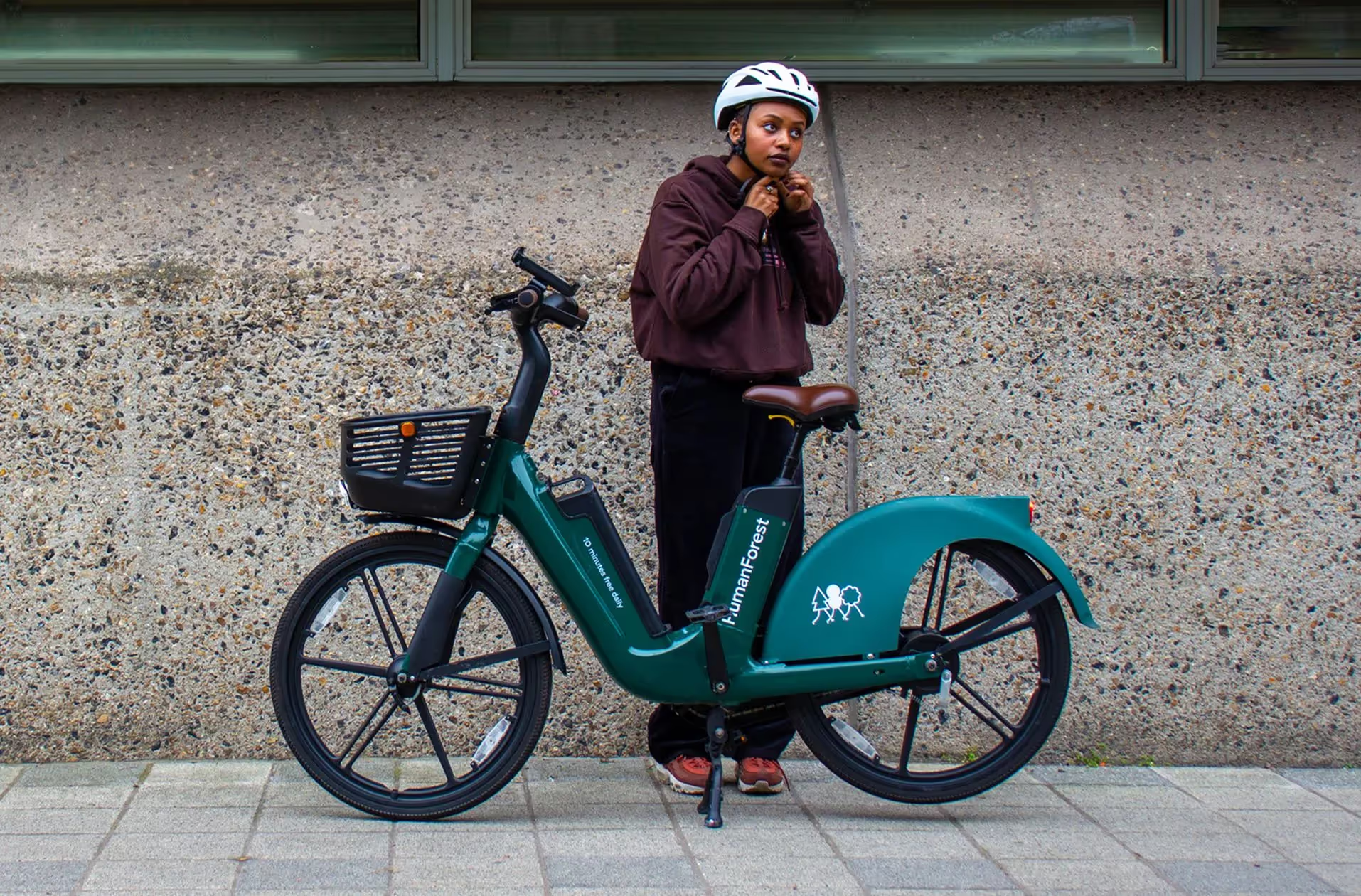
E-bike batteries are miraculous. But, in this era of constant advancements, it’s easy to forget just how good they are. These days, e-bikes are hardy, powerful, and have an ever-increasing range. It’s a dream — and it’s probably only going to get better.
Change is integral to technology, particularly in a sector like micromobility that’s still growing and maturing. Advancement rarely moves in a straight line though, there are often detours and directions before we get to the final destination, and this is as true for batteries as it is for anything.
This means there is a raft of competing designs and ideas for the future of e-bike power, and one of the most intriguing is solid-state batteries. They could be the next magical step in the hardware’s evolution.
Let’s talk about them a little.
So… what is a solid-state battery?
To understand solid-state batteries, we first need to look at the most common battery type in e-bikes today: lithium-ion. Generally, these consist of four key components: a positive electrode (cathode), a negative electrode (anode), a liquid electrolyte, and a separator.
Today, the liquid electrolyte is the important part. This is what enables lithium ions to travel between the two electrodes during charging and discharging.
A solid-state battery replaces this liquid electrolyte with a solid one, often using a ceramic, glass, or polymer material. It’s a simple change, but one that comes with some rather large benefits.
The positives of solid-state batteries
There are a range of reasons why changing the electrolyte from liquid to solid is such a game changer. To begin with, the chance of battery fires drops substantially. Because there’s no liquid electrolyte, there’s no real risk of thermal runaway, the chain reaction responsible for lithium-ion battery fires.
On top of this, the solid nature of the material means that solid-state batteries are more stable at extreme temperatures, able to retain capacity in the freezing cold or scorching heat. Furthermore, because solid-state cells are compatible with lithium-metal anodes they can achieve a higher energy density, effectively meaning you can deliver more power with less weight.
The potential shape of solid-state batteries is also a big factor for e-bikes. The technology can be used in a wider range of configurations, meaning you could effectively put solid-state batteries in more shapes. For e-bikes, this could come in a variety of ways, such as squeezing them into different parts of the frame, or more unusual places, like the handlebars. The fact that they’re hardier than regular lithium ion batteries would also allow them to be installed in places where designers would normally avoid.
Then, we have the lifespan benefits. It’s estimated that a standard e-bike battery will hold for 500-1,000 full charge cycles, but there are claims that solid-state alternatives could hit 100,000. That number of charges might not be that useful for people, because who is going to hold onto a single e-bike for a decade, but for shared e-bike businesses it could be a good deal.
On paper, this is a no brainer, but, of course, things aren’t quite as simple as that.
Where are we with solid-state batteries?
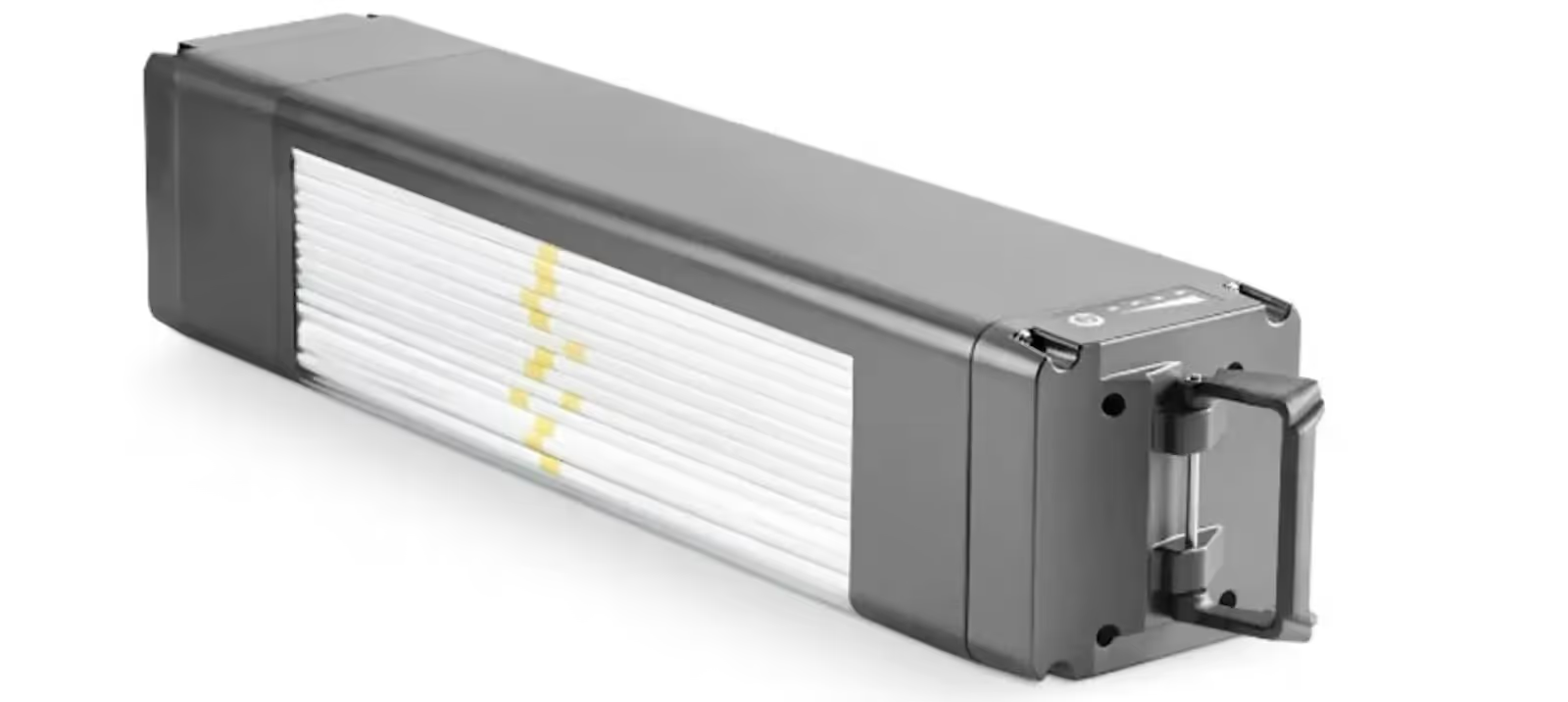
If you read all the above I assume you’d be ready to buy the first solid-state battery you could. The issue though is the market isn’t quite there yet. Much of this is theoretical.
One of the first solid-state battery e-bikes announced was from Stromer who began developing a concept vehicle to make use of the technology. Unfortunately, this statement came out 2023, and we’ve (understandably) yet to see anything.
At the announcement, co-CEO Tomi Viiala said, “it will take many more years before this technology can be used for series production, as the current production costs remain very high and the battery power is still inadequate.”
This is at the core of the issue with solid-state batteries — especially for e-bikes. Because these vehicles are comparatively low-cost with fine profit margins, it’s other sectors that are taking up the cause, with electric motorbikes in particular beginning to adopt it.
At the start of this year during CES, Donut Labs announced “the world’s first solid-state battery that is ready for use in OEM vehicle manufacturing.” The company says this technology is hitting the roads immediately, as it’s used in the current lineup of Verge Motorcycles, specifically the TS Pro and Ultra.
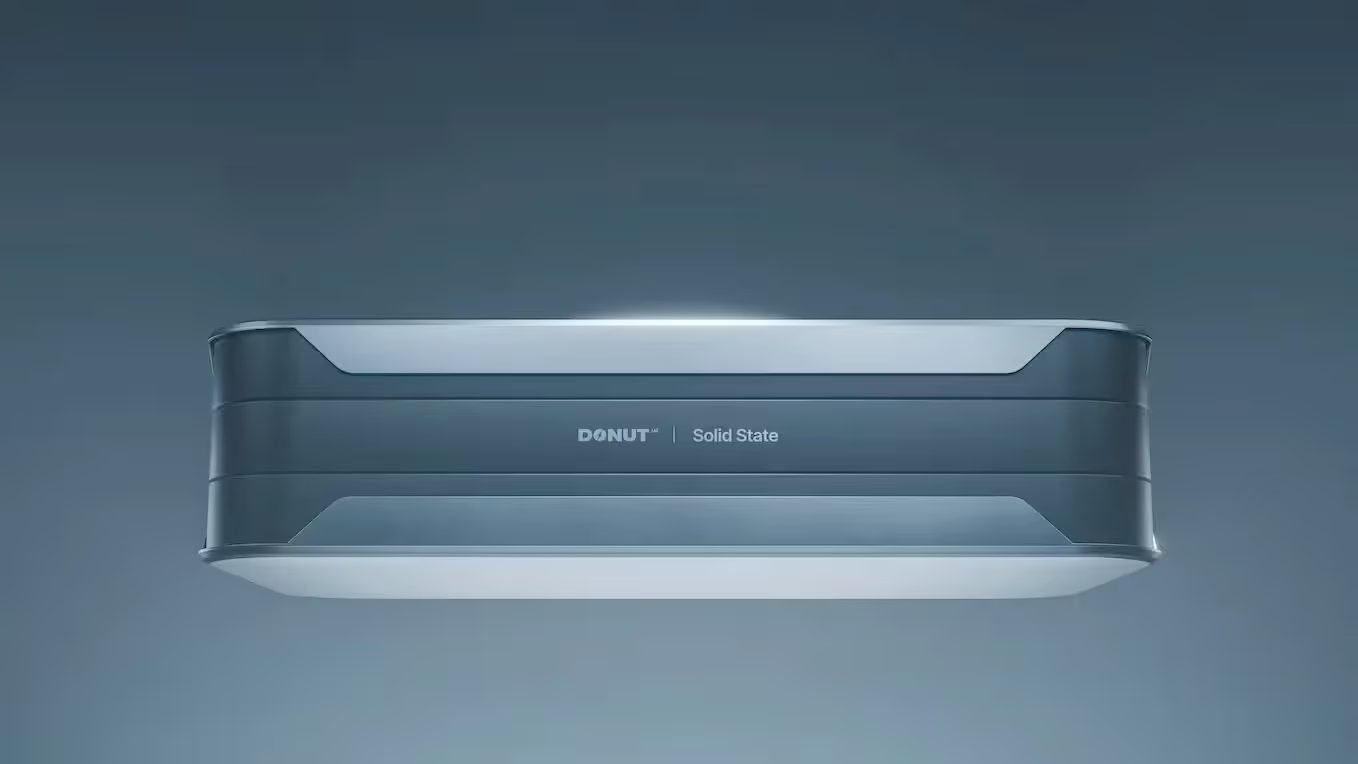
According to Donut Labs, their solid-state tech delivers a 400 Wh/kg energy density, significantly higher than typical lithium-ion. Once it’s packed (meaning, combined with the weight of the wiring and casing) that figure drops to 350 Wh/kg, but that’s still a substantial improvement over what’s on the e-bike market. The lightest battery packs on the market today come from companies like Bosch and Avinox and have pack energy densities of around 200 Wh/kg.
The long road to solid-state batteries
The problem is that we’re still some way away from solid-state batteries in e-bikes. The nature of e-bikes being (comparatively) low-cost and numerous means it’s a market that often focuses more on well-proven, affordable technology, rather than the bleeding-edge of technology. In other words, provability and reliability are key.
This is especially important because of the quality of today’s e-bikes.
Sure, everyone would be happy with a lighter two-wheeler with a longer range, but the current estimations are that solid-state batteries would save only something in the region of 1.7 kg per e-bike. This is a decent amount, but the trade-off for expense would likely add hundreds, if not thousands, onto the price of the vehicle and, for many people, this isn’t worth it.
For solid-state batteries to break into the mainstream e-bike market, their price must come down. Which in time it will. What’s most likely is we’ll see solid-state batteries used in more premium vehicles, such as electric cars and motorbikes, where squeezing every last percentage point out is more economical. As solid-state battery technology matures and production increases, prices should drop, making them far more approachable for e-bike manufacturers.
The tricky part is judging exactly when this will happen. But that’s the amazing thing about technology: there’s no timeline, but you know change is coming.
Image credits: Pixabay