.svg)
%2Bcopy.avif)


.svg)

.jpg)
%20(1).jpeg)
.jpg)


.webp)
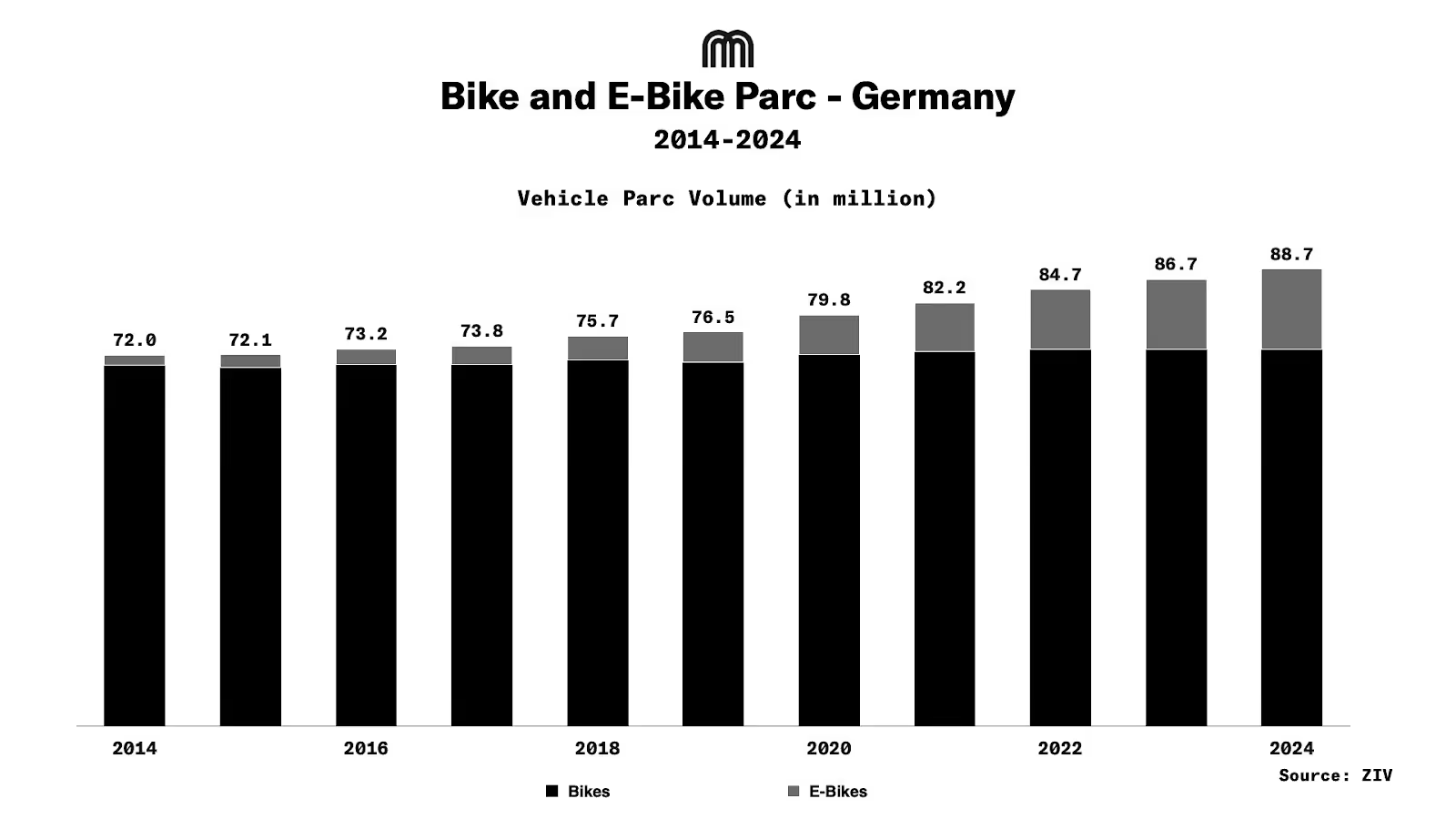
When it comes to e-bikes, Germany is a success story. The country is one of the world leaders when it comes to adoption of electric two-wheelers, with an estimated 15.7 million of them on the roads in 2024.
While there are a range of different factors impacting this success — including everything from the pandemic to people being more aware of the climate — one element that’s not often discussed is how financial factors play into e-bike penetration.
So that’s what we’re going to dig into today.
E-bikes in Germany: The state of play
Before we begin, let’s get a sprinkling of context on what’s actually been happening in Germany.
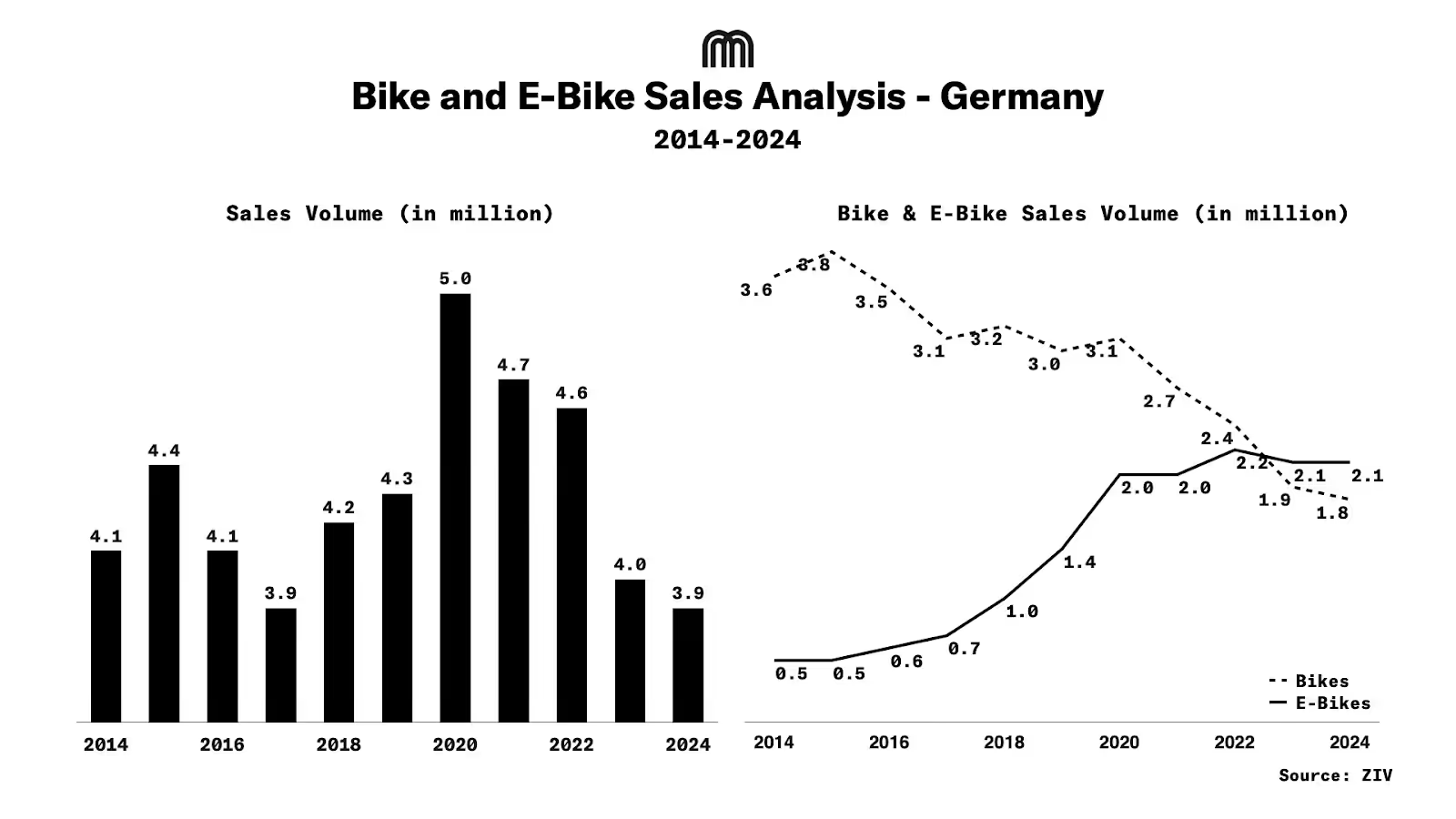
Broadly speaking, over the past decade Germany’s e-bike market has grown dramatically, becoming the primary driver of bicycle industry sales. By 2023, e-bikes accounted for about 53% of all bicycle and e-bike sales in Germany, with around 2.1 million e-bikes sold compared to 1.9 million traditional bikes — the first time electric models outsold non-motorised bikes.
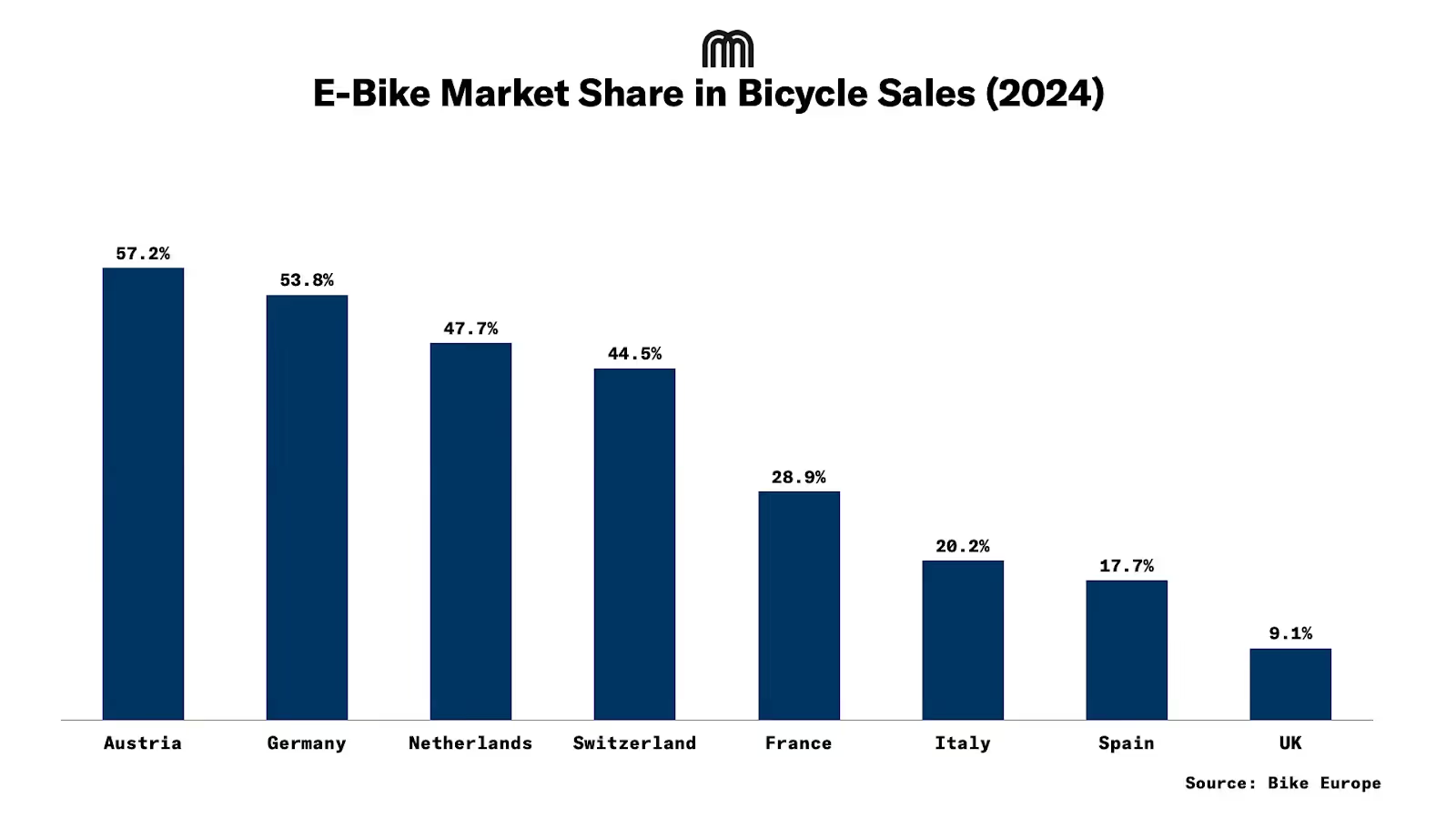
This is even more striking globally. For example, in the US, it’s estimated e-bikes only make up around 4% of all bicycles purchased.
One angle we can view this through is how Germany has used financial tools to actively accelerate this trend.
Subsidies, subsidies, and… not that many subsidies
First things first, and rather interestingly, there hasn’t been any nationwide e-bike subsidy in Germany. Instead, it’s something that cities, municipalities, and federal states have launched on their own.
Much of these subsidies kicked off in the 2010s, with the golden age between 2019 and 2023 in particular. It’s little surprise this coincided with the global e-bike boom.
One of the most prominent areas in this period was Munich, where people were offered up to €500 to help fund private e-bike purchases, something that reached €1,000 for a cargo e-bike. Even in 2024, parts of this region (such as Aschheim and Grünwald) offered up to €500 for e-bikes, while residents in Ismaning received €250 off an e-bike.
This had a few issues. Firstly, these were concentrated in specific areas. Secondly, these areas didn’t have an infinite budget, instead they had a lump sum of cash and worked their way through it. And, finally, in most places these subsidy schemes were wound down.
Currently, Tübingen is one of the few places where you can still get money off an e-bike as a private consumer in Germany, with those living in the area eligible for a €100 discount.
What this seems to suggest is that while direct subsidies played a role in e-bike adoption in Germany, they weren’t the main financial driving force. So… what is?
A subsidy by a different name
Although the German government nationally doesn’t give out subsidies, and many of the regions that once funded vehicles for private use no longer do so, there is a strong history of leasing e-bikes through businesses.
This scheme works a bit like a salary sacrifice. Here, employees pay lease installments from their gross salary. This lowers their tax and social security contributions, offering savings of approximately 40% compared to buying upfront. This not only encourages people to buy e-bikes, but also buy high-quality e-bikes, something that constitutes 78% of leased units.
A white paper from the European Cyclists’ Federation (ECF) showed how successful this has been. There’s been an average annual growth rate of 30% since 2019, leading to Germany having an active fleet of 2.1 million leased bikes by the end of 2024.
The same study revealed the scheme generated €3.1 billion and supported close to 89,000 jobs. It also states there are 270,000 German companies participating in the scheme, and employees can either purchase the e-bike at the end of the contract or return it for refurbishment.
There’s no doubt this has been a success, but the leasing scheme does have its downsides — especially when compared to subsidies. You need to work for a participating company to get involved, while the tax implications create a bit of complexity that not everyone would want to get involved in.
So why not just offer straight subsidies? Wouldn’t that get more people involved
The answer is likely a “yes,” but one reason the German government isn’t going this route is down to another type of vehicle.
The EV problem

Recently, Germany launched a new €3 billion electric vehicle (EV) incentive that offers subsidies for lower-to-middle-income households.
This scheme is restricted to households with taxable incomes under €80,000 (increasing by €5,000 per child). The subsidies start at €3,000, scaling up to €6,000 depending on income and family size.
There are of course more details in the scheme, but the most important fact is that figure: €3 billion. While EVs are a vital part of the energy transition puzzle, it’s clear that people within the German government decided that the best way forward for the country is to get people to change to electric cars, rather than electric bikes.
Financial support and change
Ultimately, e-bikes are phenomenally successful in Germany, with a big part of this down to leasing schemes that reduce the price of the vehicles. In a sense, this shows just how important financial support is in getting people to adopt new modes of transport. If people feel they’re getting a deal — or just the fact that they can afford something they previously couldn’t — it can massively boost adoption rates.
Germany is proof of this.
While there’s still more to be done to improve cycling infrastructure, and funding is a prime part of this, sometimes it’s good to sit back and applaud successful schemes. A lot of countries can learn from Germany when it comes to e-bikes.
Image Credits: Kalkhoff