.svg)
%2Bcopy.avif)

.svg)

%20(1).jpg)



.webp)

.webp)
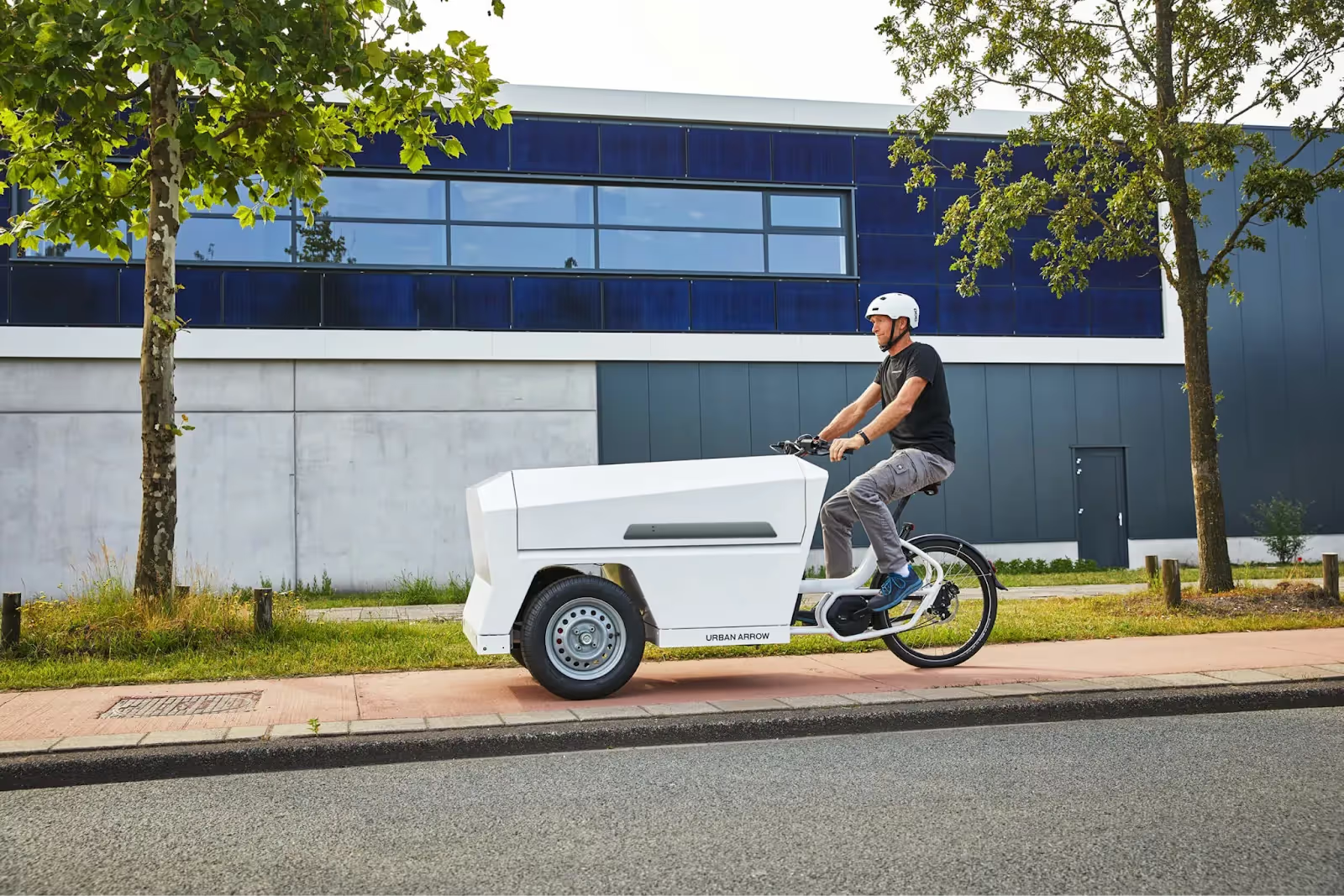
If you live in a European city, you may have seen an increasing number of unusual vehicles cruising down the streets. They move like bikes, and they even look like bikes — until you get to the front. Instead of handlebars dropping down into a wheel, there’s… a crate there instead? Some sort of large box?
Maybe it’ll have a company’s logo on it. But maybe, just maybe, it’ll be filled with children or dogs or groceries or plants. These vehicles are bikes, but not as we know them. They’re cargo bikes.
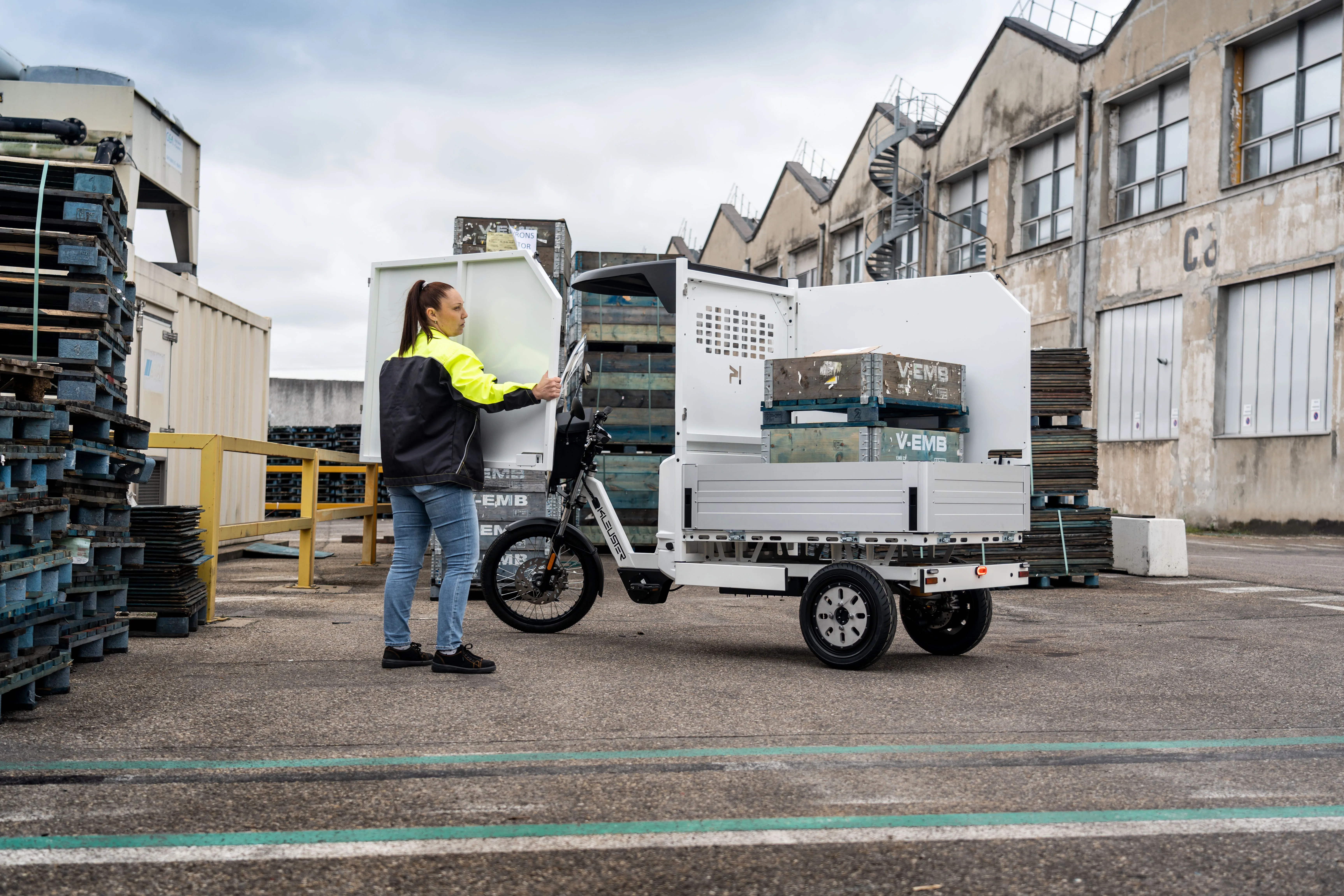
The last few years have seen this type of vehicle hit the mainstream, going from a curio into both a solution for last-mile freight and for families getting around cities. In this piece, we’re going to look at the history of cargo bikes, their explosive growth, and just what we can expect from them in the future.
The cargo bike story
Although they’re having a moment right now, cargo bikes have been around for some time, with their origins reaching back to the late 1800s in England. Their purpose is just as their name suggests: a bike for transporting cargo
They were modified bicycles fitted with boxes and smaller front wheels in order to move goods around. These bikes were used by merchants, tradespeople, and delivery services at a time when motor vehicles were rare. Cargo bikes fulfilled a need for efficient, low-cost local transport.
From their starting point in England, cargo bikes spread across Europe. They found an especially warm home in the Netherlands, where they’re known as “bakfiets,” which is literally translated as “box bike.”
These were quite popular until the end of the Second World War. At this point mass-produced motor vehicles hit the market, leaving cargo bikes in the dust. Unsurprisingly, really, as vans and trucks offer greater speed, range, and capacity. If you were a business owner, these benefits were impossible to ignore.
This doesn’t mean cargo bikes entirely disappeared though. During this period, families in parts of Europe — specifically the Netherlands and Denmark — still used the vehicles, but in a limited fashion.
For some context, during the 1980s, a Dutch company called Van Raam produced about 90 traditional cargo bikes per year. Yes, you read that right: 90 per year. At that point in time, all major manufacturers had given up on the vehicles. It seemed like cargo bikes were a thing of the past.
The electrification boom
If you’ve ever tried to move something heavy on a bike, you know how tricky that can be — especially if the two-wheeler itself is old and clunky. A chain and gears can only do so much with your legs. That was until electric bike motors.
There were examples of cargo bikes seeing a slight resurgence, particularly among couriers, but this was merely the appetiser. Electrification gave birth to the modern cargo bike. Motors and batteries made it easier to carry heavy loads, tackle hills, and travel longer distances.
In one fell swoop, cargo bikes now had compelling use cases for families and commercial operators alike. The vehicles shifted from niche tools into scalable urban transport assets. And the numbers back this up.
Cargo bikes: Electric growth
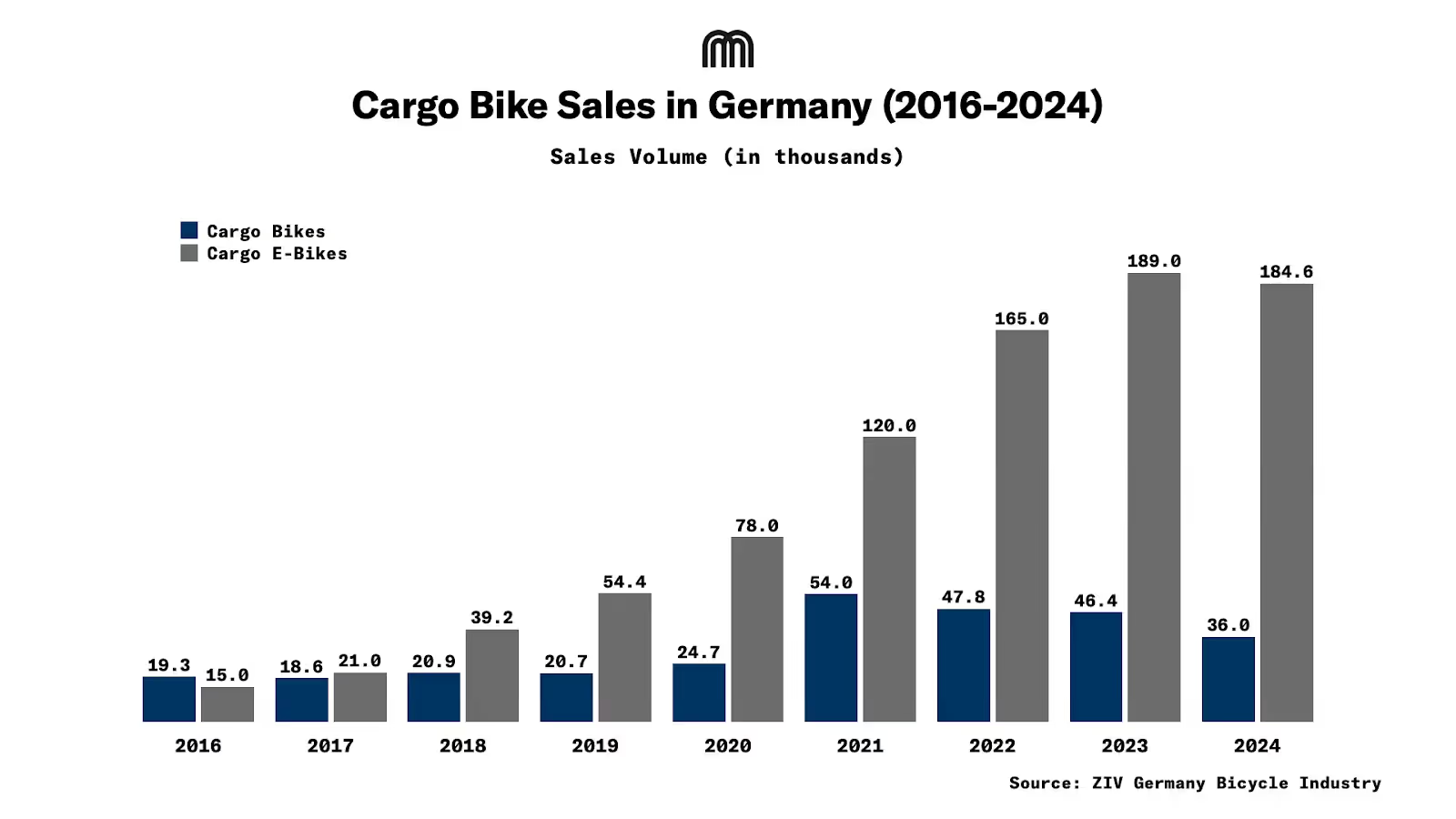
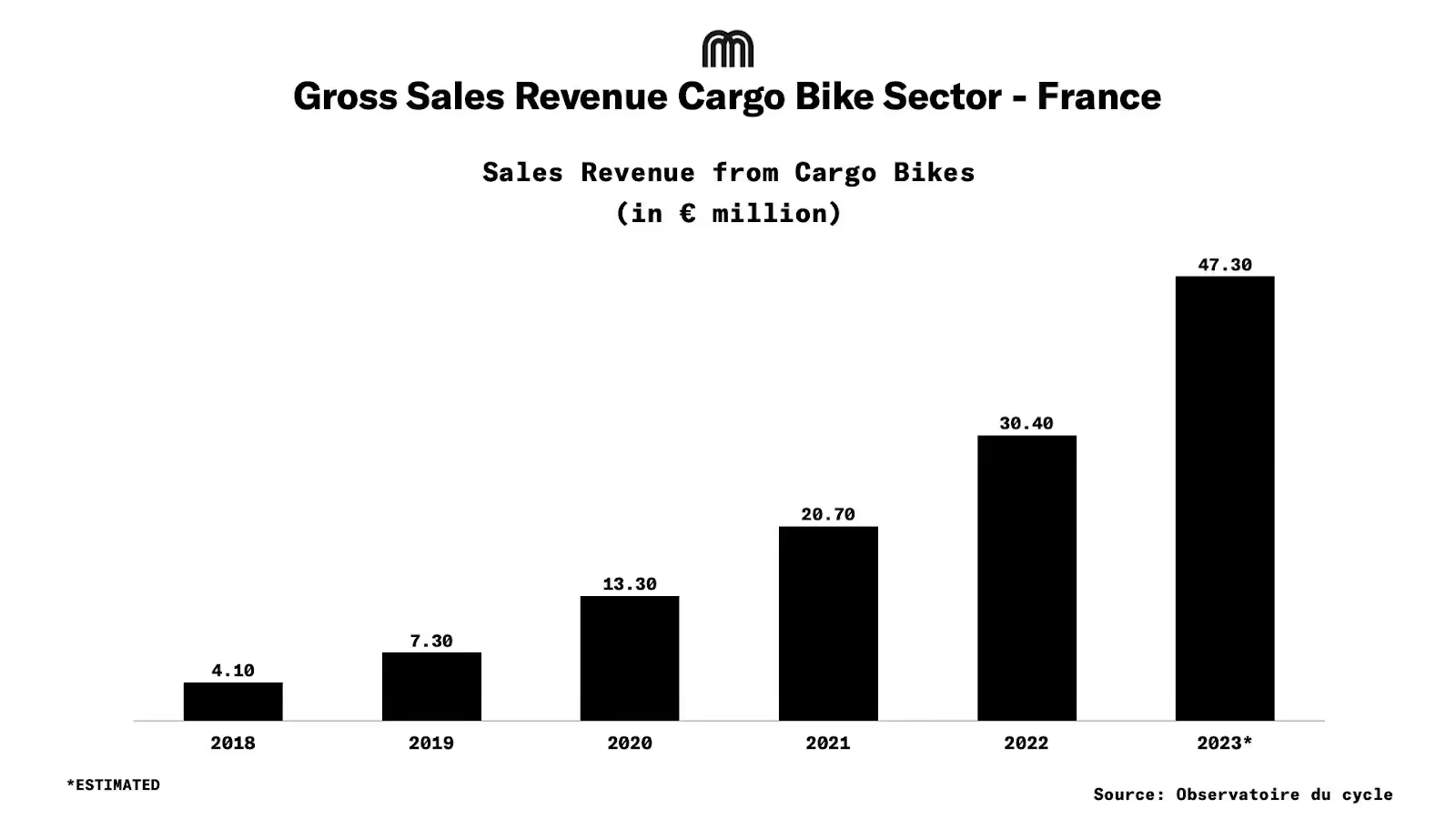
The very first European Cargo Bike Industry Survey showed substantial growth between 2018 and 2020. Sales rose from 17,800 units in 2018 to 28,500 in 2019, an annual growth rate of 60%.
This continued rising in 2020, with an estimated 45,000 units sold. In the 2023 survey, 43 manufacturers and 25 cargo bike operators were polled, with the former reportedly selling 112,000 cargo bikes in 2022. This was up from 82,500 in 2021, a 36% increase.
It doesn’t stop there though. In 2020, the cargo bike market was valued at around $1 billion, and, according to Future Market Insights, it’s expected to reach $2.4 billion by 2030. Cargo bikes are having a moment — and the experts don’t think this will end any time soon.
What’s driving the growth?
There are two main audiences behind this shift: businesses and consumers. Regarding the former, it’s really last-mile delivery that’s burgeoning the market. Recently, large companies including FedEx, DHL, and Amazon now use them in their fleets, as they offer a green and convenient way to shift small goods quickly.
Cities are also embracing the change. Transport for London (TfL) has been active in promoting the use of cargo bikes, with the body producing the Cargo Bike Action Plan, a report supporting organisations and boroughs that are considering using the vehicles for business applications.
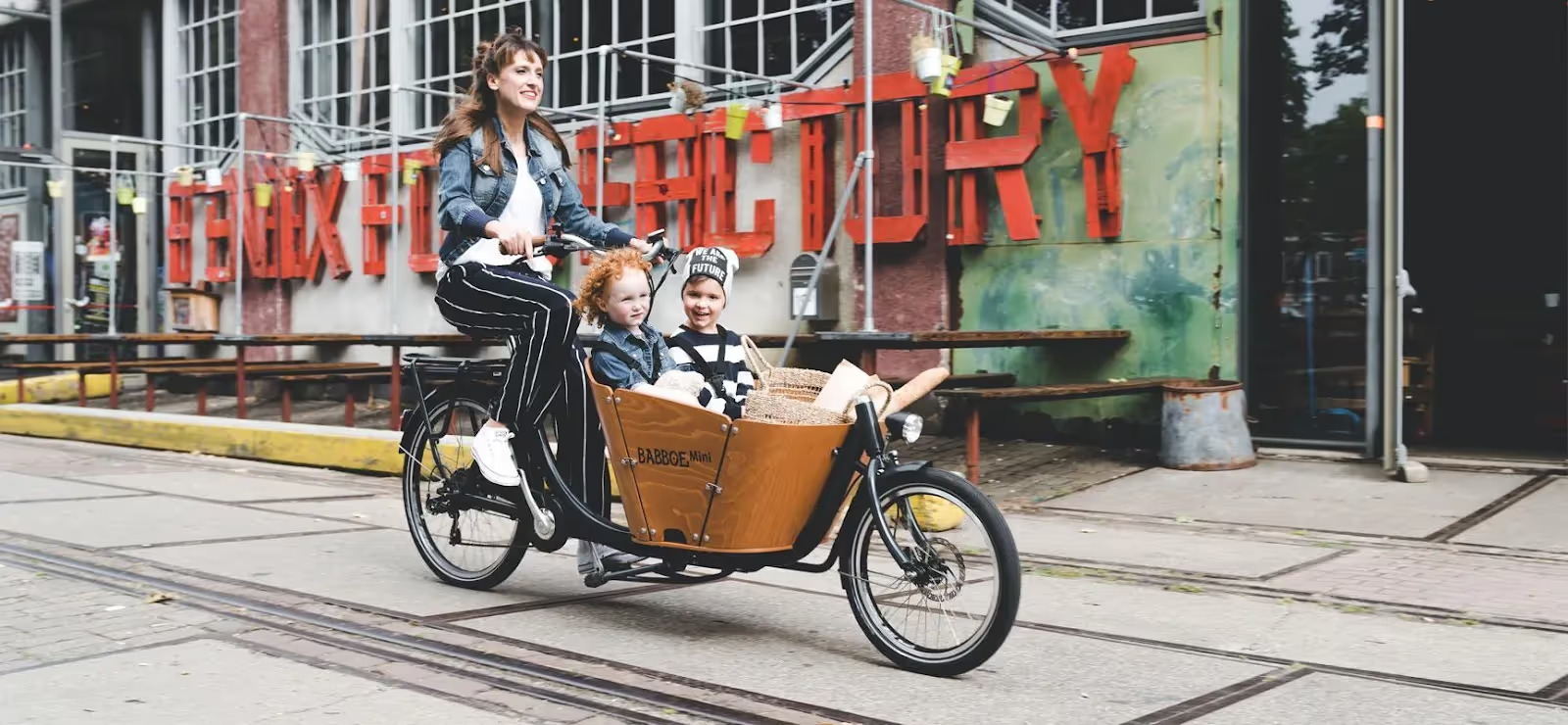
The other side of cargo bike growth is driven by consumers, with a particular skew towards families. With people becoming more focused on green transport, the cargo bike is a natural and easy way to get around an urban environment — all without needing fossil fuels or large parking spaces. You can put your child or dog into the box at the front and seamlessly cruise around a city with little fanfare or hassle.
And what’s coming next for cargo bikes?
What makes cargo bikes particularly intriguing is their potential. In some places, they’re incredibly popular, but in others they’re barely an afterthought. It’s estimated that around 50% of cargo bike sales are in Europe, with the lion’s share in Germany, France, Belgium, and the Netherlands.
There is huge potential for them to be adopted in different countries. An interesting comparison is a personal one: I’m from London, but live in Amsterdam.
When walking the streets of the Dutch capital, you see cargo bikes everywhere. Families are moving around the city, doing school runs, and picking up groceries using the vehicles — something that’s become even more common in recent years. Cargo bikes are simply part of the city’s furniture.
Whenever I visit London, though, the opposite is true. You wouldn’t really be aware that they exist for personal use. It’s a cargo bike ghost town.
This gets to the core of the issue. For cargo bikes to take off globally, we need cultural change. Some of this is education, of letting people know they’re an option, but another part comes down to infrastructural development. As we’ve spoken about before at Micromobility Industries, one of the biggest indicators for people getting on their bikes is safety. If individuals feel protected, they’re more likely to bike. This is likely to be especially true when it comes to, say, using cargo bikes to transport your family.
What needs to happen then is that more bike lanes and regulations that support cycling come into play. Cargo bikes are undoubtedly on an upward trend, but if they’re really going to reshape our cities, the hardware won’t do it alone. Instead, they have to be part of a wider array of regulations and initiatives.
Cargo bikes are having their moment, but let’s just hope we haven’t seen anything yet.