.svg)
%2Bcopy.avif)

.svg)

.webp)
.webp)


.jpg)
In 2025, Belgians took over 32m trips on shared bicycles and scooters. That number, pulled from Way To Go's annual shared mobility report, captures something worth paying attention to. Belgium’s shared mobility systems are carrying more riders than ever, while quietly becoming more efficient at the same time.
Growth is part of the story. What’s more interesting is that trips increased even while the fleet got smaller.
The Numbers That Stand Out
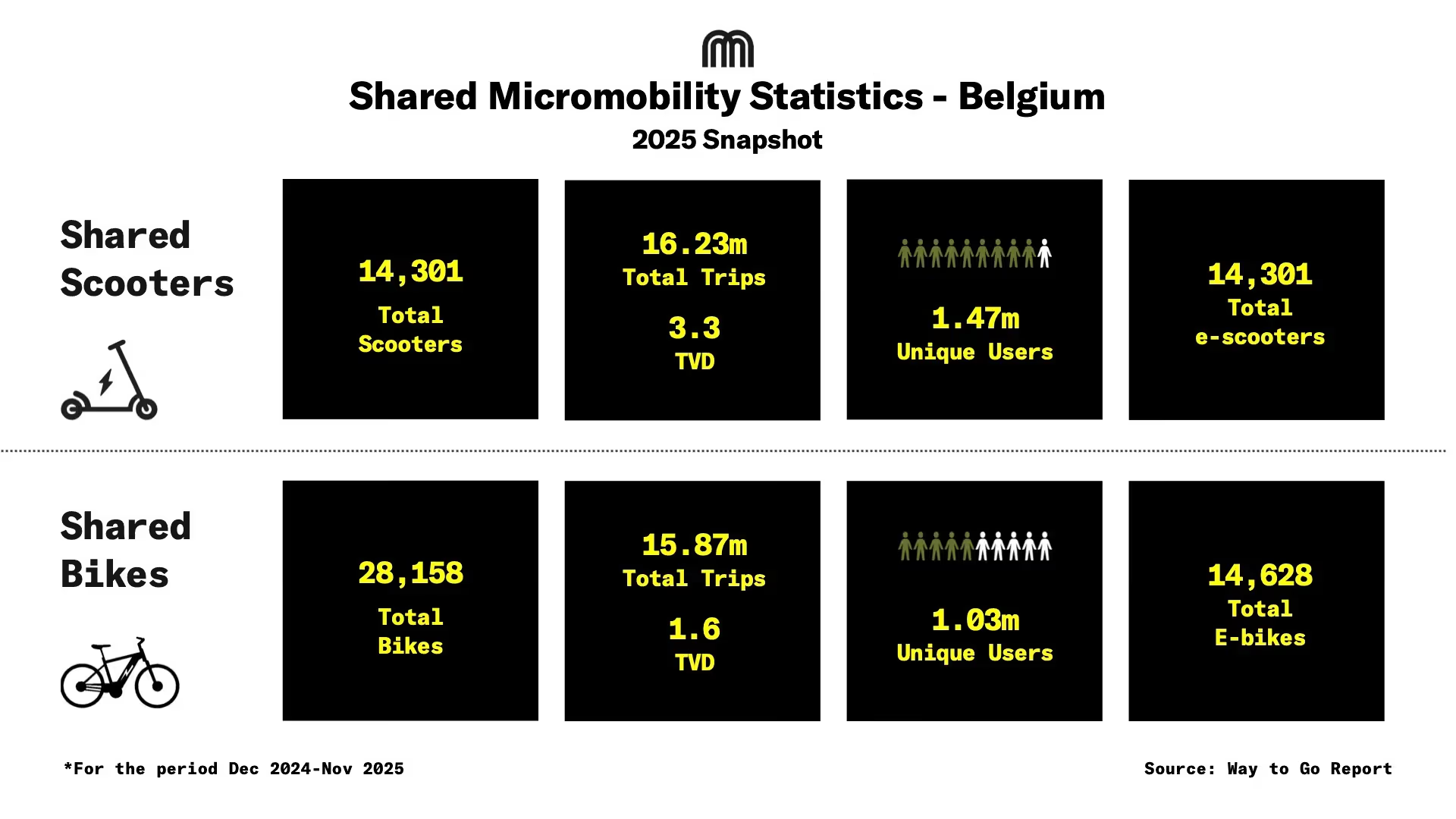
Belgium ended 2025 with 28.16k shared bicycles, a 27% jump from the year before, and 14.3k shared scooters, which is 35% fewer than in 2024. Yet shared bicycle trips climbed 31% to nearly 16m, and shared scooter trips rose 21% to over 16m.
Put differently, operators ran fewer scooters and still moved more people. The average number of trips per shared scooter per day nearly doubled, going from 1.7 in 2024 to 3.3 in 2025, a clear sign of improved operational efficiency.
Active users tell a similar story. Belgium recorded 1.03m active bicycle sharers and 1.47m active scooter users in 2025. In other words, more people actively used shared scooters than shared bicycles, despite there being roughly twice as many shared bicycles as scooters nationwide.
Three Regions, Three Very Different Realities
Belgium's shared mobility story only makes sense when its regions are viewed separately. Flanders, Brussels, and Wallonia each follow distinct development paths, shaped by density, policy, and system design.
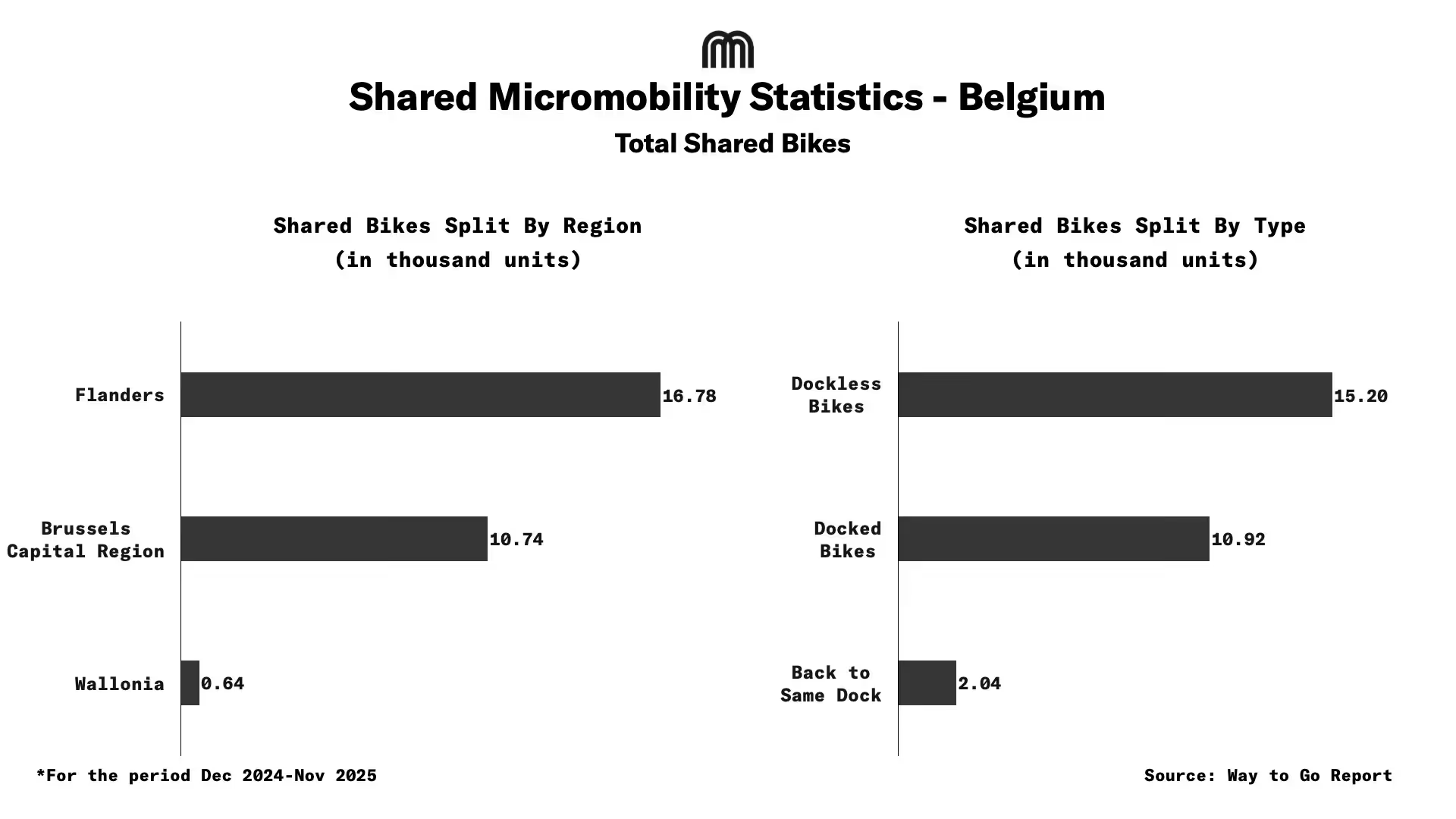
Brussels - The Densest Market in the Country
Brussels accounts for 11% of Belgium's population, but generates 31% of all shared bicycle trips and 59% of all shared scooter trips.
The region has 8.6 shared bicycles and 5.8 shared scooters per 1k inhabitants. Flanders, by comparison, has 2.4 shared bicycles and 0.6 shared scooters per 1k inhabitants. Brussels residents generate 20.7 shared scooter trips per 1k inhabitants per day, 10 times the Flemish figure.
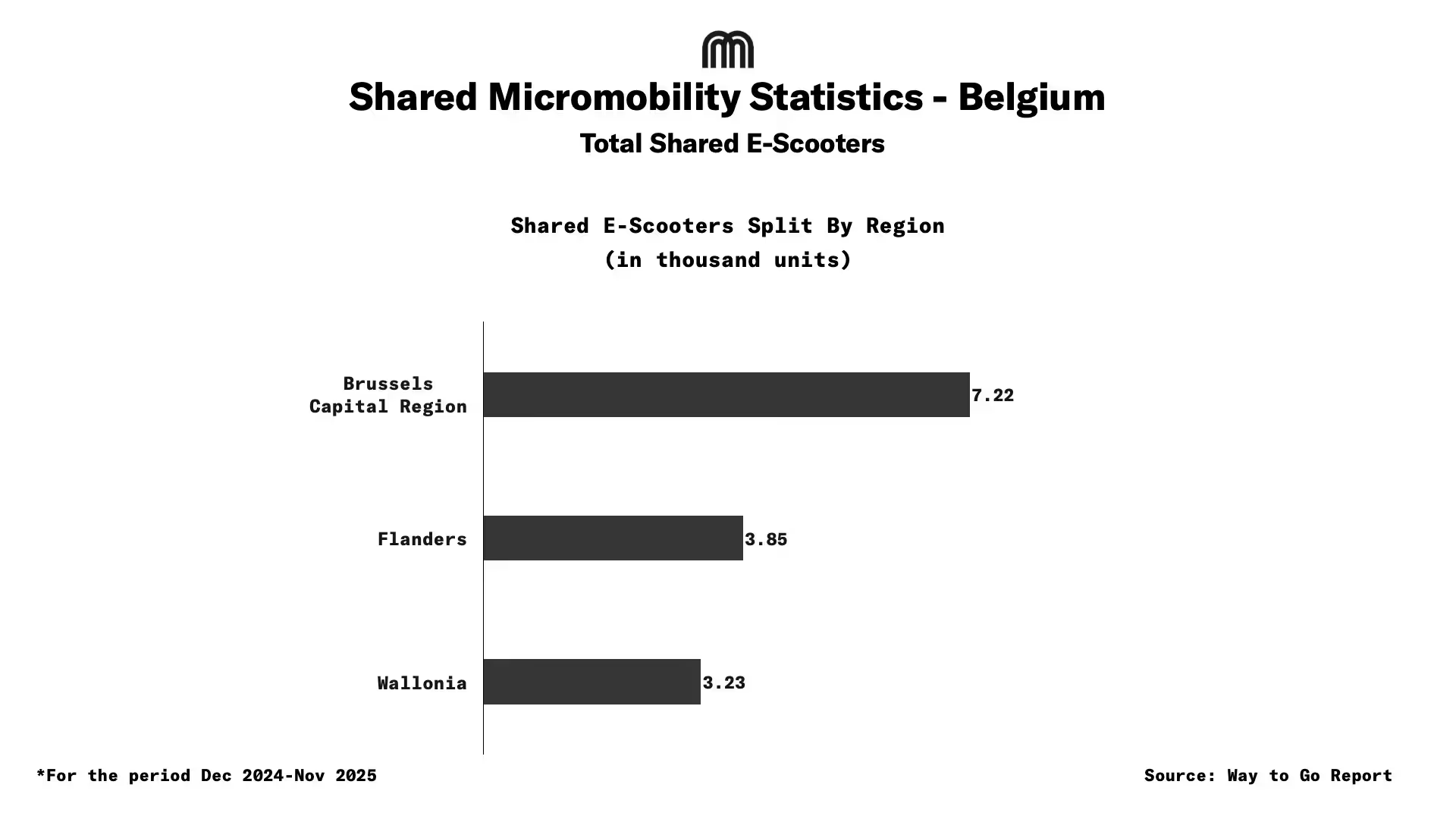
Much of this performance traces back to regulation. Brussels reduced the number of shared scooter operators from 9 to 2 and capped the total fleet. The result was 44% fewer scooters on the streets by the end of 2025, yet usage continued to rise. The 7.22k scooters that remained averaged 3.6 trips per day, up from 1.9 in 2024.
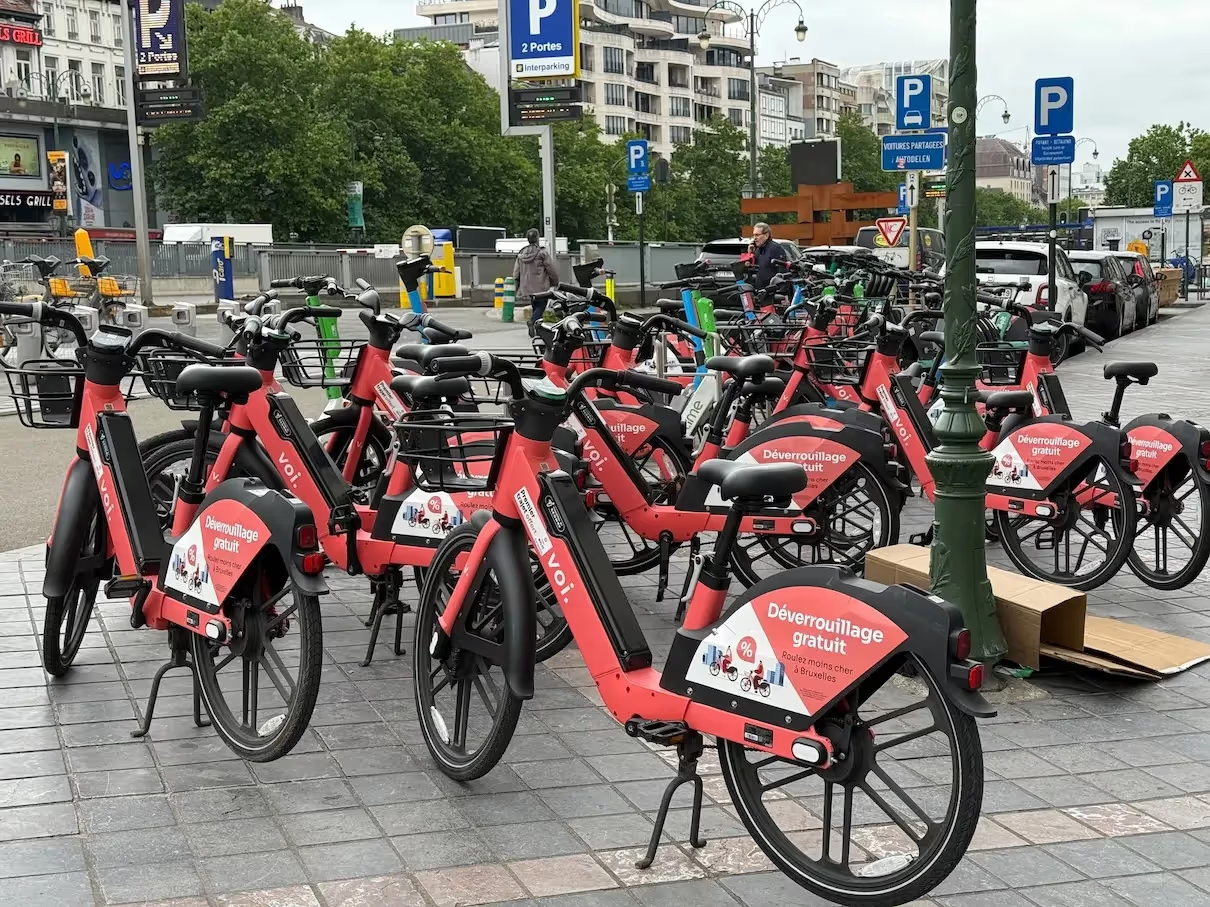
On the bicycle side, Brussels saw trip numbers jump 74% YoY to nearly 5m. Use is dominated by back-to-many systems without fixed stations (stationless systems where users can pick up and leave bicycles in designated physical or digital drop zones rather than returning them to a specific dock). Operators such as Bolt, Dott, and Voi account for 92% of active users in this segment. All bicycles in this category are electric, which matters in a dense, hilly urban environment.
Flanders - A Key Region for Shared Bicycle Use
Flanders generated 68% of all shared bicycle trips in Belgium, despite accounting for only 45% of active bicycle users. This reflects more intensive use per user and per vehicle, particularly within fixed-station systems.
Back-to-many bicycles with fixed stations (systems where users pick up and return bicycles at fixed docking stations) average 3.5 trips per vehicle per day and 32.4 trips per user per year in Flanders, the highest utilisation rate of any shared bicycle system in the country. The region added over 2.9k shared bicycles in 2025, partly through a regional on-demand transport programme that expanded shared bicycles beyond major cities into smaller towns. At least 2k of these new bicycles came from this initiative.
Average trip duration for stationless electric bicycles (back-to-many systems without fixed stations) in Flanders is 24 min, roughly double the Brussels average, reflecting longer trips through smaller urban centres and less dense areas.
Wallonia - Growing Fast From a Small Base
Wallonia’s absolute numbers remain modest. The region has 637 shared bicycles, compared with 16.78k in Flanders, and recorded 77.64k shared bicycle trips in 2025, accounting for less than 0.5% of the national total.
Growth rates, however, are striking. Shared bicycle trips rose 196% YoY, active users grew 498%, and the bicycle fleet expanded by 85%, driven in part by the entry of a new operator.
Shared scooters are more firmly established than bicycles in Wallonia. The region holds 23% of Belgium’s shared scooter fleet and was the only region where scooter supply grew, increasing 37% to 3.23k vehicles. There are 8 times more active scooter users than bicycle users in Wallonia, underlining scooters’ role as the primary entry point to shared mobility in the region.
How Long and How Far
The average trip on a traditional shared bicycle lasted 36 min and covered 2.3 km. On an electric shared bicycle, this increased to 52 min and 3.3 km. Shared scooter trips were shorter, averaging 11 min and 2.3 km.
Back-to-one systems (where users must return the bicycle to the exact same location where they picked it up) skew duration data significantly. Because the clock runs from unlock to return, a short errand can register as a multi-hour reservation. These systems recorded average “trip durations” of over 9 hours for traditional bicycles, reflecting reservation time, not actual riding time.
By contrast, stationless back-to-many systems (one-way trips with flexible pickup and drop-off locations) record durations that closely match actual riding time.
The Supply-Usage Relationship
One clear pattern emerges across the data, regions with more shared vehicles per capita consistently record more trips per capita.
Brussels has 10 times more shared scooters per 1k inhabitants than Flanders, and also records 10 times more shared scooter trips per 1k inhabitants per day.
The same relationship appears for bicycles. Stationless back-to-many bicycles in Brussels, with 5.1 vehicles per 1k inhabitants, generate 8.7 trips per 1k inhabitants per day. Back-to-one systems, with roughly 0.09-0.3 vehicles per 1k inhabitants, record near-zero trip rates.
Two systems outperform the general supply-use trend: stationless bicycles in Brussels and fixed-station bicycles in Flanders. In Brussels, this is linked to full electrification and dense urban conditions. In Flanders, it reflects a large base of frequent users and long-standing investment in fixed infrastructure.
Electrification Across the Bicycle Fleet
For the first time, the majority of shared bicycles in Belgium are electric. Of the 28.2k shared bikes on Belgian roads at the end of 2025, 14.63k, or 52%, have electric assistance.
That figure varies sharply by system type. Among stationless back-to-many bikes, 78% are electric. For fixed-station systems, just 23% are. Back-to-one bikes come in lowest at 12%.
Brussels leads all regions with a 78% electrification rate across its entire shared bicycle fleet. Every single stationless shared bike in Brussels is electric. Wallonia matches that rate within the stationless category; all 365 of those bikes are electric, but its fixed-station fleet remains entirely conventional.
Belgium at a Glance
A few figures worth keeping:
- 32m shared bicycle and scooter trips in 2025, equivalent to 4.5 trips per Belgian aged 18-64
- 28.16k shared bicycles, up 27% from 2024
- 14.30k shared scooters, down 35% from 2024
- 1.03m active bicycle sharers; 1.47m active scooter users
- 3.3 average trips per shared scooter per day, up from 1.7 in 2024
- 52% of shared bicycles are now electrically assisted
Image Credits: MMI