.svg)
%2Bcopy.avif)

.svg)

.jpg)
%20(1).jpeg)
.jpg)


.webp)

One of the enthralling things about micromobility is it’s still an industry that is evolving. Where most transport methods are reasonably mature (you aren’t seeing a deluge of designs that reimagine trains, for example), micromobility is still seeing new interpretations of vehicles surging in popularity.
There’s one category in particular that caught my attention recently, and that’s the e-cargo quad. A bike that, somehow, isn’t really a bike at all. So let’s dive into this category.
What actually is an e-cargo quad?
The short answer is that it’s an electric cargo quad bike, with “e-cargo quad” being a quick way to write it.
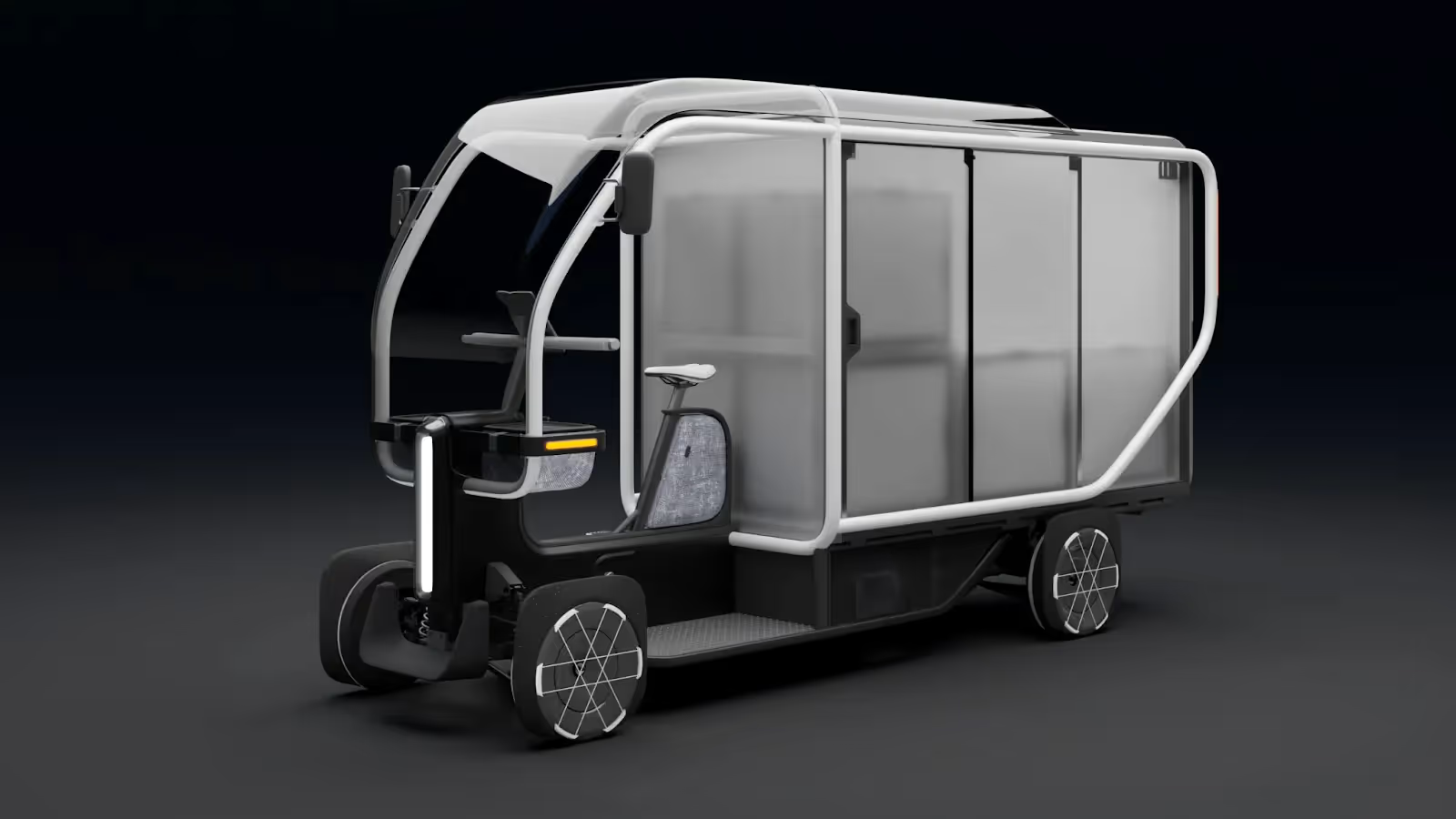
In many cases, it’s similar to a cargo bike — something we’re big fans of over here at Micromobility Industries — with one major difference: it has four wheels rather than two or three. On top of that, the most popular type of e-cargo quad has a cab system attached to the back, making it look more like a van than a traditional bike.
But, technically, it is a bike. E-cargo quads are pedal-assisted, although they have the sort of design that’s more reminiscent of a delivery vehicle than something you’d see on the Tour de France. And that’s the key element here, e-cargo quads are a bridge between cargo bikes and microcars, but rather than the focus being on families or transport around the city, the selling point of these vehicles is goods and services.
What’s driving the uptick in e-cargo quads?
In one phrase: last-mile deliveries. This is the sweet spot that this type of micromobility vehicle is milking.
The issue is getting specific statistics on their use. Currently, because e-cargo quads are still categorised as cargo bikes, their use isn’t directly measured outside of this. This means to understand the success of e-cargo quads, we need to talk broadly about cargo bikes themselves.
Overall, cargo bikes are thriving in urban delivery settings, specifically as they can bypass traffic on bike lanes and avoid a lot of the parking issues traditional delivery vehicles have. This leads to door-to-door deliveries that are quicker, with the vehicles in Berlin delivering loads two-to-three times faster than vans.
Some electric cargo bikes can carry up to 500kg of weight, cut emissions between 50% and 90% when compared to vans, and reduce noise and congestion. Understandably, these sorts of figures are drawing the attention of any delivery company worth its salt.
This will be even more important in the future. It’s estimated that urban freight will rise by nearly 80% in 2030, meaning that the roads will be even more congested. The broad cargo bike category can relieve much of this — and e-cargo quads are going to be increasingly important.
Broadly speaking, a delivery vehicle with four wheels and a large cab on the back can carry more weight in a safer way than a more bike-shaped cargo vehicle. Interestingly, this shift is already happening.
The Amazon and ALSO effect
Arguably, the biggest company adopting e-cargo quad bikes is Amazon. While the company has two- and three-wheeled cargo bikes in rotation, four-wheelers (the e-cargo quads) are a vital part of this chain.
The company launched this initiative way back in 2019, using e-bikes for grocery deliveries in New York. This was such a success that it rolled it out further. And, in 2024 alone, there were more than 60 million packages delivered in New York using cargo bikes, pushcarts, and on-foot deliveries.
This has been repeated across various countries and cities, with Berlin, Lyon, Manchester, and Antwerp being some of the places where this has been trialled.
Alongside this initiative, Amazon is also collaborating with ALSO, a Rivian spinoff that concentrates on making e-bikes and e-cargo quads. This will be a custom-designed vehicle that’s based on the company's TM-Q quad, and Amazon is planning to buy “thousands” of them.
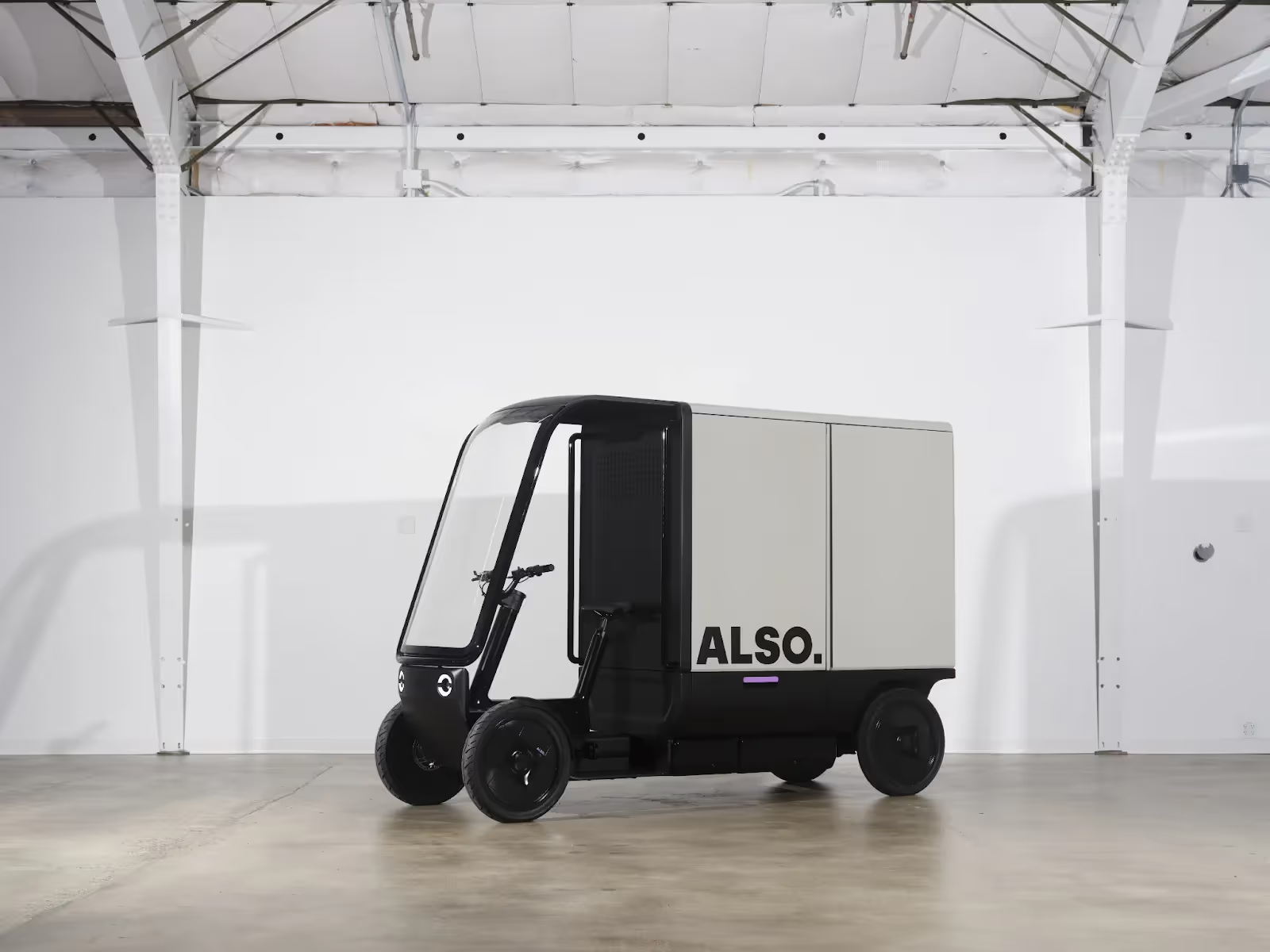
On this, Emily Barber —the director of Amazon’s Global Fleet — says, “Micromobility solutions like pedal-assist e-cargo quads allow us to quickly deliver to customers in dense, urban cities, while helping reduce traffic and noise.”
In many ways, this neatly sums up the appeal of e-cargo quads. These are a solution to pre-existing problems, not a type of transport that’s looking for a problem to solve.
The future of e-cargo quads
Collaborations between companies and corporations like ALSO and Amazon are a vital tool in pushing vehicles like e-cargo quads forward. For a segment to be successful you need organizations to build the vehicles and progress the technology, yet this is useless unless there are customers there to actually use the hardware. These sorts of collaborations will make it so there are e-cargo quads in every city across the globe.
If we’re going to make streets less congested, then reducing the number of big vehicles in cities is paramount, and adopting greener modes of transportation and delivery is key for that. E-cargo quads serve that purpose.
The one issue, of course, is if these sorts of pedal-assisted four-wheelers get so popular that they fill up cycle lanes and force local governments to get involved, an issue that impacted microcars in the Netherlands.
Thankfully, solving this would be easy: build more bike lanes.
Cities need to be remodelled and adapted to make it better for average people to live in, and e-cargo quads are a way of getting us there.
Image Credit: Fernhay.com