.svg)
%2Bcopy.avif)


.svg)



.webp)
.webp)


For many people, when they think of shared micromobility, they think of Lime. The business has gone from strength-to-strength in recent years, becoming an important cog in many cities’ transport puzzle.
In many ways, the growth of Lime reflects the evolution of the entire micromobility sector — and there’s no better time to dive into that than right now. Why? Because Lime is set to launch its annual Ride Replay on Monday, December 15th. This is a personalized year-in-review feature that gives users an overview of how they’ve used Lime vehicles over the past year. Think of it like Spotify Wrapped, but for e-bikes.
Let’s just consider that for a moment: there are enough people using Lime regularly that providing them a yearly personalized wrap-up makes sense. Would that have happened five years ago? Unlikely, and that tells a story by itself: micromobility is on the move.
Lime itself has had a bumper year. One of the most eye-catching stats from the Ride Replay overview we were shown is the fact Lime surpassed one billion lifetime rides this year. Considering Lime was only founded in 2017, this is a substantial story of growth.
On this achievement, Wayne Ting — Lime’s CEO — says that, “every single one of these billion rides represents a step toward a more sustainable and equitable future for cities.” This success is further highlighted in the data, with Lime estimating it reduced 38 million car rides in 2025 alone.
It’s a fascinating lens to view micromobility as a whole through. After a billion rides, it’s hard to argue against the sector shifting from a scrappy startup into a mainstream concern. The industry is reshaping entire cities.
We can view some of this growth through figures. Let’s take Lime’s UK financials as an example:
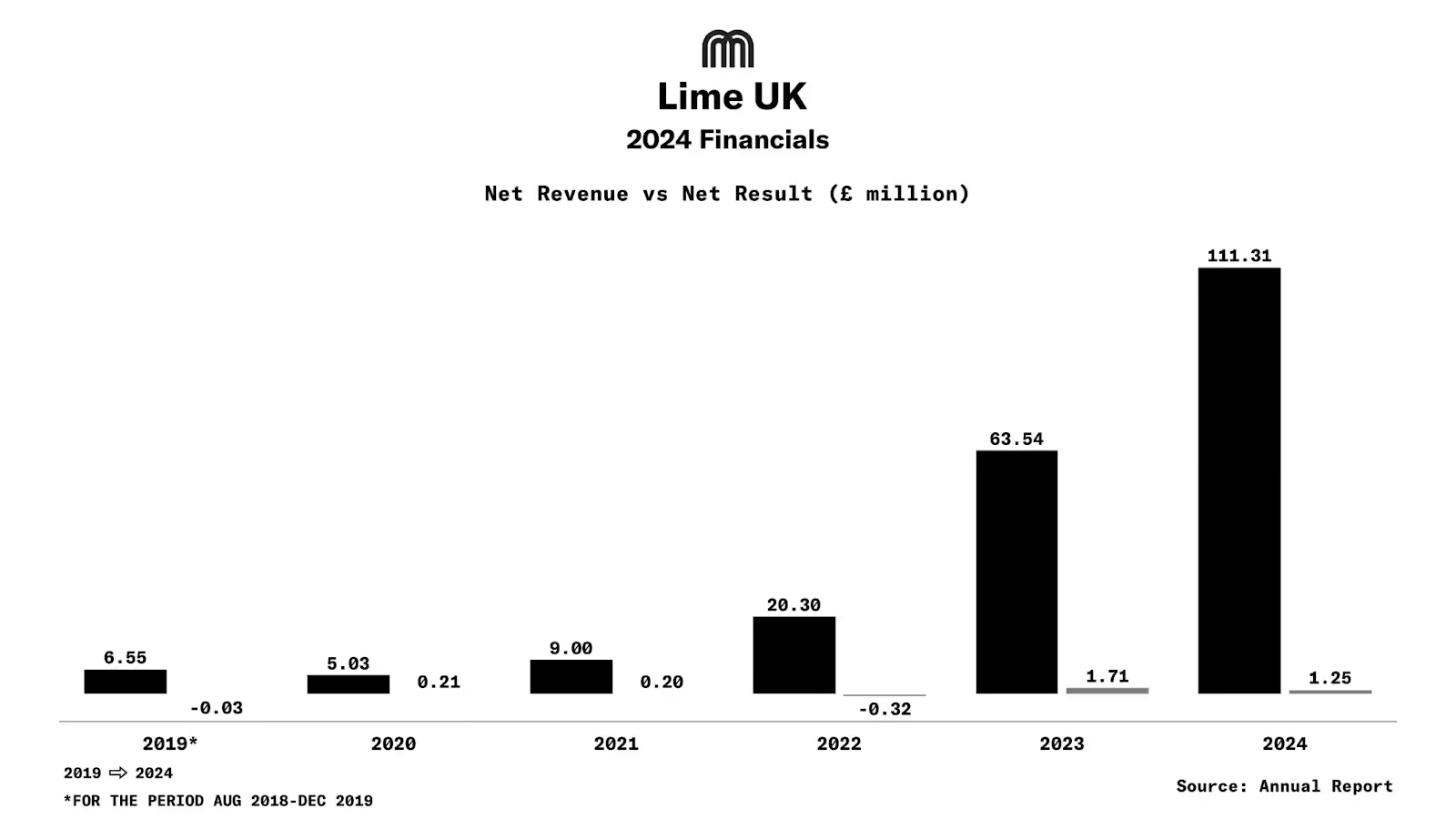
It’s a startling graph. In the UK, Lime recorded £111.3 million in revenue for 2024, an increase of 75% year-over-year. This is almost six times higher than in 2022.
But this success isn’t just based in a single country. Globally in 2024, Lime recorded $810 million in gross bookings and $686 million in net revenue. With both rising more than 30% year-over-year, it marked the fourth consecutive year of double-digit growth for the company.
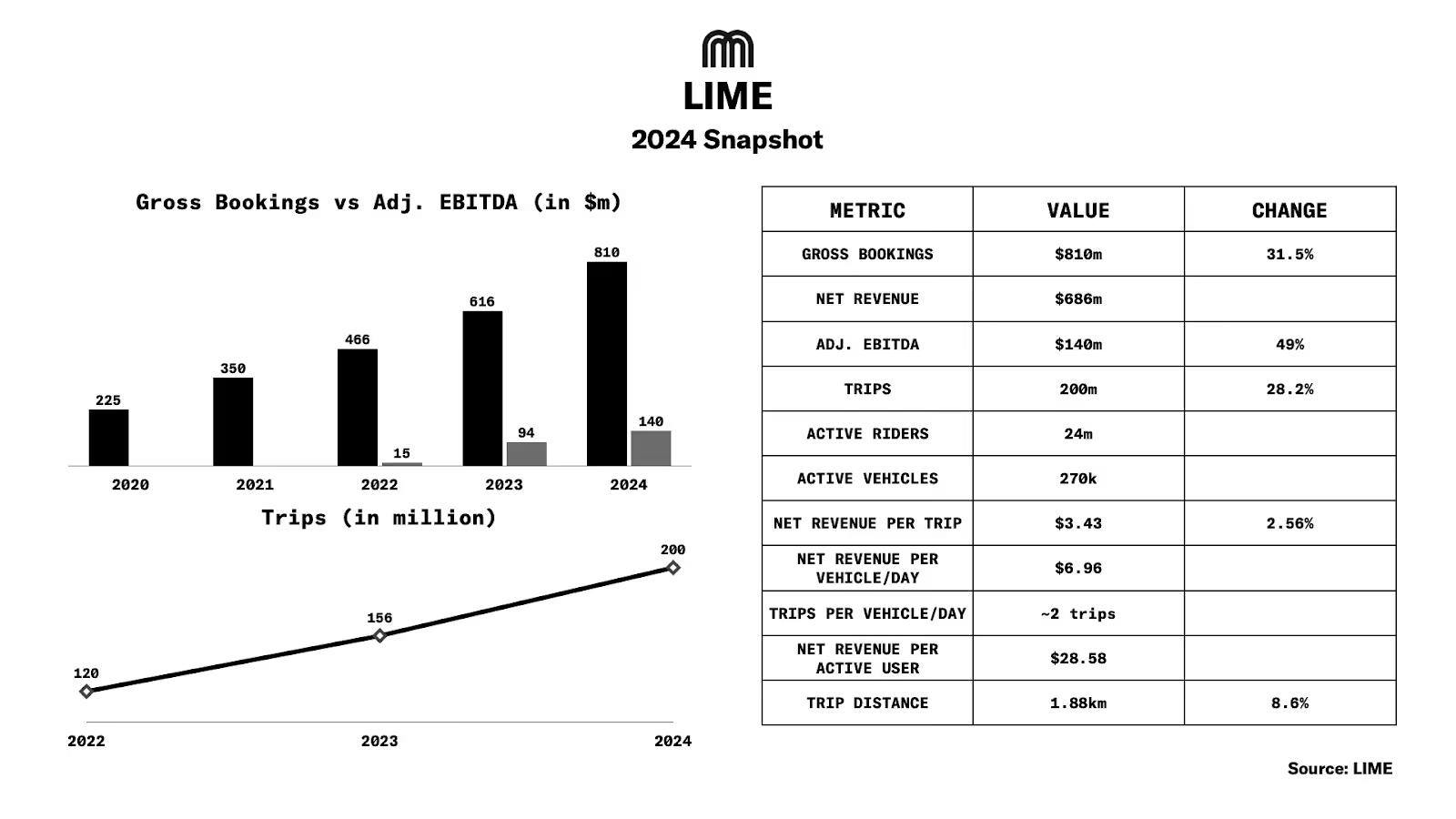
Skyrocketing revenue is undoubtedly impressive, but it doesn’t mean much if the overall goal is deeper than simply making money, as is the case with micromobility.
As Wayne Ting himself says, Lime’s mission is to support “the global shift toward cleaner, more livable cities” and to build “a future where every trip under five miles is made without a personal car.”
This wouldn’t be possible without people actually riding Lime vehicles, and that’s another area of fascinating growth. On May 30 of this year, there were more than one million rides worldwide — the first time this has ever happened on a single day.
Lime isn’t alone in this expansion, the entire micromobility industry is thriving. For example, the North America Bikeshare and Scootershare Association (NABSA) found that total trips in the region rose 31% from 2023 to 2024, going from 175 million to 225 million.
The continued rise in the number of rides is both vital and evidence that people’s habits are changing. Lime isn’t an outlier here either, as there are a number of micromobility providers who handle millions upon millions of yearly rides:
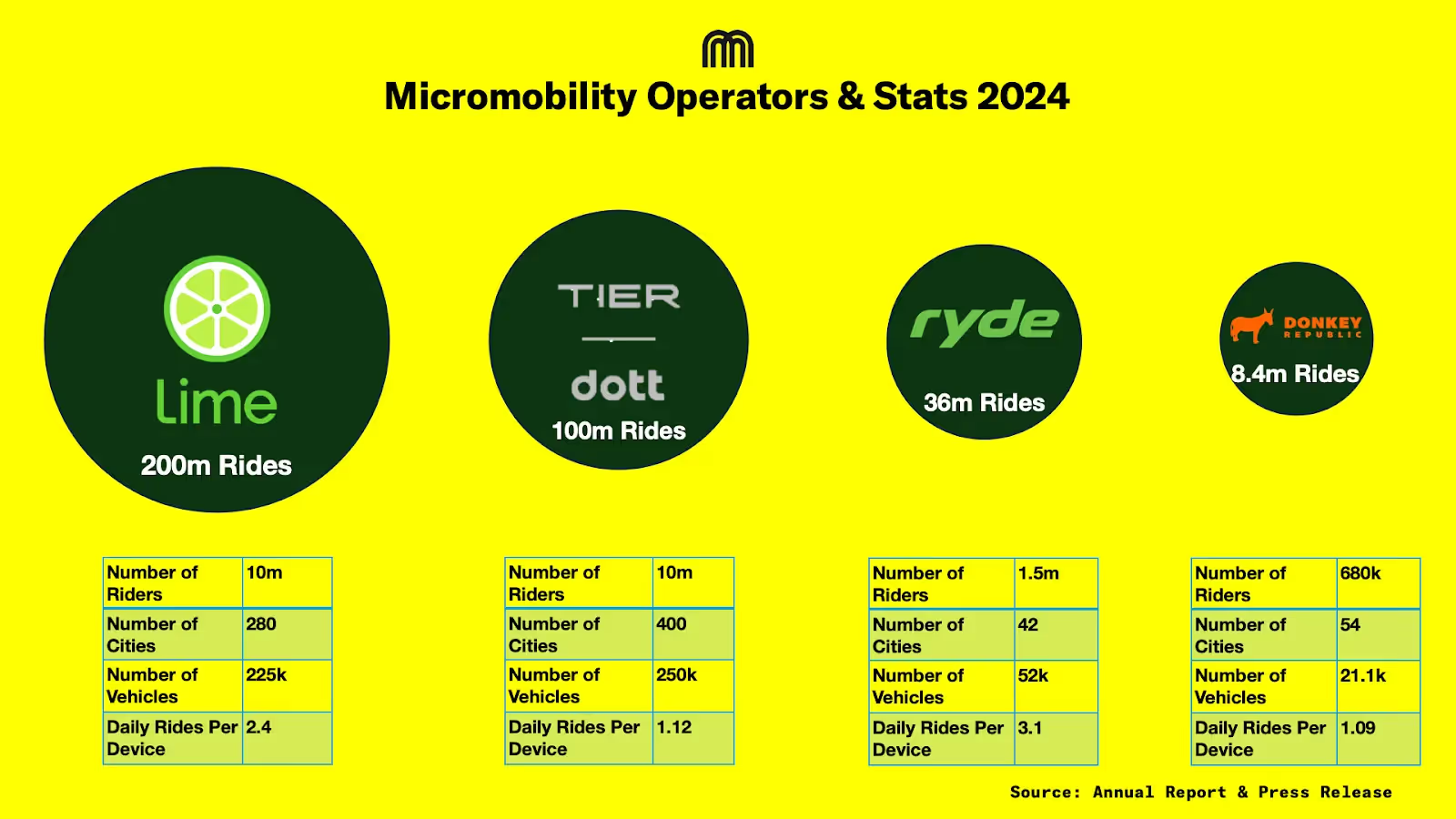
All this is part of a maturing industry — as is the widening reach of micromobility. Broadly speaking, it’s young people who are the first to adopt new trends, but when it comes to changing transportation behaviour, they aren’t the most important group to attract.
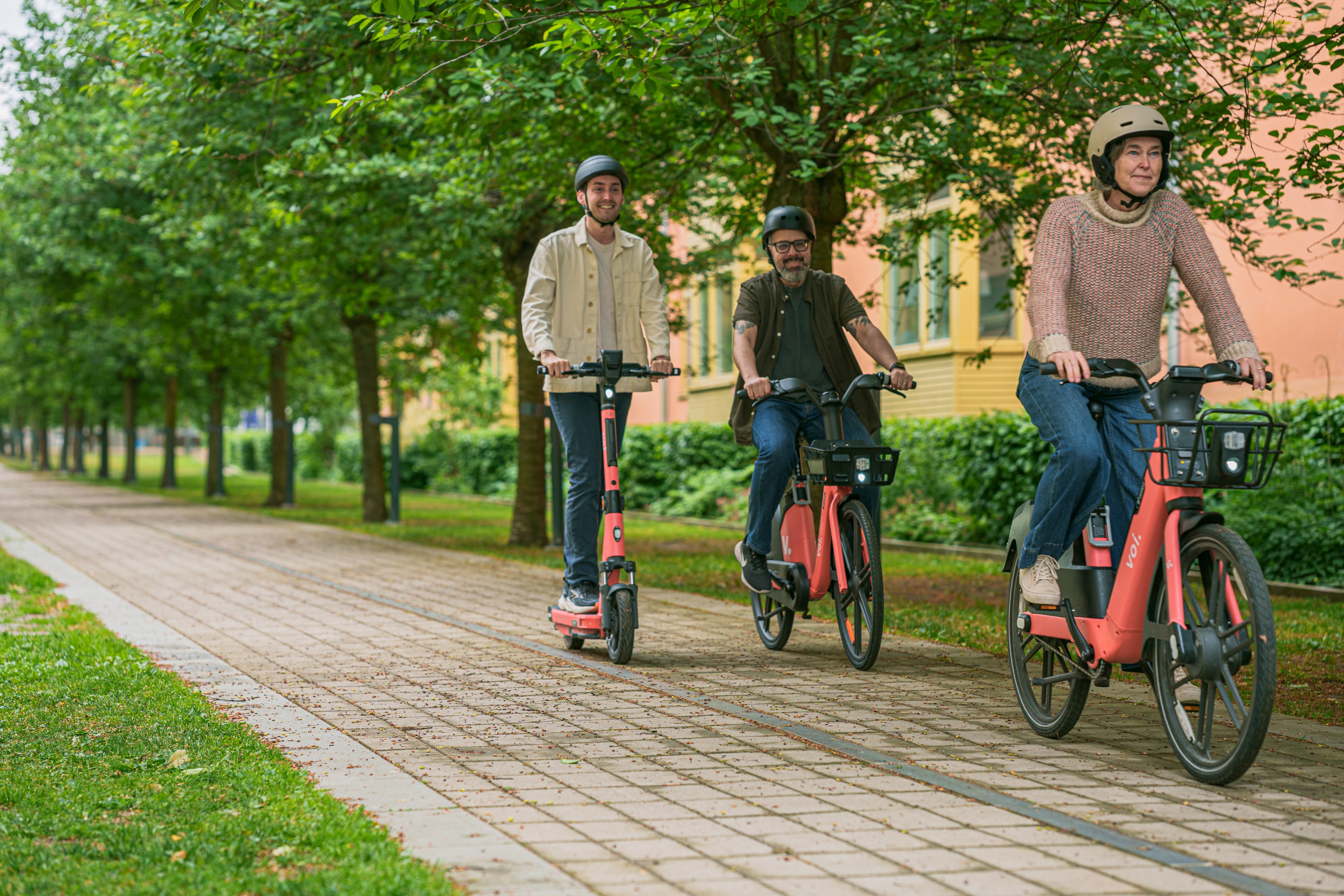
As we saw with Voi’s user survey, the number of older riders using shared mobility is increasing, a significant change, because those in the 45+ age bracket drive the most and own the most cars. One explanation Voi gave for this shift was the evolution of its hardware.
As the report states: “Voi’s vehicles have also evolved significantly — today’s scooters and e-bikes are sturdier, more stable and more comfortable than those in the early years, which makes them more appealing to a broader range of riders.”
Although we don’t have age-related figures from Lime, the company has also focused on improving its range, specifically with the launch of the LimeBike and LimeGlider. These vehicles are designed to be “comfortable and easier to use for everyone — especially those traditionally underrepresented in micromobility, including women and older riders.”
In many ways, the story of Lime in 2025 tracks with that of the micromobility industry as a whole. The upstart years are coming to a close and, instead, we’re entering an era of scale and size.
Of course, with this evolution comes issues. Lime isn’t free from controversy, with multiple issues with the vehicles in London and elsewhere, but this is to be expected. When a fresh company in a new sector grows, there will be teething problems. Micromobility is no different. Despite this, pressure is a privilege. Both Lime and the industry are big enough to make an actual difference, and the next step in this journey will be witnessing how they handle the issues that arise with a truly global presence.
Lime’s Ride Replay is a moment to mark the close of another year, but one thing’s for certain: we’re nowhere near the end of micromobility’s story. In fact, we may be gearing up for an entirely new chapter.
Cover Image Credit: Lime