.svg)
%2Bcopy.avif)

.svg)

.jpg)


.webp)
.webp)

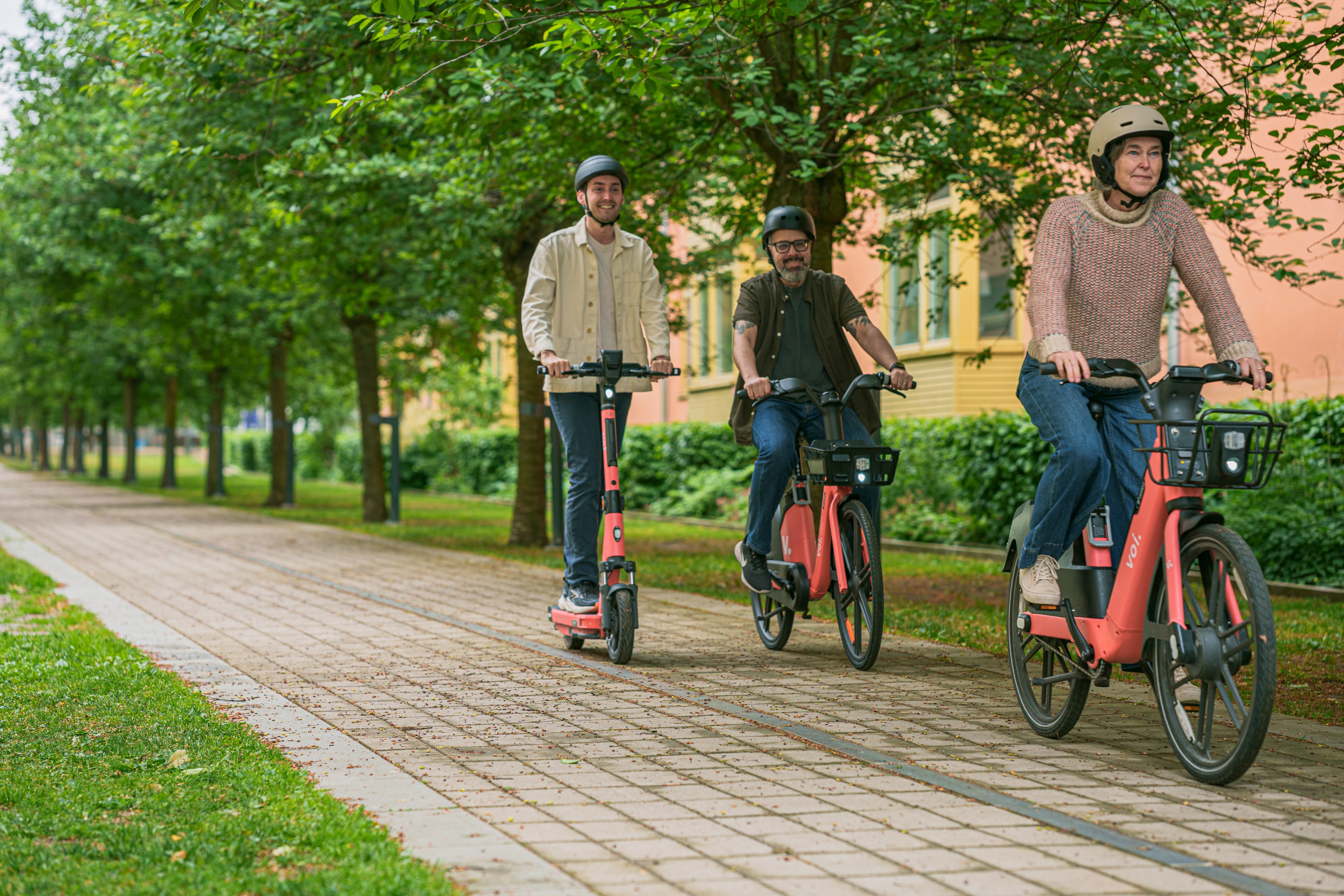
Cargo bikes are a rare technology; it’s not often a mode of transportation popular in the 1800s disappears before coming back more popular than ever — but that’s what’s happening here. It’s a strange thing to ponder, a little like if everyone started riding horses again because they’re more efficient than cars.
Sadly, that’s unlikely to happen because, unlike cargo bikes, horses won’t be transformed through batteries and electric motors.
These technological advancements that took the humble vehicle from a forgotten tool into something that’s a vital cog in last-mile delivery or replacement cars for families. This flexibility has seen them become incredibly popular in Germany, the Netherlands, as well as other European nations. What isn’t spoken so much about though is how cargo bikes are faring in other parts of the world. Like Canada, for example.
Let’s get to the question then: just how popular are cargo bikes in Canada?
A little background and some market data
Much like the United States, Canada is a car country. It revolves around the vehicle. In fact, it was following the rise of the combustion engine after the Second World War that the majority of cargo bikes in North America disappeared. This led to a period where cities were car-centric, designed with that mode of transport in mind.
In the 1980s, though, things began to change a little in Canada. Despite being described as a place that’s politically “hostile” to cycling, the last several decades have seen a rise in micromobility.
The issue, though, is how easily this can be attributed to cargo bikes specifically. Because their resurgence is new, the category isn’t tracked independently, so we need to look a bit wider.
So, the stats. The Canadian e-bike market (which cargo bikes are part of) is forecasted to do well. It was valued at $1.17 billion in 2025 and is projected to reach $2.39 billion by 2031, with cargo bikes noted as a particular growth sub-segment.
This follows a wider trend in the region. The North American electric cargo bike market as a whole was estimated to be worth $440 million in 2024, with a projection of around 38% CAGR over the next decade. This makes the overall North American market one of the fastest-growing global regions for cargo bikes.
Still, in Europe this market was estimated to be worth 1.16 billion in 2024.
When it comes to cargo bikes in Canada, we can draw some assumptions: it’s growing, but remains relatively niche.
How cargo bikes are being used

If we can’t rely on data alone, one way we can gain more insight into cargo bikes in Canada is examining situations in which they’re being used. Firstly — and contrary to parts of Europe — there appears to be little broad momentum for family use of cargo bikes in the country. Instead, Canada appears to be using them in B2B and logistics environments.
One such example is FedEx Express. They began with three e-cargo bikes in Toronto in 2020, but the fleet has since grown to 47 e-bikes across Ottawa, Calgary, and Vancouver. In that time, they have covered more than 120,000 km and delivered over 400,000 packages.
On top of this, Toronto created a micro-hub pilot (now a full scheme) that allows for shipping containers to operate as logistic hubs for deliveries. This pilot was a success, discovering that electric cargo bikes averaged 37 stops per day, compared with 24 for delivery trucks. The cargo bikes’ parking time was also about 65% shorter.
All good? Sure, but the issue is stagnation. According to some reports, these micro-hubs aren’t growing or expanding, they’ve remained at the same scale and cargo bikes aren’t tearing through the city.
What’s causing Canada’s issue with cargo bikes?
Generally speaking, cargo bikes haven’t made a huge dent in Canada on a consumer or business level. If this is going to change, we need to understand the problem. While there are a few factors that impact the lack of take-up (such as import costs, tricky regulatory framework, and union issues) the biggest sway over this issue might just be infrastructural.
To begin with, Canada’s car culture and harsh climate make it tough to rely on cycling throughout the year. This is where the lack of infrastructure really hurts. 31% of Canadians say they would ride their bikes more if they had more dedicated pathways, while 40% say they’d hop on two-wheelers more regularly if there were physical barriers between cycle lanes and roadways. Basically, the more infrastructure, the more people cycle.
In a lot of European cities, this sort of investment happens, but some parts of Canada are taking the opposite approach. For example, Ontario's Bill 212 (2024) attempted to remove bike lanes from certain major roads, actively undermining the infrastructure cargo bikes depend on.
This is particularly important in uptake. For cargo bikes to be popular for both businesses and consumers, there needs to be the infrastructure to use them on. Unless there are solid cycle lanes (including regularly gritted and safe paths) to travel on, businesses won’t use them. The chance of a rider injuring themselves on an icy corner in a Montreal winter is something companies won’t take a chance on. They want reliability and safety.
The goal— as it is across the world — is companies, governments, and consumers coming together to try and enact this change, but if the legal culture is deliberately antagonistic towards bikes, this won’t happen.
Still, there’s always hope. The world at large is waking up to the potential of cargo bikes, specifically their ability to thrive in last-mile deliveries as well as car replacement for families. There’s no reason Canada can’t do the same — but it will require some work to get there.
So, how popular are cargo bikes in Canada? Let’s just say there’s a lot of potential growth there.
Cover image credits: Urban Arrow