.svg)
%2Bcopy.avif)

.svg)


.jpg)

.webp)
.webp)

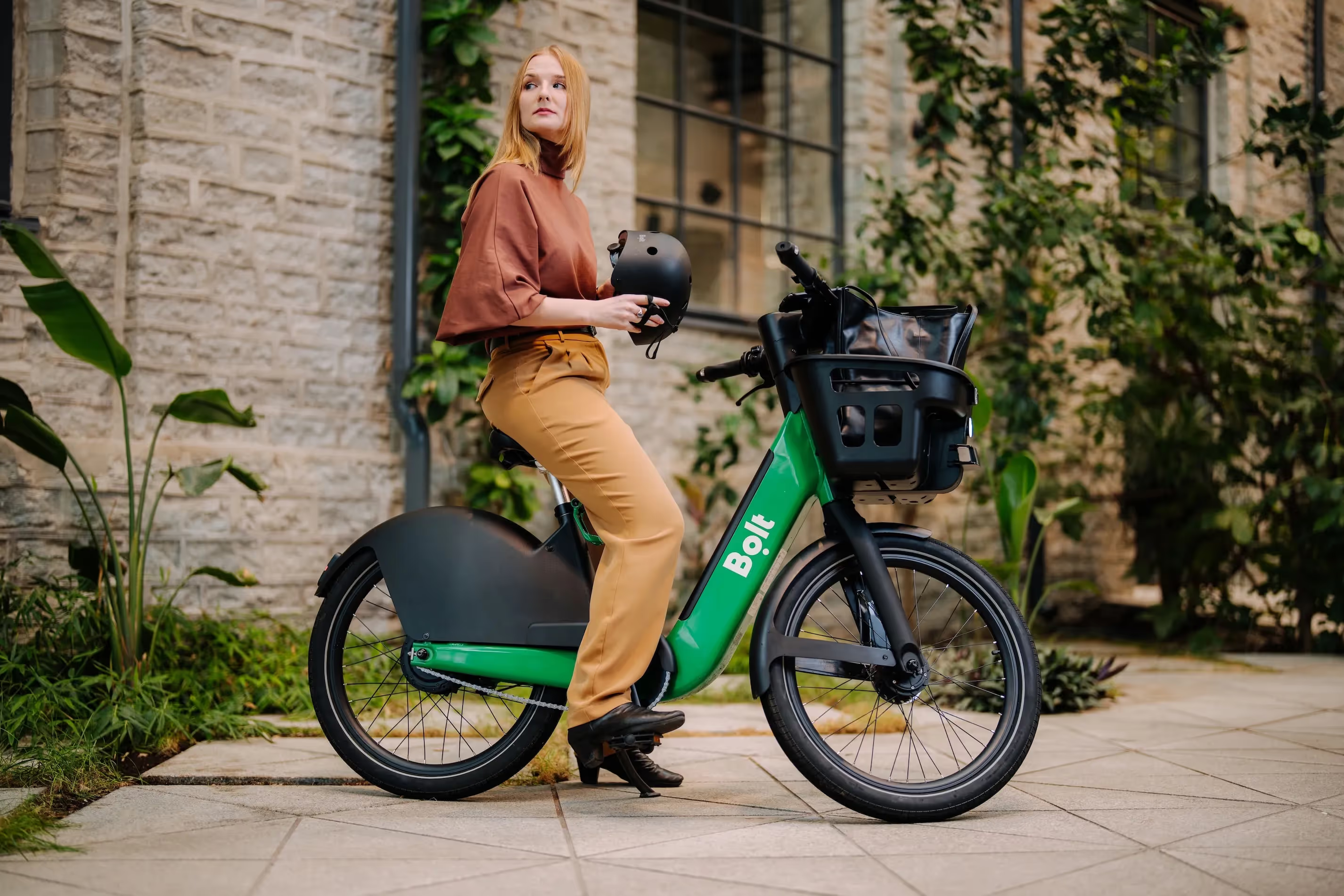
Last week Bolt announced a new shared e-bike. On the surface, this isn’t unusual — releasing new vehicles is the bread and butter of micromobility companies, after all. But in one important way, this new e-bike from Bolt did stand out: it’s a barometer for the future of shared transport.
In its current form, we’re still only in the second decade of shared micromobility. For an industry reliant on physical hardware, this puts it in an interesting position: maturing, but not quite at its final stage yet, especially as it’s an entirely new category of transport.
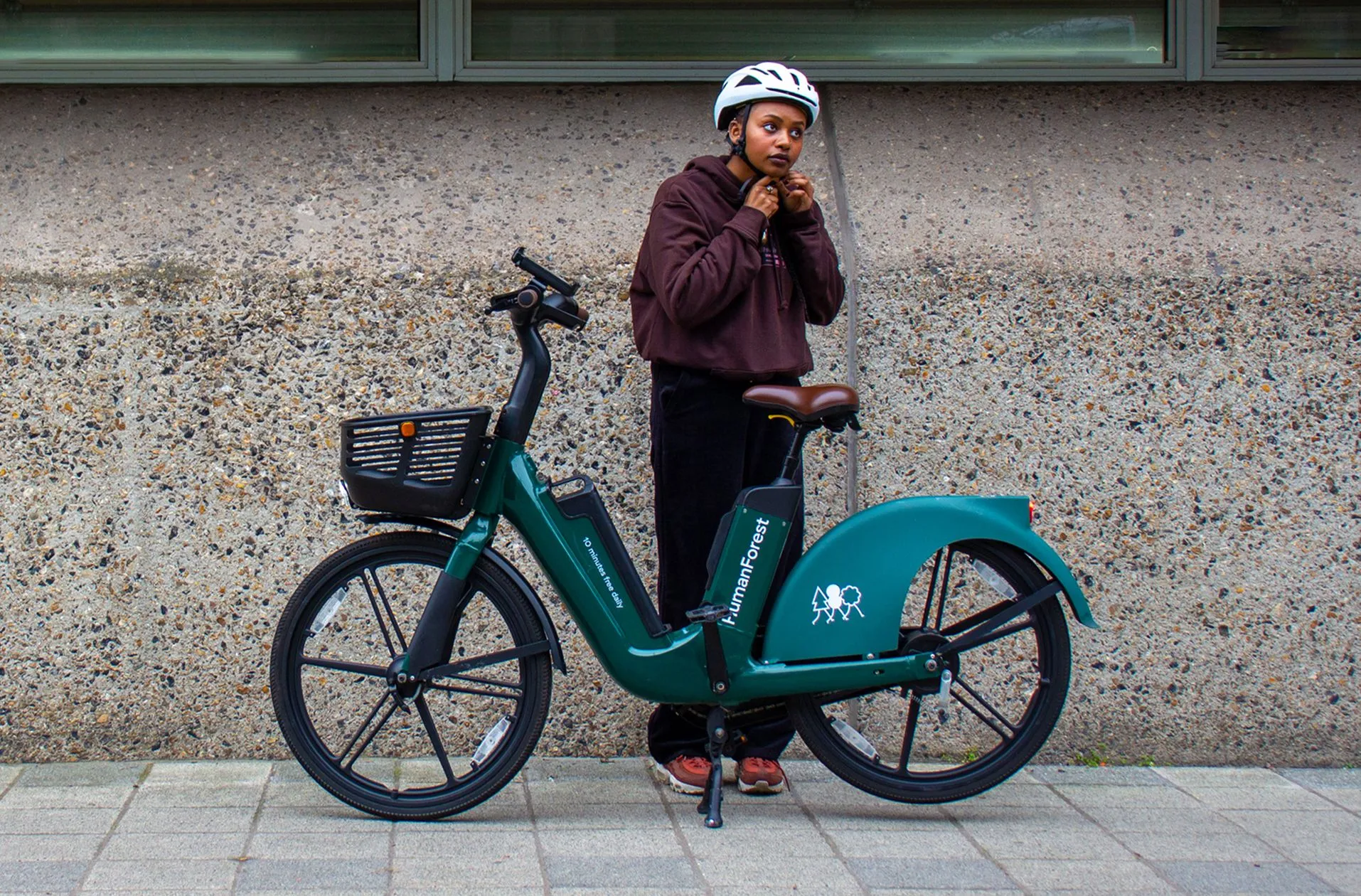
A shared e-bike, for example, has entirely different demands on it compared to a regular e-bike. Something like a VanMoof or Cowboy is designed to be used by one person, normally the owner, and therefore are constructed with that in mind. This means it doesn’t have to expect to be thrown around or constantly dropped on the floor. Indeed, it doesn’t need to be outdoors in all weather conditions for months on end. Shared e-bikes do.
Over the past few years, we’ve seen this sector grow and, as the data pours in, micromobility companies are responding with new designs. Looking at this evolution can help us predict the future of shared e-bikes, so that’s what we’re going to do today.
More inclusive designs for varied bodies
New shared e-bikes are focused on making it easy for as many people as possible to ride them — but it’s not easy. Humans are incredibly diverse, coming in different shapes and sizes, so creating a single vehicle that encompasses that variance is tough, but companies are putting a lot of effort into this.

The latest LimeBike, for example, focused on making the seat as easily adjustable as possible. Meanwhile, the new Bolt two-wheeler includes a low step-in frame and ergonomic handlebars to make riding it as seamless as possible.
On the surface, these are small updates, but expect shared micromobility companies to continue to iterate. One element we could see in the coming years are automatic seat and handlebar adjustments. This could be connected to a profile on your shared micromobility app, so when you rent an e-bike, it automatically adjusts the heights of components, allowing you to ride in comfort.
Lighter and lighter bikes
Look at any of the recent e-bike launches from shared micromobility companies, and you’ll notice regular references to the weight of the vehicles. This makes a lot of sense. In the early days, weight was a huge factor in e-bikes in general, and this was even starker with shared micromobility. These vehicles not only had to contain electric motors and large batteries, but also had to be robust enough to deal with drop damage and the wear and tear of urban life.
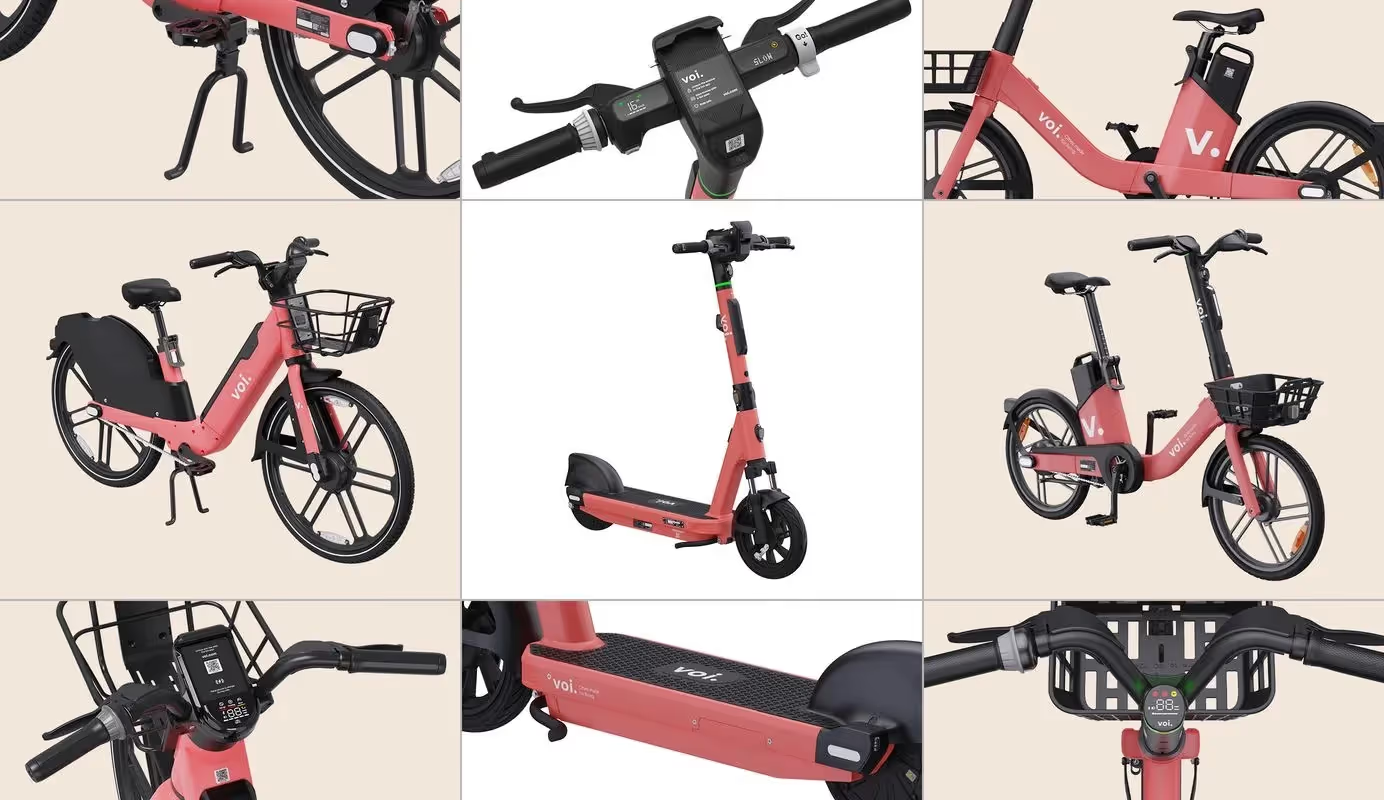
Things have changed a lot, though. Voi’s new e-bikes — and specifically the Explorer Light 1 — are prime examples of this evolution, with the company claiming this model is “25% lighter than standard shared e-bikes on the market.” Bolt is also onboard with this trend, with its new e-bike only weighing 34kg, making it one of the lighter vehicles in this category.
Weight will be a big battle point between shared micromobility operators in the years to come. Businesses will scrap to make shared e-bikes as light and easy to manoeuvre as possible, while still being strong enough to deal with constant use.
Fundamentally, the lighter an e-bike is, the more comfortable it will be to ride.
Environmentalism and longevity
The environmental impact of hardware is directly related to how long it’s in use. The more time an e-bike can operate, the less impactful it is on the environment. For shared micromobility this is a win-win.
Voi has already made great strides in this field, with both battery and vehicle lifespan accelerating rapidly in recent years:

This is something that all shared micromobility companies worth their salt are focusing on. The longer they can make a product last, the more environmentally friendly it is and the better it is for their business. That’s the dictionary definition of a “no brainer.”
Eventually, it’s likely that we’ll get close to an optimum design for shared e-bikes, something that’s edging ever closer. Think of it like the array of experimental phones before manufacturers agreed that the cuboid touchscreen was the most suitable.
Once that sea change occurs, we may see something akin to more modular shared micromobility. E-bikes where components can be easily swapped in and out, far more so than today. Meaning that if there’s a new motor, or handlebar grips, or a brake function, they can be easily and quickly replaced, leaving the heart of the machine in operation for well over a decade.
More screens and more user guiding
An attention-catching element of new shared e-bikes that was present on the Bolt two-wheeler was the colour display on the handlebars. This shows riders their speed, battery level, local speed limits, and nearby parking — and will become even more widespread.
Some of the big issues facing micromobility (such as antisocial behaviour, and parking) can be at least mitigated with a screen. Giving people a way they can interact with an e-bike without their phones, that can alert them when going over the speed limit, and direct them towards parking will ensure many of the people who don’t know they’re not acting in the prescribed manner on the e-bikes will be informed. This can be part of a soft cultural change that will help nudge behaviour in the right direction.
So, expect to see bigger, better, and more informative screens on shared e-bikes in the coming years.
Especially as screens get cheaper and technology advances, it will become incredibly normal to have information on shared micromobility.
Ultimately, we’re in a fascinating spot for shared e-bikes. While the industry is still new, it’s mature enough that we have several generations of design to build from. Experimentation is happening, but on a smaller scale that’s focused on actively improving the user experience, rather than trying to rip up the road.
And that’s how shared e-bikes will reach more people: making it as seamless and pleasant as possible for all riders, no matter who they are.