.svg)
%2Bcopy.avif)


.svg)

.webp)
.webp)


.jpg)
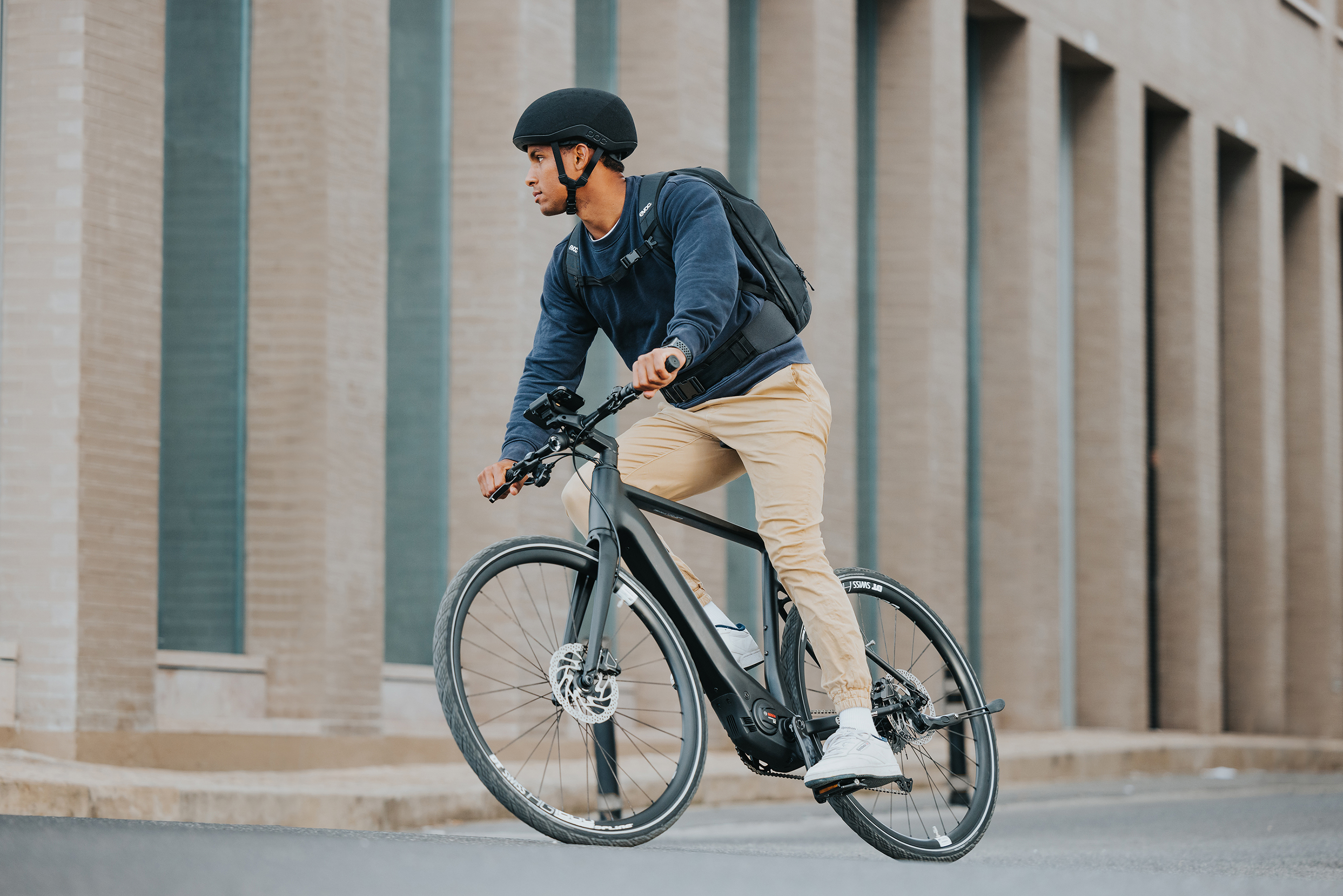
On the surface, nothing looks particularly special about an e-bike. For all intents and purposes, it looks like a regular bicycle. It has two wheels, handlebars, and a seat. So far, so bike. Sure, it might be a bit bulkier, but, aesthetically, it’s much the same.
The real magic, the real point of differentiation is the battery.
It almost feels silly to say it, sort of like looking around and being amazed by the air we’re breathing — but here’s the thing, it is amazing. Because we live in a modern world overflowing with batteries, it’s easy to forget how miraculous these things are.
These comparatively lightweight cuboids are rechargeable, reliable, and allow us to cruise through cities, climb hills, and generally explore the world in comfort.
So, today, we’re taking a little bit of time to delve into the forgotten star of e-bikes: the humble battery.
What is a battery?
A basic question? Sure — but it’s also one worth spending a few moments on. Fundamentally, a battery is a storage device. It holds chemical energy and converts it to electrical energy on demand.
Without getting too far into the weeds, a battery facilitates the transfer of electrons from one chemical to another. We then capture the energy from that transfer. Scientifically, it’s a simple concept, but the reality is far more complicated — and has been a focus of e-bike makers for some time.
How batteries work for e-bikes
Casually, we use the terms “energy” and “power” pretty interchangeably. If you talk about, say, plugging in your phone, it’s likely you’ll use one or the other. This isn’t the case when it comes to actual science.
Fundamentally, designing e-bike batteries is about creating a tradeoff between energy and power. Energy is measured in Watt-hours (Wh) or Amp-hours (Ah) and is the capacity, specifically how far an e-bike can go.
On the other hand, power — which is measured in Watts (W) or Amps (A) — is the rate at which energy can be released. For e-bikes, this equates to the delivered force, ergo the torque or acceleration.
The problem is you can’t prioritize both in the same battery. There has to be a balance, and in many ways getting the best balance out of batteries has been the story of e-bikes.
A short history of batteries in e-bikes
One of the first recognisable e-bikes was the Sinclair Zike. Launched in 1992 by Sir Clive Sinclair, one of the main figures behind the personal computing boom, it wasn’t a success by any measure, but it’s an important point in the history of e-bikes.
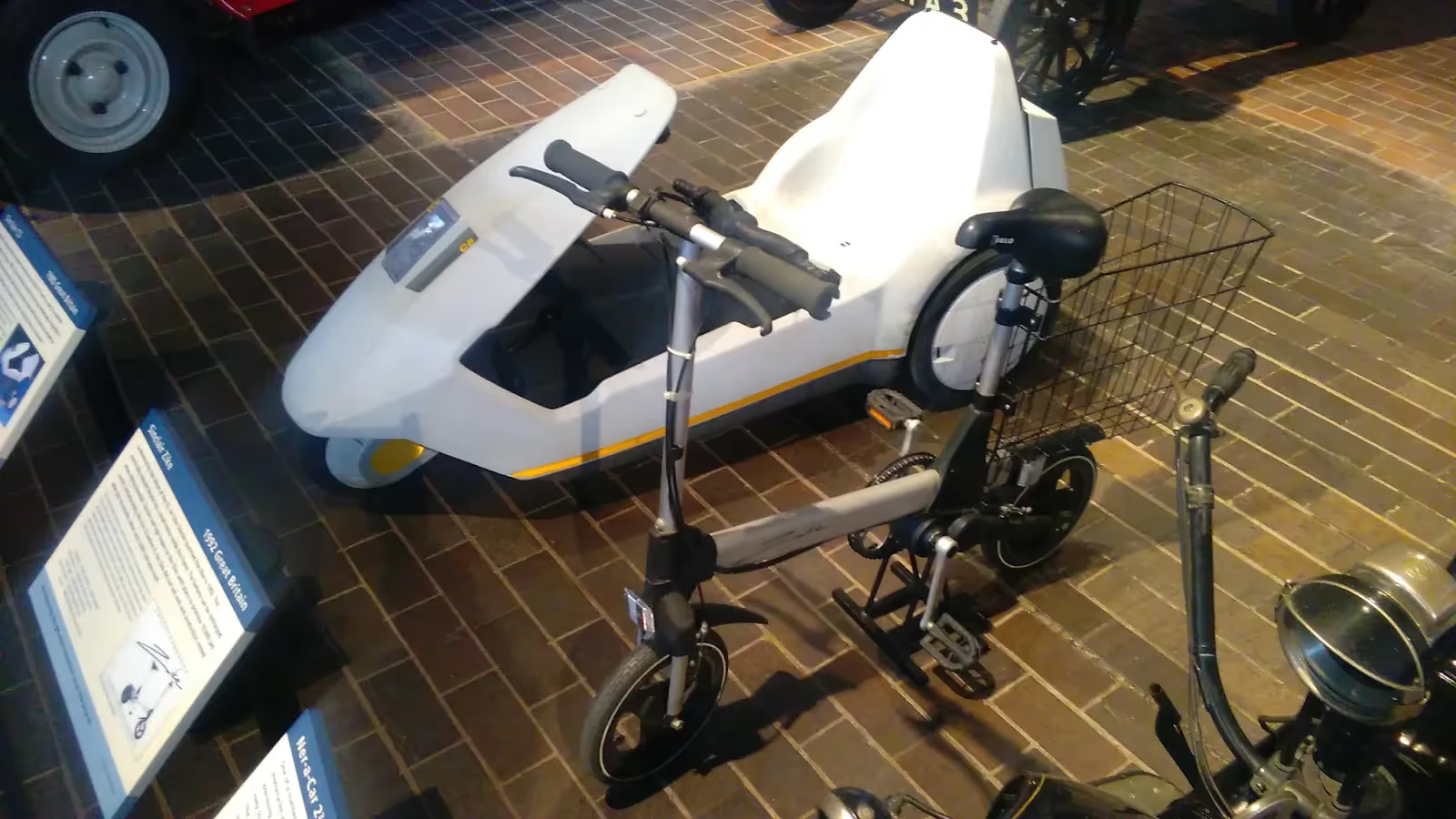
The Sinclair Zike had a 24 V nickel–cadmium battery, something innovative at the time. Earlier batteries were lead-acid, but these had issues with weight, low capacity, and a short life. Nickel-based batteries were an improvement over them, as they had a better energy density.
Now, the evolution of batteries is complex with a range of competing technologies, but the next big leap was from nickel-based batteries into lithium ion ones. A range of different scientists engineered some miraculous advances — such as the introduction of a graphite anode — which all pushed the format forward.
When it comes to e-bikes though, there are two main types in use today: lithium-ion (Li-ion) and lithium iron phosphate (LiFePO₄) batteries.
The main difference between them is their chemistry and chemical composition, but, in most cases, lithium iron phosphate batteries are superior. They operate better in different temperatures, have higher durability, and deliver a more stable performance under load.
There are two main areas where lithium-ion batteries excel though: weight and energy density. In reality, this means that lithium-ion batteries are preferred for lightweight or long-range road e-bikes, whereas lithium iron phosphate batteries are taking over cargo and city e-bikes.
Yet, with battery technology advancing, it’s unlikely we’ll see this duopoly continue for long.
What’s coming next?
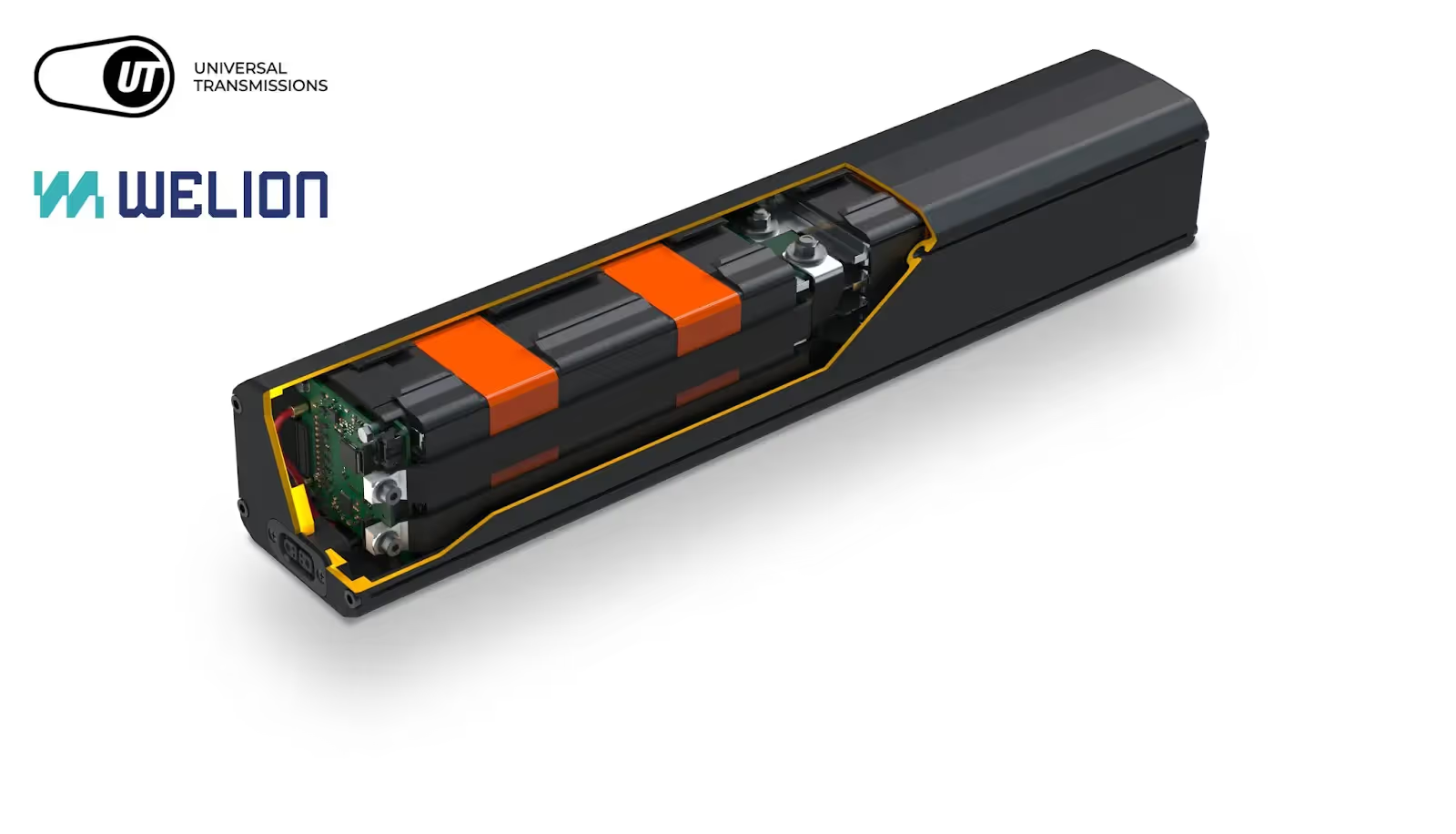
We can say one thing for sure when it comes to e-bike batteries: the market won’t stay still. Not only are there regular enhancements being made to pre-existing technologies — such as incremental improvements in energy density — there are entirely new categories being developed.
One such example is solid state batteries. These replace liquid electrolytes that are standard in batteries with solid ceramics or polymers, supposedly offering 2-3x higher energy density and improved safety.
Another intriguing technology is sodium-ion batteries (SIBs). Instead of lithium, these use sodium, which could lead to better performance in colder temperatures (perfect for e-bikes left outside), while also costing less. These are already slowly rolling out on the market, with the world’s first sodium-ion battery EV announced a few days ago.
Already, though, what is being achieved with e-bikes is quite miraculous. Many of these machines have a typical range of 60–120 km (40–75 miles), with many being light enough to pick up with a single hand.
It’s a real wonder. So, if you have a moment today, pay a little bit of attention to e-bike batteries. They really are amazing.