.svg)
%2Bcopy.avif)

-2.avif)
.svg)


.jpg)
%20(1).jpeg)
.jpg)


.webp)
Electric bikes are everywhere now. Operators run fleets in hundreds of cities worldwide. You unlock one with your phone, ride it across town, and park it at the side of the road when you’re done. The whole thing feels normal, almost invisible.
But rewind to 2010. Shared bikes existed, but they were heavy, pedal-only machines locked to docking stations. E-bikes in bike share fleets didn't exist. The idea that you could unlock a bike with GPS, ride it with electric assist, and leave it anywhere seemed far-fetched.
The gap between then and now wasn't filled by one company or one invention. It took nearly 60 years of experiments, incremental progress, and a few breakthrough moments. The story of shared e-bikes starts with stolen white bicycles in Amsterdam and ends with batteries you can swap in 30 seconds.
The White Bikes That Disappeared
Amsterdam, 1965. A group called Provo had an idea. They painted 50 bicycles white and left them unlocked around the city. Anyone could use them for free. The concept was simple, bikes belong to everyone, not just individuals.
The experiment lasted less than a month. Police confiscated most of the bikes, claiming they encouraged theft. The few that remained were stolen or vandalized. But the idea stuck. Luud Schimmelpennink, one of the people behind the white bikes, spent the next decades trying to make shared bikes work.
This was Generation 0 of bike sharing. Free bikes with no technology and no way to track them. They failed completely, but they planted a seed.
The Slow Climb Through Generations
After the white bikes disappeared, shared bicycles went quiet for years. When they returned, they came back slowly, learning from each failure.
In 1974, La Rochelle, France tried something different. They installed coin-deposit stations. It was a simple exchange - you put in money, you got a bike. And, you returned it, you got your money back. This was Generation 1. It worked better than free bikes, but theft remained high.
Then in 1998, Rennes, France added electronic identification. Users needed magnetic cards to unlock bikes. This was Generation 2. The technology allowed operators to track who took which bike, which cut theft significantly.
The real shift came in 2003 when Vienna launched a system designed by JCDecaux, the advertising company. This was Generation 3. The bikes were heavy and built to withstand abuse. They had RFID locks, credit card payments, and docking stations connected to central computers. In 2005, Lyon rolled out a similar system called Vélo'v with 1.5k bikes. It worked.
Paris watched Lyon and scaled the model. In July 2007, Vélib' launched over 10k bikes across the city. By the end of the year, it had almost 20k. Cities around the world noticed. If it worked in Paris, it could work anywhere.
But all these systems had a problem. They required docking stations. Building docks was expensive. Installing them took months. And if you didn't live near a dock, the system was useless.
The GPS Revolution
In 2010, a New York startup called Social Bicycles saw the docking problem and thought there had to be a better way. The idea was to put the technology directly into the bike.
Some of the details from this period come from reflections shared by Ryan Rzepecki, founder of Social Bicycles, in a Micromobility podcast interview recorded in 2020. In that conversation, he described watching Paris’s Vélib’ launch and realizing that while the system worked, it relied on expensive, bulky docking stations that limited flexibility.
His insight was simple but radical at the time, what if you could take the technology out of the dock and put it into the bike itself? Each bike would have an integrated locking system and a mobile connection. Users could find, unlock, and return bikes using their phones.
In 2008, this was cutting-edge. The iPhone had only been out for a year. The first cellular modem they sourced cost $125. Wireless carriers didn't even have data plans for connected devices yet.
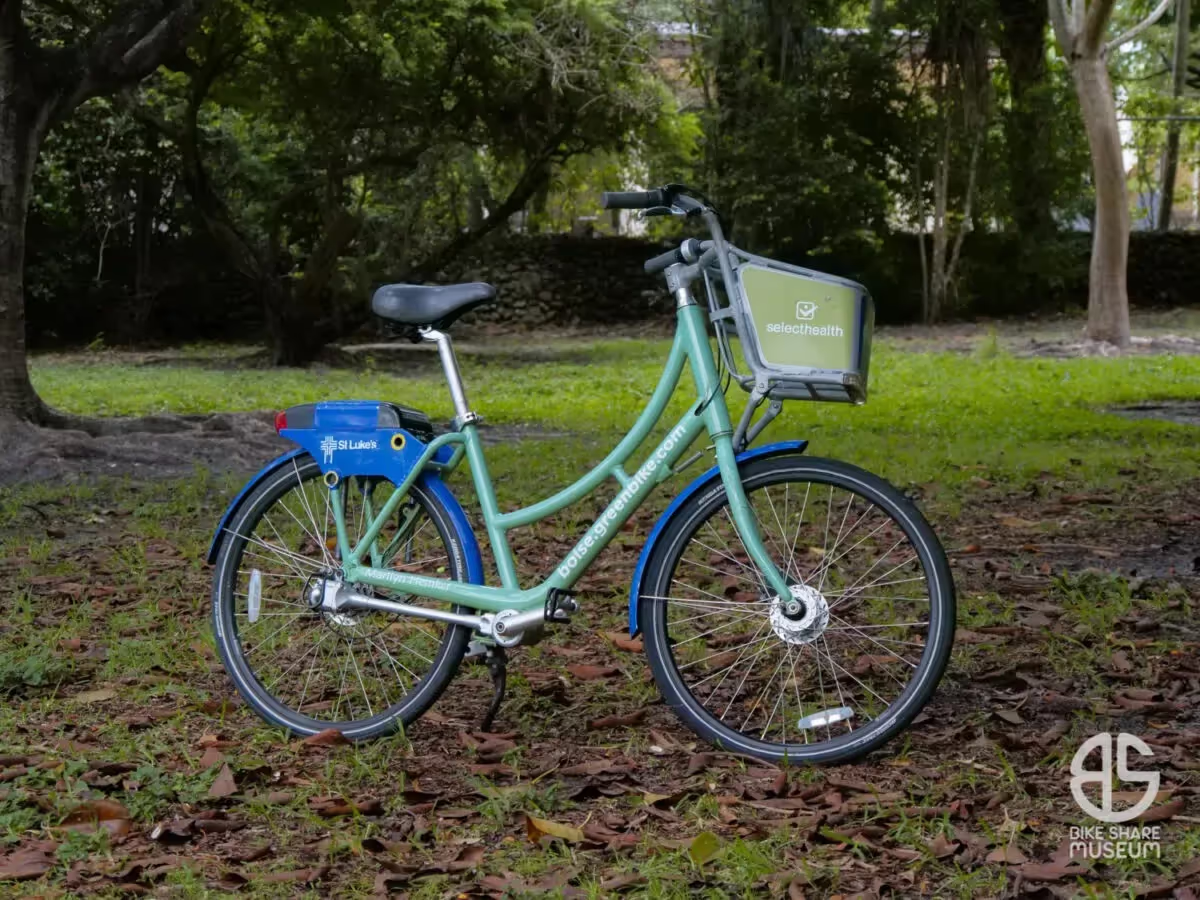
Each Social Bicycles bike had a GPS unit and a lockbox built into the frame. You unlocked it with your phone. You locked it when you were done. No docks needed. This was Generation 4, launched in 2011.
The first SoBi bikes were clunky. They had a big grey GPS box stuck to the back with a removable U-lock. The technology worked, but the bikes were heavy and the design was rough. Still, small cities like Boise and Topeka bought them. Social Bicycles proved you could run a bike share system without docks.
Between 2012 and 2015, the company refined the product. SoBi 3.0 in 2014 was lighter and more polished. By 2016, they'd reached about $10m in revenue selling bikes and software to cities. SoBi 4.5 in 2017 was the last pedal-only version. But by then, the company was already working on something bigger.
A trip down memory lane with Jump founder, Ryan Rzepecki
The E-Bike Breakthrough
By 2017, the industry was shifting. Social Bicycles had to adapt fast. The company rebranded as JUMP and bet everything on electric bikes.
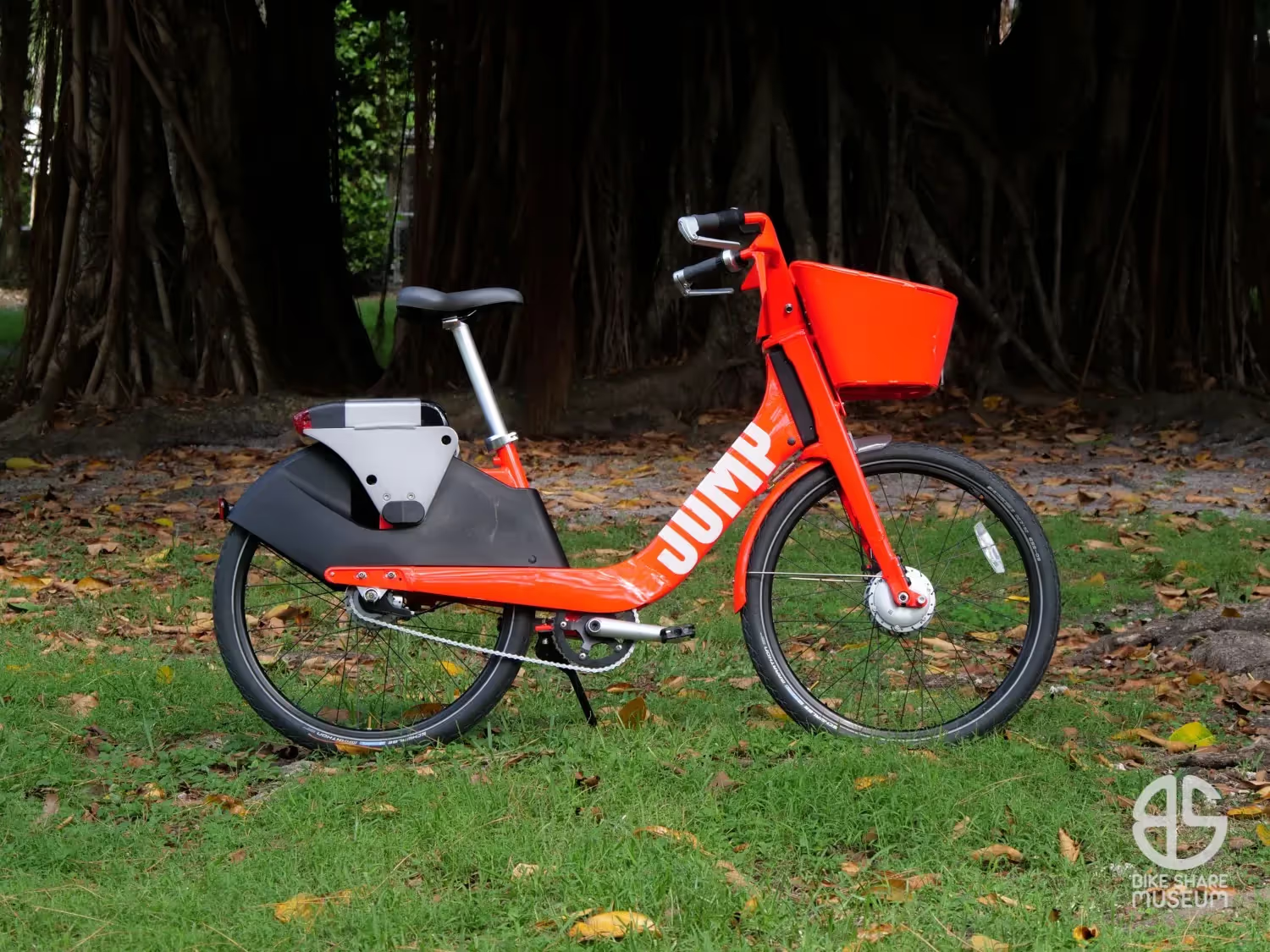
In January 2018, JUMP launched the SoBi 5.0, its first electric bike.
The JUMP 5.0 looked different from anything else on the street. It was bright red. It had a big integrated basket on the front. The handlebars curved slightly toward the rider, mimicking Dutch city bikes. And it had electric assist that kicked in when you pedaled.
The design was deliberate. The goal was to build a bike that worked for everyone, not just regular cyclists. The frame could fit riders from 150cm to 198cm tall. The seat post adjusted 30cm, far more than consumer bikes. The basket was large enough for groceries or a backpack. The bike weighed 32 kg, heavy enough to feel stable but light enough to maneuver.
The motor changed everything. Casual riders who avoided bikes because of sweat or hills suddenly had an option. Commuters could travel farther without arriving exhausted. The electric assist made bikes accessible to a much wider audience.
JUMP bikes launched in Washington DC and San Francisco in mid-January 2018. The response was immediate. Riders loved them. Cities scrambled to figure out how to regulate them.
In April 2018, Uber acquired JUMP for approximately $200m, putting e-bikes directly into Uber's app alongside ride-hailing options. The acquisition gave JUMP resources to expand quickly and develop new models, including the JUMP 5.5 in 2018 with a swappable 36-volt battery that could be changed in under 30 seconds.
The Industry Catches Up
JUMP proved that e-bikes could work at scale in shared mobility, but they weren't alone for long.
Lime had been watching closely. The company launched in June 2017 with heavy pedal-only bikes in Greensboro, North Carolina. These original LimeBikes had solar panels in the basket to power smart locks and solid foam tires to avoid punctures. But they were sluggish and suffered from high vandalism.
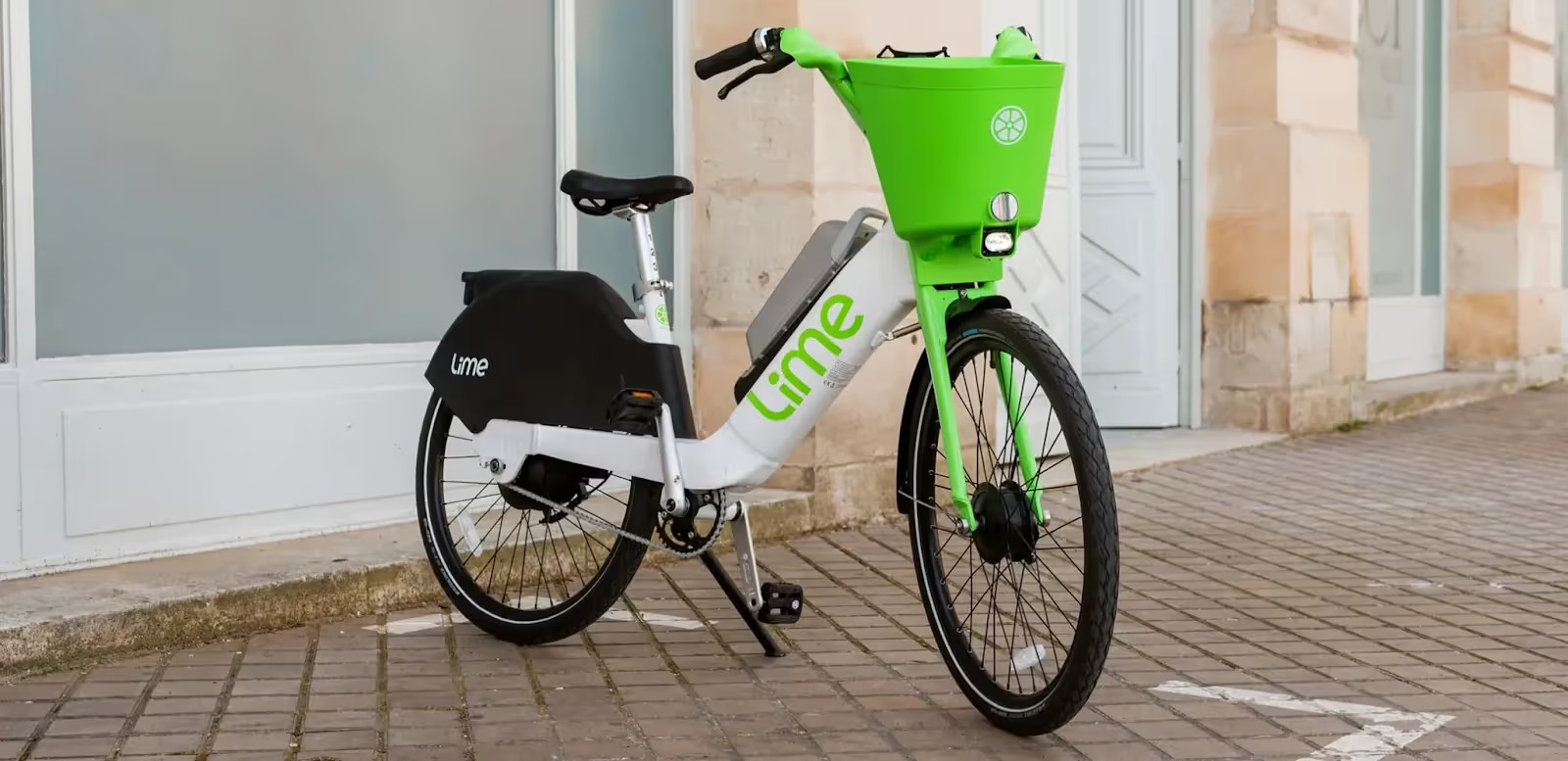
Usage data showed something interesting. When Lime added electric bikes in January 2018 with the Lime-E, trips were 2 to 3 times longer than pedal trips. Riders wanted the assist. The early Lime-E models had a 250-watt motor with a quoted 50-mile range, but they had a major operational problem: batteries couldn't be swapped in the field. Bikes had to return to depots for charging.
The turning point for Lime came in May 2020. Uber transferred JUMP to Lime as part of a $170m investment. Uber was cutting costs during the pandemic, and bikes didn't fit its core business anymore. Lime took over the fleet and gained something more valuable than bikes, knowledge. The JUMP bikes had powerful front-hub motors, retractable cable locks built into the frame, and premium ride quality. The red JUMP bikes were eventually repainted green and phased out, but the lessons stuck.
That learning showed up clearly in the Gen 4 e-bike launched in 2022, which became the company’s global standard. Shared swappable batteries with scooters and improved onboard hardware marked a shift toward longer-lasting, more operationally efficient fleets. In 2024, Lime expanded beyond a single bike model with the LimeBike and LimeGlider pilots, introducing features like throttle riding, easier seat adjustment, and a pedal-free option to serve different rider needs.
By the early 2020s, other operators were drawing similar conclusions. Voi entered the e-bike market from a different starting point. Known initially for scooters, the Swedish company launched its first shared e-bike pilot in December 2020 with Explorer Gen 1 in Cambridge, Peterborough, and Kettering. The bikes were heavy and basic, but the pilot confirmed demand, and riders were willing to take longer trips on bikes than scooters.
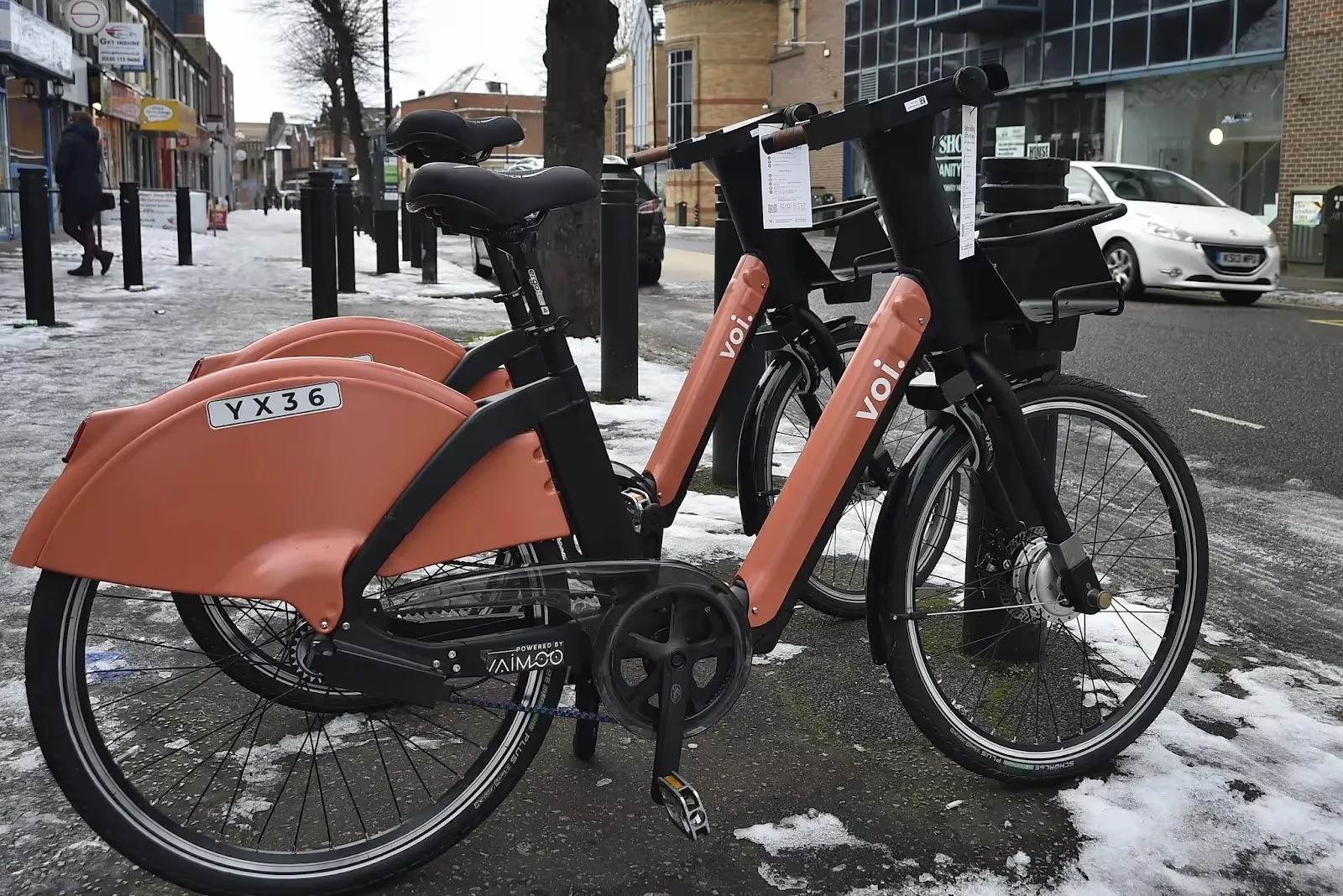
Voi followed with Explorer 2 in 2022, its first full production model, adding displays, turn indicators, improved braking, and a commuter-focused step-through design. Explorer 3 arrived in April 2024 in Liverpool with automatic gearing, smoother motor tuning, and improved safety hardware. By early 2025, Voi expanded the lineup again, launching Explorer 4 across multiple European countries as a durable 5 year platform, alongside Explorer Light 1, a lighter model designed for shorter trips and less confident riders.
By 2025, Voi's Explorer 4 had modular construction designed for 5+ year lifespans.
What the Evolution Shows
No single breakthrough created this industry. Each generation built on what came before. Social Bicycles solved the docking problem. JUMP proved electric assist scaled. Lime showed swappable batteries transformed operations. Voi demonstrated different models serving different riders. And many more companies contributed lessons along the way.
Technology progressed from no tracking to coin deposits to electronic cards to RFID docks to GPS bikes to electric bikes with swappable batteries. Each step reduced user friction and improved operator economics.
What started as 50 white bikes in Amsterdam in 1965 took 60 years, venture capital, cellular networks, lithium batteries, and smartphones to work at city scale.
Where We Are Now
Shared e-bikes are standard infrastructure in 2026. Most major cities have at least one operator. The technology Social Bicycles pioneered in 2011 and scaled with JUMP in 2018 is now the baseline.
Modern shared e-bikes have longer battery life than the first JUMP bikes. Motors are more efficient. Frames are lighter but more durable. Automatic gears are standard. Some systems use swappable batteries. Others have throttle options. A few are testing solar-powered charging stations.
Vandalism remains a problem. Theft hasn't disappeared. Cities still wrestle with how to regulate dockless systems without cluttering sidewalks. But the trajectory is clear.
E-bikes went from non-existent in bike share in 2011 to mainstream in less than a decade. The white bikes of Amsterdam disappeared after a month in 1965. The red JUMP bikes lasted from 2018 to 2020. But what remains is bigger than any single company or color. It's the infrastructure, the technology, and proof that shared e-bikes work at scale. That's the real evolution.
Image Credit: Lime