.svg)
%2Bcopy.avif)

.jpg)
.svg)

.jpg)
%20(1).jpeg)
.jpg)


.webp)
E-bikes and e-scooters have become a fixture of American streets. But the rules governing them look different depending on where you live, and sometimes, how recently a local law was written.
There is no single federal framework for micromobility. States and cities have been filling that space on their own, each moving at its own pace and in its own direction. A recent report by Massachusetts' Special Commission on Micromobility, particularly its review of policies across the U.S., captures just how wide that variation has become.
The Federal Baseline
The federal government took its most significant step in 2002, when Congress passed Public Law 107-319. That law established that e-bikes with a top speed of 20 mph are consumer products, not motor vehicles. That distinction mattered enormously. It meant low-speed e-bikes wouldn't be pulled into the regulatory world of cars and motorcycles.
The three-class system that most states now use - Class 1 (pedal assist, no throttle, 20 mph cap), Class 2 (pedal assist plus throttle, 20 mph cap), Class 3 (pedal assist only, 28 mph cap), comes not from that legislation but from federal land management regulations written for off-road use. States picked up that framework and built their own laws around it.
E-scooters sit in an even hazier position. The Department of Transportation recognizes them informally as "low-speed electric vehicles," but no federal legislation covers them. Every state that wants to regulate e-scooters has had to start from scratch.
Most States Use the Three-Class System, But Not All
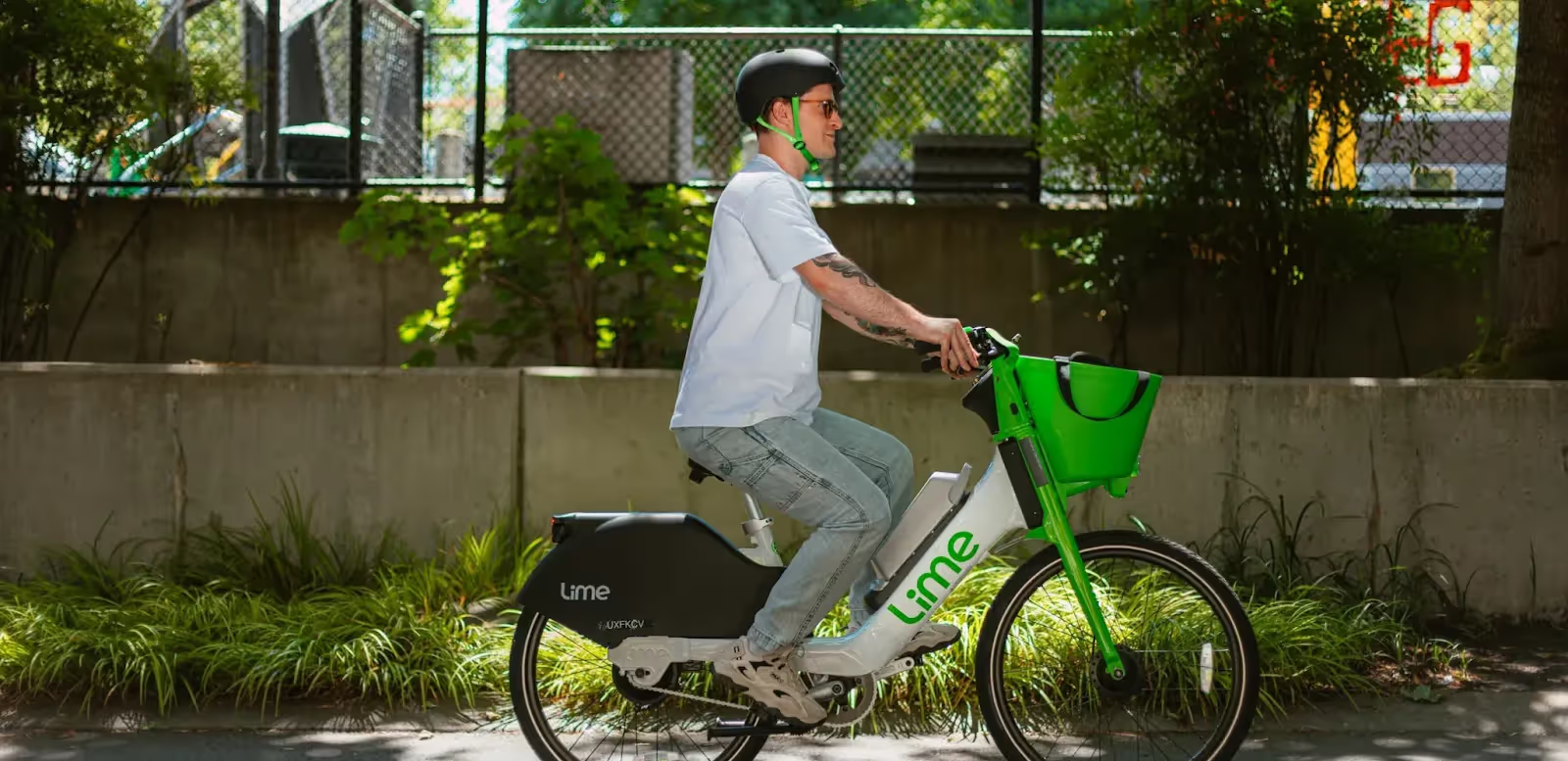
36 states and Washington, D.C. classify e-bikes using the three-class framework. It gives regulators a workable tool - use the class of device to decide where it can go, who can ride it, and at what age.
Several states attach age restrictions specifically to Class 3 e-bikes, the fastest legally recognized category, while leaving Class 1 and Class 2 open to younger riders. The most common minimum age for Class 3 operation is 16.
Not every state follows the three-class model, though, and the outliers reveal just how wide the interpretive range actually is.
New Jersey, under its old law, recognized only two classes, Class 1 (up to 20 mph) and Class 2 (up to 28 mph), and required licensing and registration for the faster category. Arkansas treats e-bikes the same as conventional pedal bicycles. New Mexico classifies them as mopeds. Alaska takes what is arguably the most distinct approach of any state: every e-bike, regardless of its speed or design, is legally a "motor-driven cycle", the same category as a motorcycle.
That classification has real consequences in Alaska. Riders must carry an operator's license. The minimum age to ride is 14, when a young person can apply for an M2 permit, a special category for motor-driven cycles under 50cc, with parental consent from both parents. Helmets are not required for adults, but the licensing requirement alone places Alaska in a different category from almost every other state.
Registration and Licensing
Across the country, most states do not require e-bike owners to register their devices or obtain a special license to ride. California, Florida, and Alabama skip registration and licensing altogether, but manufacturers must affix a label on the frame identifying the device's class. A small group of states, Alaska, Hawaii, New Jersey, New Mexico, North Dakota, and South Dakota, does require some form of licensing, depending on the device's maximum speed.
Hawaii stands alone on registration. It is the only state that requires both e-bike and e-scooter registration, and it charges a one-time $30 fee for each. That money goes directly into the bikeway fund and stays in the county where it was collected. Hawaii also sets an ownership age minimum of 18 for registration, though riders as young as 15 can legally use a device registered to a household member.
E-Scooters: 28 States Have Passed Some Kind of Law
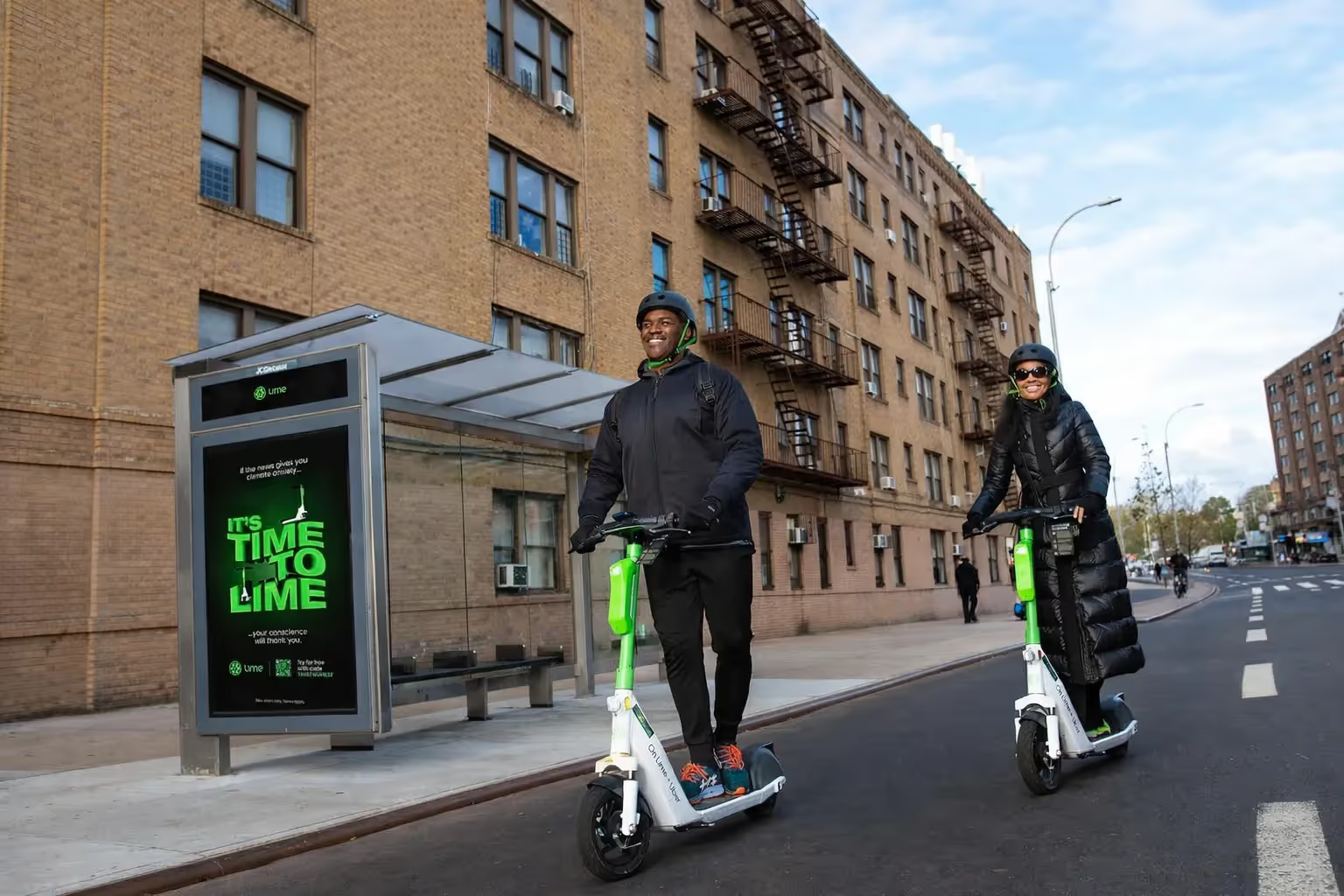
28 states have enacted e-scooter legislation. That leaves more than 20 with no dedicated law at all.
Among those that have acted, the rules diverge sharply. 17 states cap the maximum manufactured speed of e-scooters at 20 mph. Of those 17, 7 set a separate, lower operational speed limit of 15 mph. Illinois caps operational speed at 10 mph. Oklahoma, at the other extreme, allows riders to travel up to 25 mph.
15 states set a minimum age for e-scooter operation. Most land on 16. Illinois sets it at 18.
Several states ban specific behaviors outright. Hawaii, Illinois, Louisiana, Minnesota, and New York prohibit operators from holding anything, a phone, a bag, anything, that could affect steering or braking. Illinois, New York, and Utah make it illegal to operate an e-scooter under the influence of alcohol or while carrying alcoholic beverages.
Two states have gone furthest of all. Delaware prohibits e-scooters and e-skateboards from being operated on any public highway, street, sidewalk, or right-of-way in the state. A rider can push a device across a road but cannot ride it there. Pennsylvania classifies e-scooters as full motor vehicles, which means they need titles, registration, licensing, and inspection, including turn signals and mirrors. Since most e-scooters don't come with that equipment, they are effectively unable to operate legally on Pennsylvania roads.
New Jersey Rewrites Its Rules Entirely
In January 2026, New Jersey Governor Phil Murphy signed legislation that put the state among the strictest in the country. The law was prompted by a series of fatal crashes, including one that killed a 13-year-old boy in Scotch Plains.
The new law scraps the old two-class system entirely. In its place, New Jersey now recognizes 3 categories: "low-speed electric bikes" (assist stops at 20 mph), "motorized bikes" (throttle-driven, up to 28 mph), and "electric motorized bicycles" (capable of exceeding 28 mph). All 3 categories now require registration, licensing, and insurance. Low-speed e-bikes and motorized bikes were not previously subject to those requirements.
The law also bans the online sale of electric motorized bicycles for 1 year and prohibits the sale of modification kits that convert a low-speed e-bike into a motorized bike. E-bike owners have 6 months to comply. Licensing and registration fees are waived for the first year.
Age restrictions are specific. Riders under 15 cannot operate low-speed e-bikes or motorized bicycles. A 17-year-old needs a basic driver's license to ride one. 16-year-olds can rent low-speed bikes through government contracts, like Citi Bike, but cannot otherwise operate a motorized bicycle independently.
Transportation groups and bike advocates pushed back hard on the legislation, arguing that it creates barriers for immigrant and low-income riders who depend on e-bikes for their livelihoods.
California Adds New Requirements in 2026
California took a different approach, adding a set of targeted safety requirements rather than overhauling the system.
Assembly Bill 544, effective January 1, 2026, requires e-bikes to carry a rear red reflector or red light, solid or flashing, during all hours of operation, not just at night as the previous law required. The bill also allows an online safety course developed by the California Highway Patrol to satisfy the safety requirement for minors who receive a helmet violation involving an e-bike.
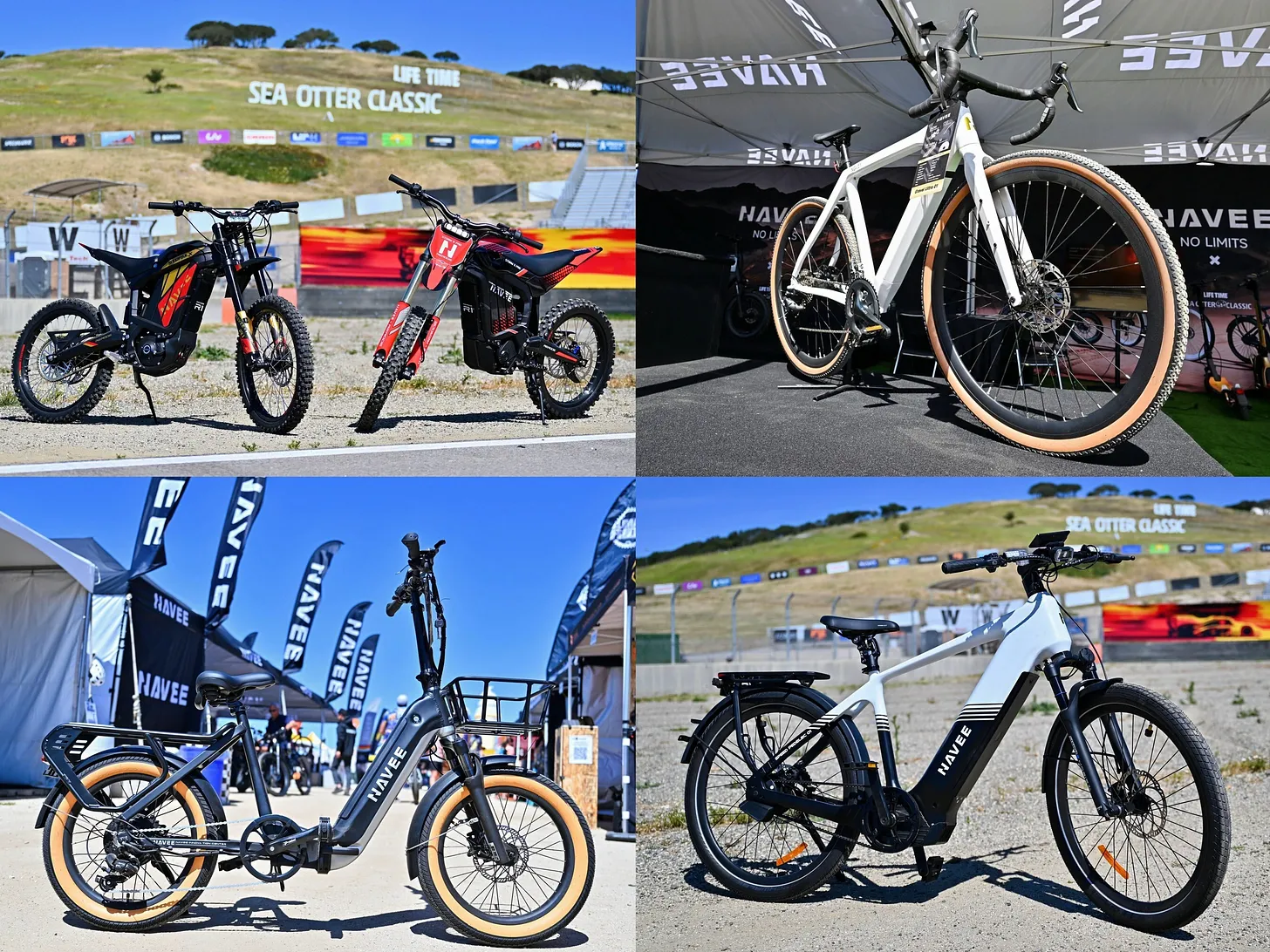
Senate Bill 586 creates a new legal category: the "off-highway electric motorcycle," or eMoto. A vehicle designed for off-road use, powered by an electric motor, equipped with handlebars and a straddle seat, and without manufacturer-provided pedals. eMoto vehicles are now classified as off-highway motor vehicles, requiring helmets and DMV identification plates.
Assembly Bill 875 gives peace officers the authority to impound a vehicle for at least 48 hours. This applies to vehicles with fewer than 4 wheels that do not qualify as e-bikes but can exceed 20 mph on motor power alone, if operated by an unlicensed rider. It also applies to Class 3 e-bikes ridden by individuals under 16. In cases involving minors, completion of a safety course may be required before release.
On product safety, Senate Bill 1271, passed during the 2024 legislative session, began taking effect on January 1, 2026. It requires e-bikes, powered mobility devices, and their lithium-ion batteries to be tested by accredited laboratories and meet specific safety standards, with mandatory labeling to show compliance. From January 1, 2028, that requirement extends to rental devices as well.
The False Advertising Problem
Alongside safety and licensing concerns, a separate issue has quietly emerged as some devices are sold as e-bikes even though they do not meet the legal definition.
Off-highway vehicles, motorcycles, and other motor-driven devices have turned up online and in stores, marketed as e-bikes. The mislabeling matters because buyers, often parents purchasing something for their children, may not realize they're buying a vehicle that belongs in a different legal category, one that may require a license or registration, or that may be unsafe for the intended rider.
California and Minnesota both moved to address this. California passed a law prohibiting the false advertisement of any device as an e-bicycle if it doesn't meet the legal definition.
Minnesota's statute, Section 325F.661, added to the state's consumer protection law in 2024, goes further in its specifics. It requires sellers of genuine e-bikes to disclose maximum motor power, maximum speed, and device class in writing before any sale completes. Sellers of motorized bicycles or motorcycles that describe their product using terms like "electric bike" or "e-bike" must disclose the device's actual legal classification and include a mandatory warning that the vehicle is not an electric-assisted bicycle under Minnesota law, is subject to motor vehicle regulations, and may not be covered by the buyer's existing insurance. That disclosure must appear in all advertising materials, including websites and social media posts. Violations fall under Minnesota's consumer fraud statute.
Connecticut introduced a similar bill in 2025. It died in committee. California and Utah also require e-moto sellers to explain state regulations at the point of sale.
The Massachusetts Picture
Massachusetts is among the states actively working through what its micromobility framework should look like. A Special Commission on Micromobility has been reviewing the current landscape.
Under existing state law, the picture is uneven. Electric bicycles require no registration and no license. Mandatory helmet use applies only to riders 16 and under. There is no state-set speed limit for e-bikes.
Motorized bicycles sit in a different category. They require registration, a license or permit of any class, and a helmet. Their speed limit is 25 mph. Motorized scooters require a license or permit but not registration, carry a mandatory helmet requirement, and are capped at 20 mph.
One notable gap is that Massachusetts defines Class 1 and Class 2 e-bikes in law but has no definition for Class 3.
The state's regulations add further detail. Under Department of Conservation and Recreation rules, Class 1 e-bikes may ride on paths wider than 8 feet. All 3 classes may use bike lanes. E-bikes are prohibited from the Appalachian Trail. The Registry of Motor Vehicles prohibits motorized scooters from registering. A Class D driver's license suffices to operate a motorized bicycle or scooter. If a motorized bicycle can exceed 30 mph, the registrar may refuse to register it.
In the absence of complete state guidance, Massachusetts cities and towns have passed their own ordinances. A few examples show the range.
Nantucket requires all bicycles, not just e-bikes, to be registered with the town for a $2.50 fee, and distributes free e-bike classification stickers through schools and police stations. Class 3 e-bikes are banned from Nantucket's paths and must ride in the street with a speedometer. E-bikes are also banned from school grounds; violations result in the school confiscating the battery, which parents must collect.
Foxborough requires bicycle owners to register with the local police department and attach a registration plate. When a bike is sold, the plate must be surrendered or transferred.
Marlborough caps motorized bikes and scooters at 20 mph across all roads, bans anyone under 16 from operating them, and prohibits nighttime operation. Malden gives right-of-way to human-powered devices over motorized ones on shared paths, limits speeds to 15 mph on multi-use trails, and requires tires to be under 5 inches wide for a device to qualify as an e-bike, which excludes "fat tire" bikes from the category.
Agawam passed an ordinance in November 2025 banning e-scooters from roads with speed limits over 30 mph. Neither e-scooters nor e-bikes may operate in Agawam after dark. Northampton allows only e-bikes weighing less than 170 pounds with a maximum speed of 20 mph on shared-use paths, with a path speed limit of 12 mph.
What This Map Looks Like
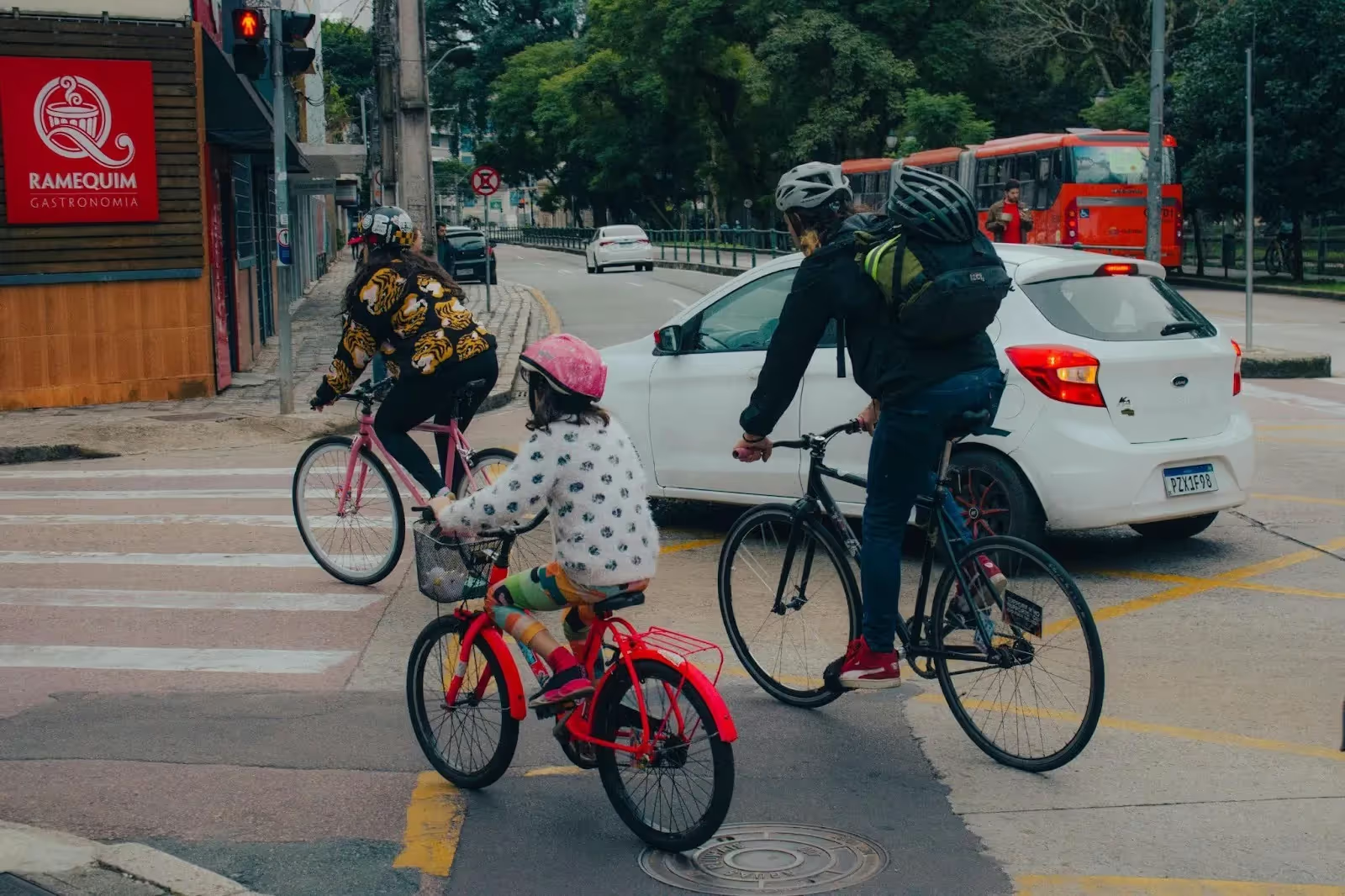
A handful of states have built comprehensive frameworks, Hawaii with registration, California with layered safety requirements, New Jersey with a full licensing and insurance mandate. Others, like Arkansas, treat e-bikes as bicycles and leave it there. Alaska applies licensing rules to everything with an electric motor. Delaware and Pennsylvania have set some of the most restrictive conditions in the country for e-scooter use.
In Massachusetts alone, the rules in Nantucket, Marlborough, Malden, Agawam, and Northampton differ from one another in meaningful ways, and from whatever the state statute says.
The devices themselves keep changing, motors are getting more powerful, new categories are emerging, and the line between an e-bike and a motorcycle continues to shift. How states classify and respond to those changes will determine what the regulatory map looks like 5 years from now.
Image credit: Pexels