.svg)
%2Bcopy.avif)

.svg)

.jpg)



.jpg)
%20(1).jpeg)
.jpg)
When people talk about micromobility, the focus tends to stay on vehicles, better scooters, longer-range batteries, and safer brakes. But the biggest transformation in the industry is happening somewhere far less visible: in charging. What began as an operational necessity has quietly become one of the most competitive parts of the business. Today, the companies that keep fleets powered efficiently aren’t just running scooters; they are helping define a new layer of urban energy infrastructure.
From Gig Charging to Infrastructure
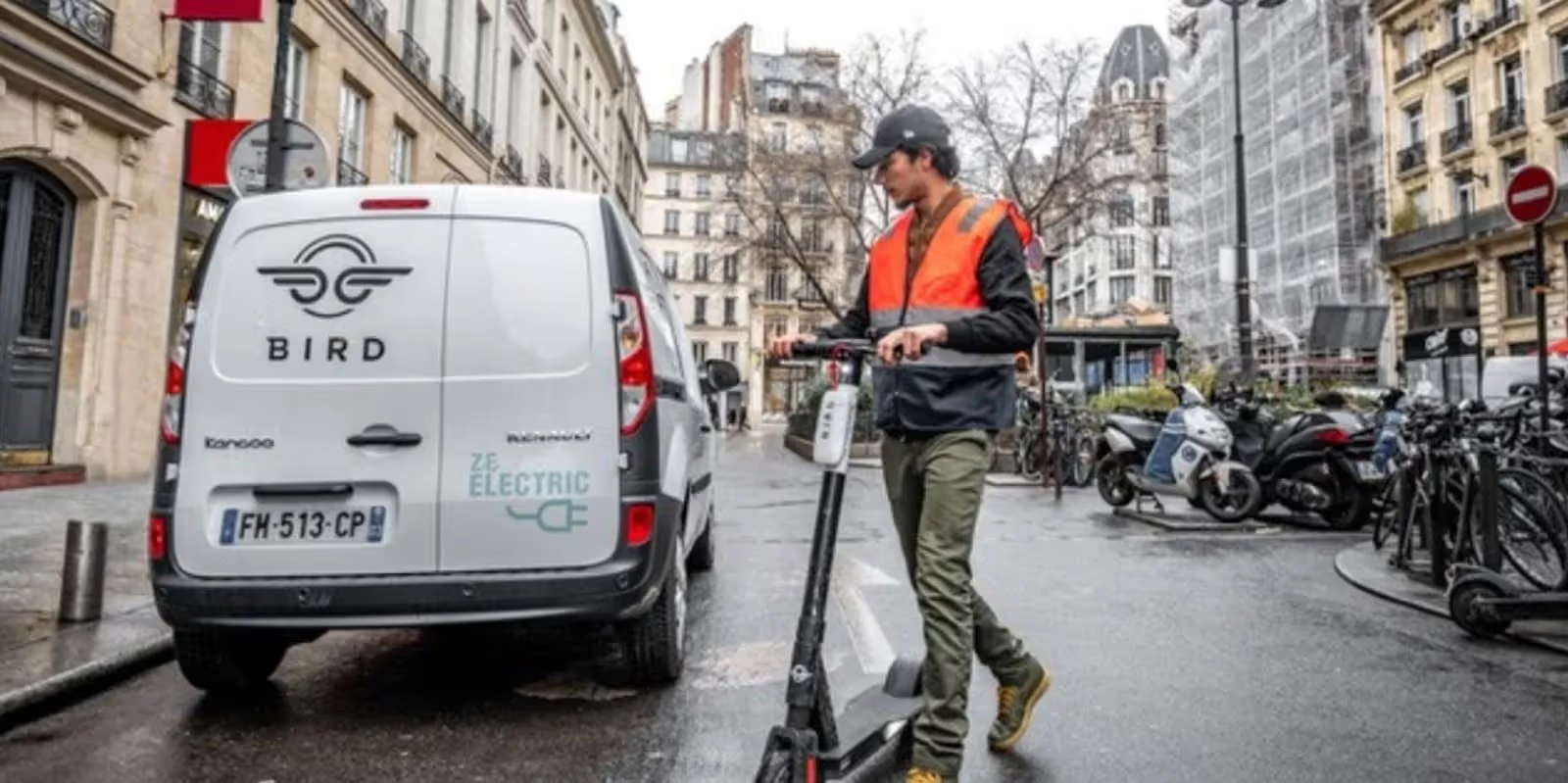
The dockless scooter boom of 2017-2019 ran on gig workers collecting scooters at night and charging them on household sockets. It helped operators scale, but the model collapsed under its own weight: high logistics costs, unpredictable availability, and little control over battery health or safety. Centralised depots solved some of those problems, but they still required vans shuttling vehicles back and forth, expensive, emission-heavy, and difficult to maintain at scale. The next step forward has been to stop moving scooters to power and instead bring power closer to where vehicles operate.
Lime’s Paris Pilot

Paris became an early testing ground for a different operational approach. In 2020, Lime began piloting swappable-battery scooters with “Station F” to assess whether field swaps could reduce reliance on vans and warehouse charging.
By 2024, the company had pushed the idea further with a rider-facing model. In Paris, Lime began installing battery cabinets inside grocery stores, most prominently through a partnership with the retailer Franprix. Riders can locate these stations in the Lime app, stop during a trip, swap a low e-bike battery for a charged one, and receive around 20 minutes of free riding as a reward.
This arrangement changes who participates in fleet operations. Instead of relying solely on staff or gig workers, Lime lets frequent riders do part of the work in exchange for credits. Franprix gains footfall from people entering the store to swap a battery and often buying something on the way out. Lime reduces the number of van-based swaps required and spreads its charging network into spaces that already have power, staff, and long opening hours.
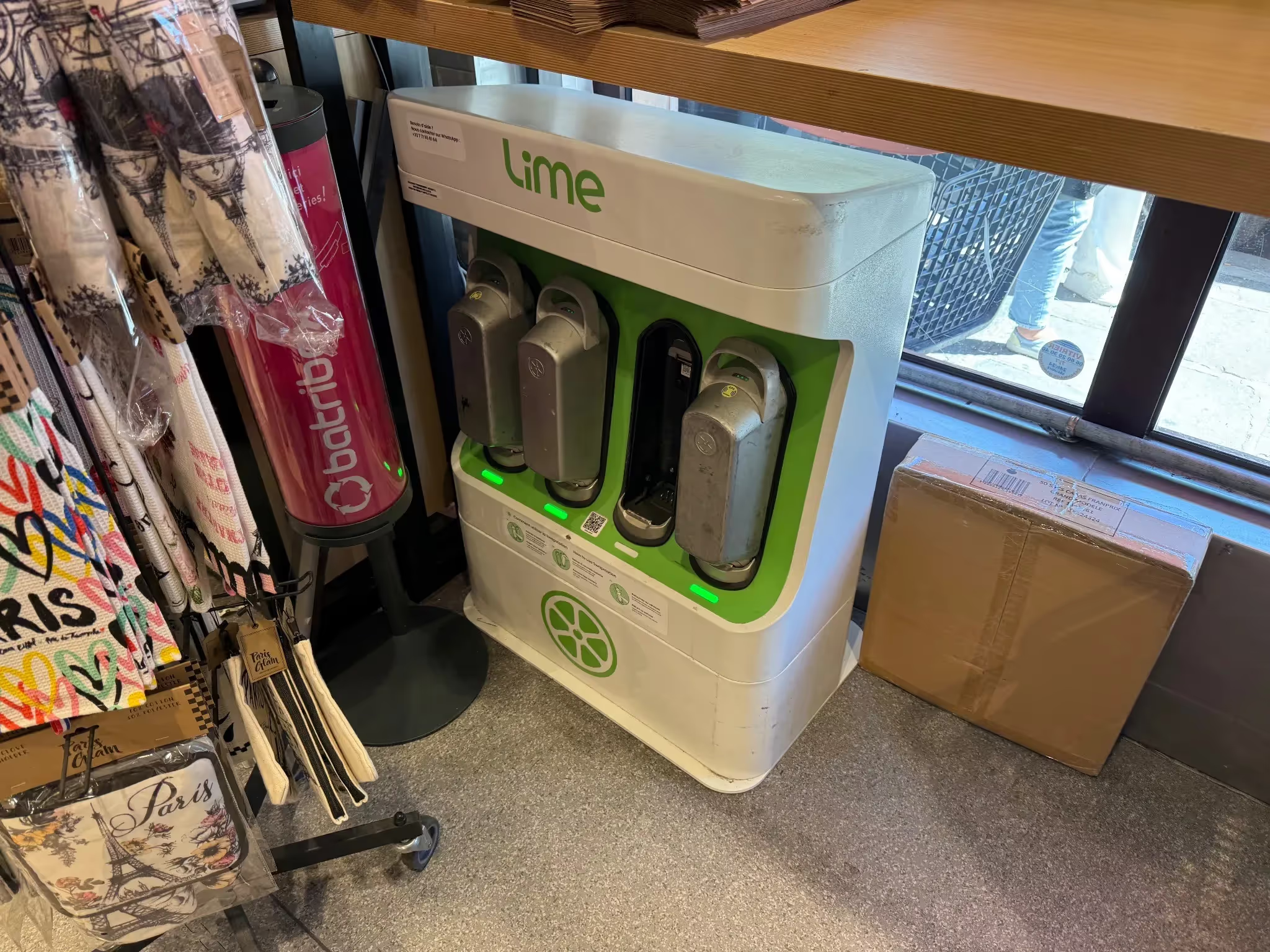
Alongside these cabinets, Lime has introduced a unified swappable battery for its Gen4 e-bikes and e-scooters. A single pack design works across both vehicle types, which means operations teams can carry one battery format and swap in the field instead of returning vehicles to depots. Paris, in other words, shows two sides of the same shift: batteries that move more easily and charging that sit closer to daily life, in familiar places like grocery stores.
Swappable Systems Across Operators
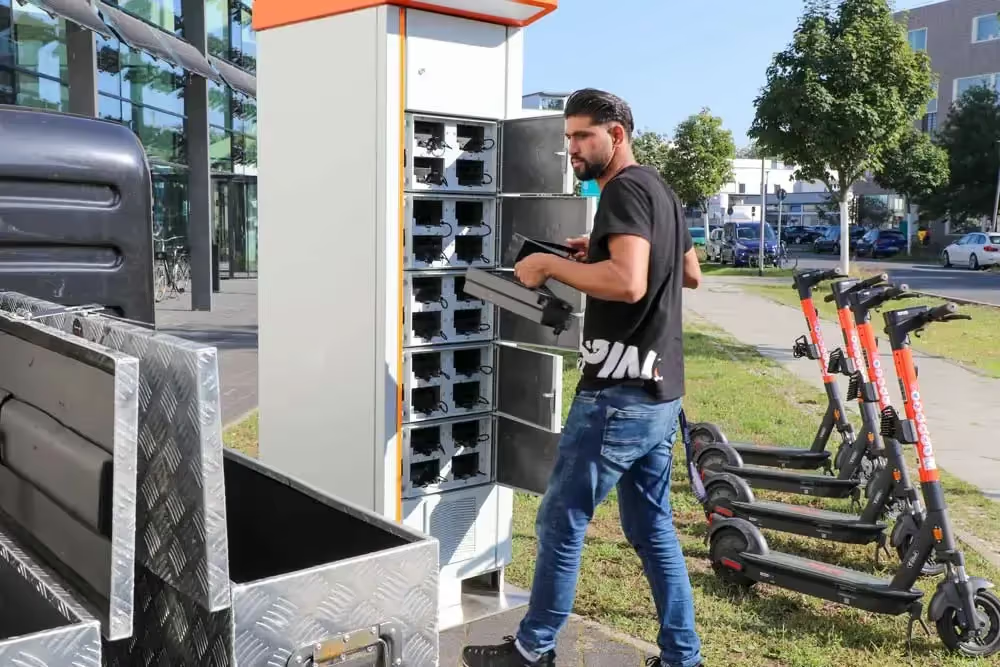
Lime is not alone in this direction. In 2021, Dott, TIER and Voi jointly committed to buying only new scooters with swappable batteries, framing swapping as a basic requirement for future fleets rather than an add-on feature. That commitment signalled that charging hardware and processes had become part of core infrastructure planning, not just a cost line in operations.
Dott highlights swappable batteries as a way to reduce van kilometres and keep more vehicles available throughout the day. It also focuses on repairable battery design, where packs can be opened and individual cells or components replaced, extending lifetimes and cutting waste.
Before its 2024 merger with Dott,TIER built a distributed network around its batteries. The TIER Energy Network (TEN) places automated battery cabinets, known as PowerBoxes, inside convenience stores and other local businesses. Riders can walk into a “SwapSpot”, exchange a depleted scooter battery for a charged one and earn ride credits. Shops gain extra visitors and a visible sustainability narrative; TIER gains fewer depot trips and a grid of neighbourhood charging points.
Voi, by contrast, has often chosen to work with third-party providers like Swobbee. In some cities it uses battery-as-a-service infrastructure, accessing swap cabinets installed and managed by specialist companies instead of building every site itself. The result across all these examples is the same: swappable batteries and distributed cabinets have turned charging from a side activity into infrastructure that operators design and invest in.
Market for Shared Charging Hardware
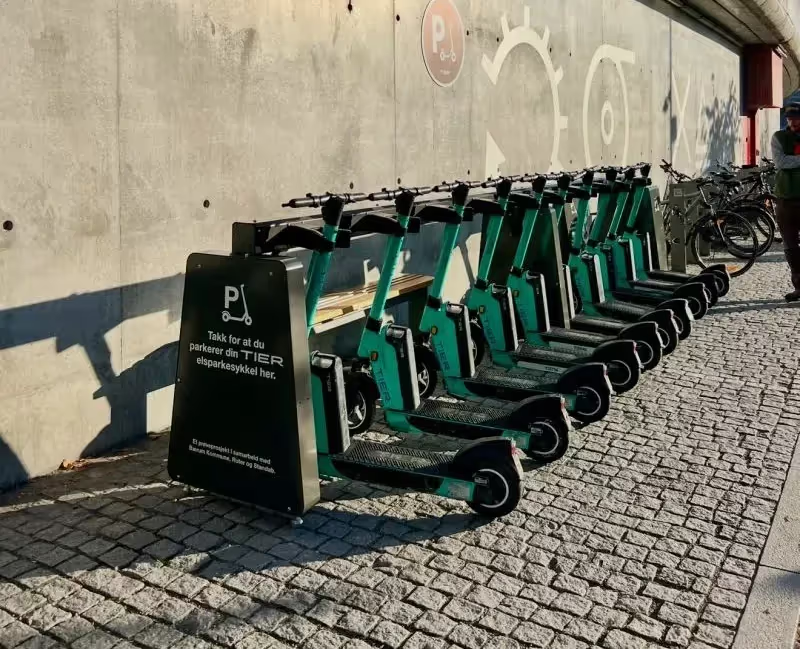
As cities push for more order and less clutter, pressure is growing for operators to share infrastructure rather than deploy their own proprietary docks in every market. This is the space where infrastructure-focused companies are stepping in.
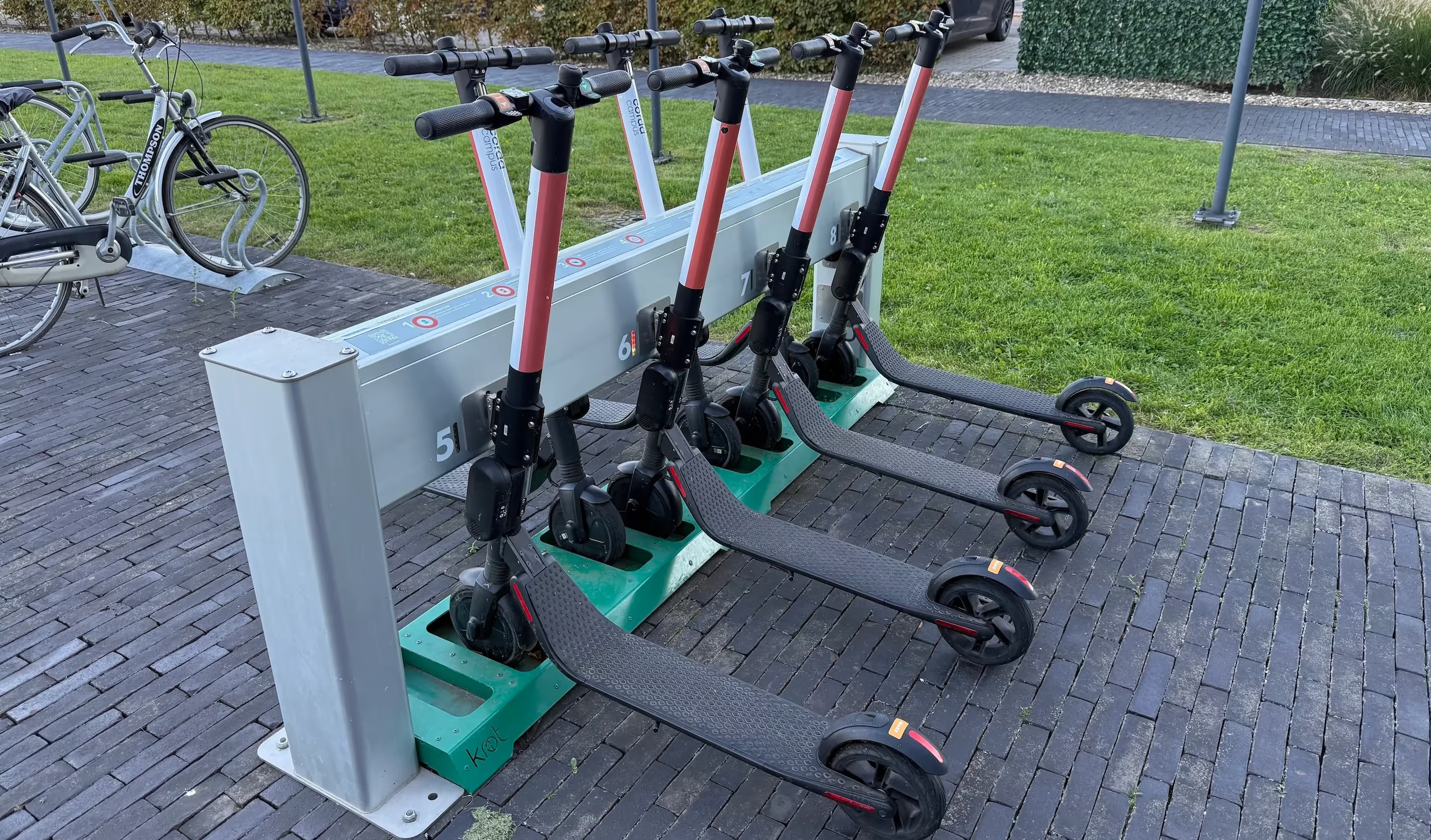
Standab, a Swedish infra-tech startup, has positioned itself at the centre of that shift. The company’s patented Marma station is a robust stand with integrated charging, designed to work with more than 85% of existing scooter and e-bike fleets. Standab secured around €3.6 million in funding to scale a cross-brand parking and charging network to 15 European cities by 2026 and has launched deployments in markets such as Sweden, Norway, Finland, and the UK. Partnerships with operators, including Dott, show how fleets can plug into shared hardware rather than erecting their own stations everywhere.
In Greece, AMCO takes a city-focused approach to charging. The company’s smart e-bike docking and charging system offers locking stands with built-in power and backend software that integrates into wider mobility platforms. Systems like this are often pitched to cities or transport authorities that want secure, tidy parking for shared or public bikes, with the option to link access to existing payment or transit cards.

In Italy, Z‑Plus introduced Dokky, a public e-scooter charging dock, at MME 2025. Dokky is designed for fixed public or private spaces, giving operators and property owners flexibility to host charging and locking infrastructure without building custom docks. Other players, such as Bikeep and ALPEN, provide secure parking hubs with integrated power, further turning micromobility vehicles from street clutter into charge-ready, city-friendly assets.
Docks and Hubs
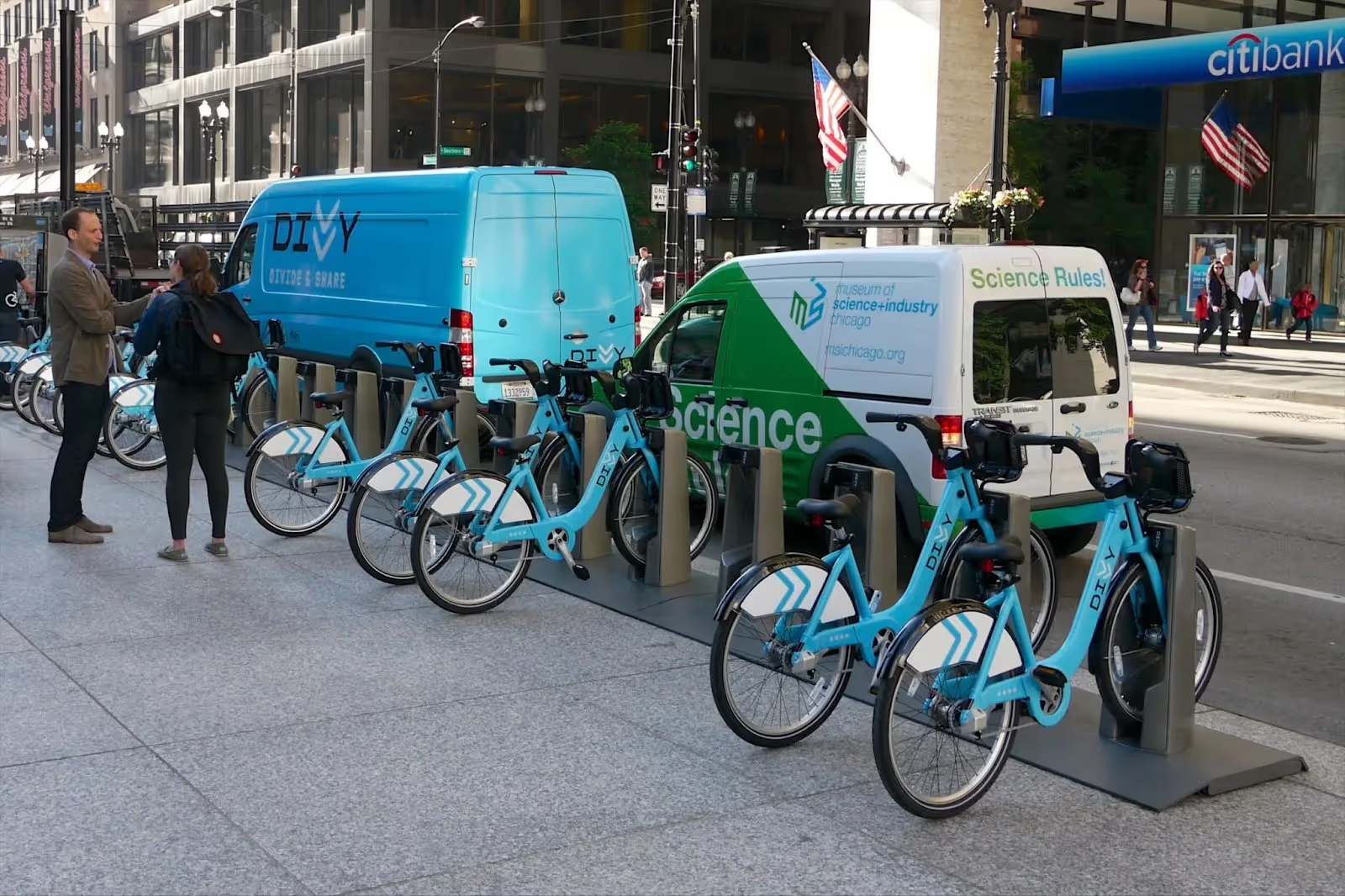
Alongside swapping and third-party docks, classic station-based systems are adapting to electrification. In Montreal, BIXI’s e-bikes charge directly at PBSC’s powered E-Stations, where batteries start charging as soon as bikes are docked. Chicago’s Divvy system is rolling out new stations that can charge docked e-bikes, and, in some pilots, scooters, when connected to the grid, reducing the need for constant battery swaps.
These grids of powered docks effectively act as fixed charging infrastructure, often installed in former car-parking bays or along major corridors. Once they are in place, they serve as both parking and power nodes, knitting micromobility into a more predictable street pattern.
Several cities are also experimenting with multi-modal curbside hubs that combine charging for different vehicle types. In the United States, projects in places like Portland and Arlington County, Virginia, fund curbside “mobility hubs” that bring together shared e-bikes, scooters, cargo bikes and sometimes electric cars next to transit stops. These hubs aim to serve residents who cannot charge at home while helping operators access public charging infrastructure instead of building parallel private systems.
The Wireless Shift
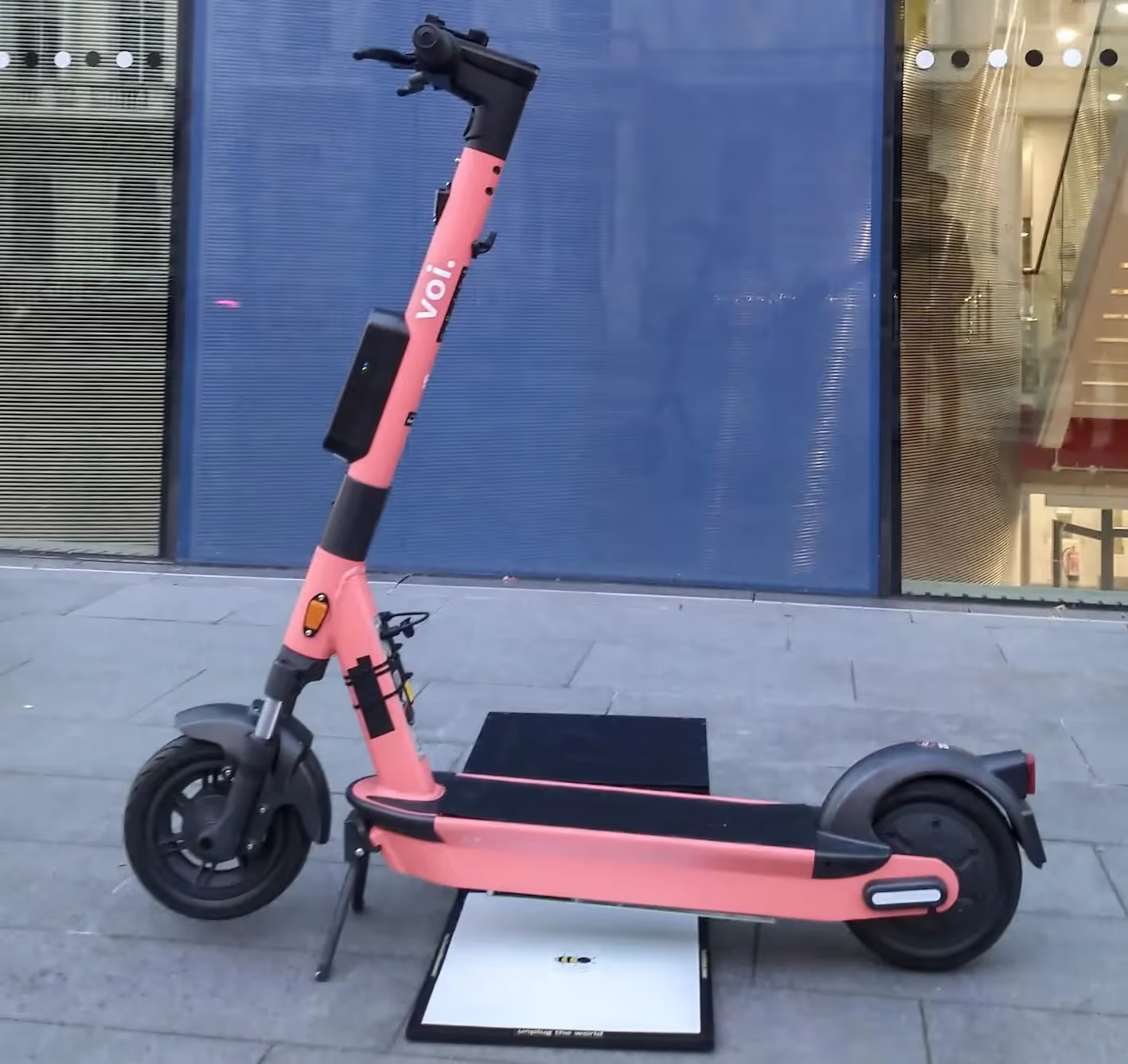
While docking and swapping solve the chaos, they still require user effort. The next leap in infrastructure is inductive wireless charging, removing the need for cables or precise alignment entirely.
Companies like Bumblebee Power (UK) and Voltraware are deploying high-frequency resonant technology. Unlike standard smartphone chargers, this allows scooters to charge even if parked slightly misaligned over the pad. Tiler (Netherlands) has launched pilots embedding charging tiles directly into the pavement. The promise here is "invisible infrastructure": charging pads that sit flush with the sidewalk, reducing visual clutter and vandalism while keeping fleets topped up automatically.
Bumblebee has also worked directly with operators. In 2020, Voi partnered with the company to retrofit shared e-scooters with wireless receiver units and test ground-based charging pads in real-world conditions, including at the University of Warwick campus in Coventry, UK. The idea was simple:install charging pads in designated parking areas so scooters could recharge automatically while parked.
Zurich’s Infrastructure-first Model
If Paris represents the consumer-led model, Zurich represents the infrastructure-led model. The city has rejected the chaotic "free-floating" approach in favor of organized, designated hubs.
The city’s Publibike network, roughly 145 stations with conventional and electric bikes, provides both parking and, in many locations, integrated charging directly in public space. Instead of allowing scooters to scatter freely, the city directs them toward structured zones where charging and storage happen together.
Zurich has integrated micromobility into its broader transport planning. A prime example is the Audi Charging Hub in the city, a high-tech facility that combines rapid electric car charging with swappable battery stations for e-scooters. By mandating that vehicles be parked and charged in specific, high-quality zones (often repurposing car parking spaces), Zurich proves that micromobility can be as orderly and reliable as the train system.
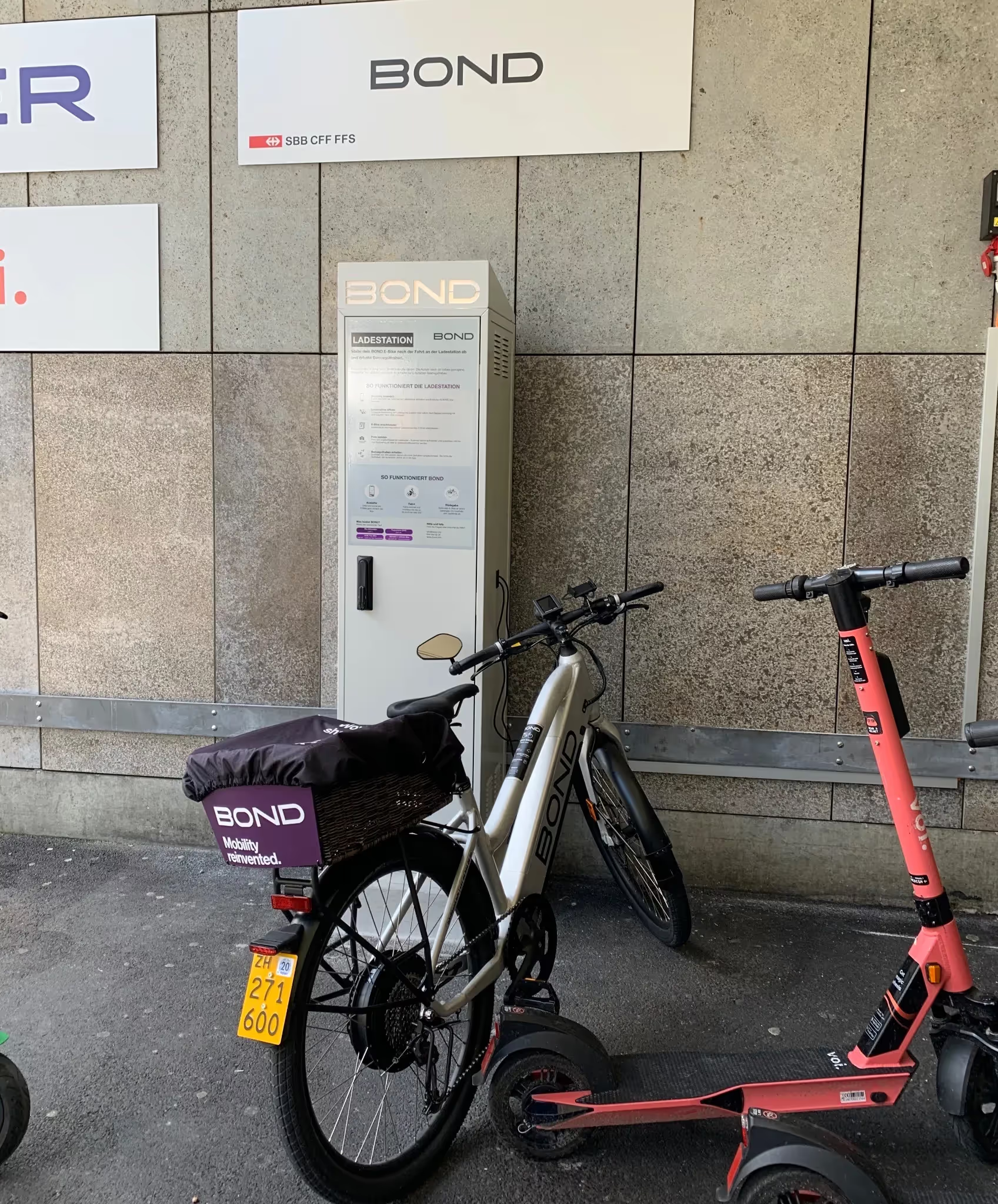
Zurich had a history of experimenting with this kind of ‘hard’ infrastructure. Bond Mobility (formerly Smide) was an early pioneer here, introducing dedicated charging docks for high-speed e-bikes as far back as 2018. While Bond is no longer active, its early investment in structured charging set the tone for Zurich’s infrastructure-led approach.
Building the Market
Across operators, hardware suppliers and cities, one theme repeats: the work of charging has moved out of warehouses and into the urban fabric. Batteries are swapped in grocery stores, charged in shared docks and topped up at curbside hubs. The global micromobility charging infrastructure market is projected to grow from roughly $5 billion in 2023 to over $25 billion by 2030.
As micromobility grows, these networks, not just the vehicles, will shape how well fleets run and how easily cities can live with them. The market is still forming.