.svg)
%2Bcopy.avif)


.svg)


%20(1).jpg)



.webp)


Bird and Lyft Urban Solutions are further deepening their partnership, signalling a continued push toward more integrated, multimodal urban transport across North America. The latest announcements focus on expanding their app-level integration beyond e-scooters in the US and seasonal coordination in Canada, building on the groundwork laid over the past year.
Expanding App-Level Integration in the US
The most notable development is the expansion of Bird e-bikes into the Lyft app, allowing riders to locate and unlock Bird e-bikes directly alongside Lyft’s other mobility options. This follows the 2024 launch of Bird scooters in the Lyft app across more than 25 US cities and reflects a broader strategy to make shared micromobility easier to access through fewer, more familiar platforms. Early results suggest the approach is working: in Denver, Bird e-bike rides increased by over 50% within the first month of integration. The feature is now live in Denver, Nashville, and Cleveland, with additional cities expected to follow in 2026.
Addressing this, Stewart Lyons, Co-CEO of Bird, said, “Integrating our vehicles into the Lyft app gives millions of people simple, immediate access to cleaner ways to move.”
Shared E-Bike Growth and Multimodal Insights
In its 2025 Multimodal Report, Lyft highlighted strong growth in shared e-bike adoption, with a 47% year-on-year increase in shared e-bike trips across Lyft Urban Solutions’ global micromobility network. In 2024, Lyft e-bikes accounted for more than 40.8m trips.
The insights from Lyft’s 2025 Multimodal Report were also explored in this Micromobility Webinar, where Lyft shared how multimodal data is shaping deployment, partnerships, and city strategy.
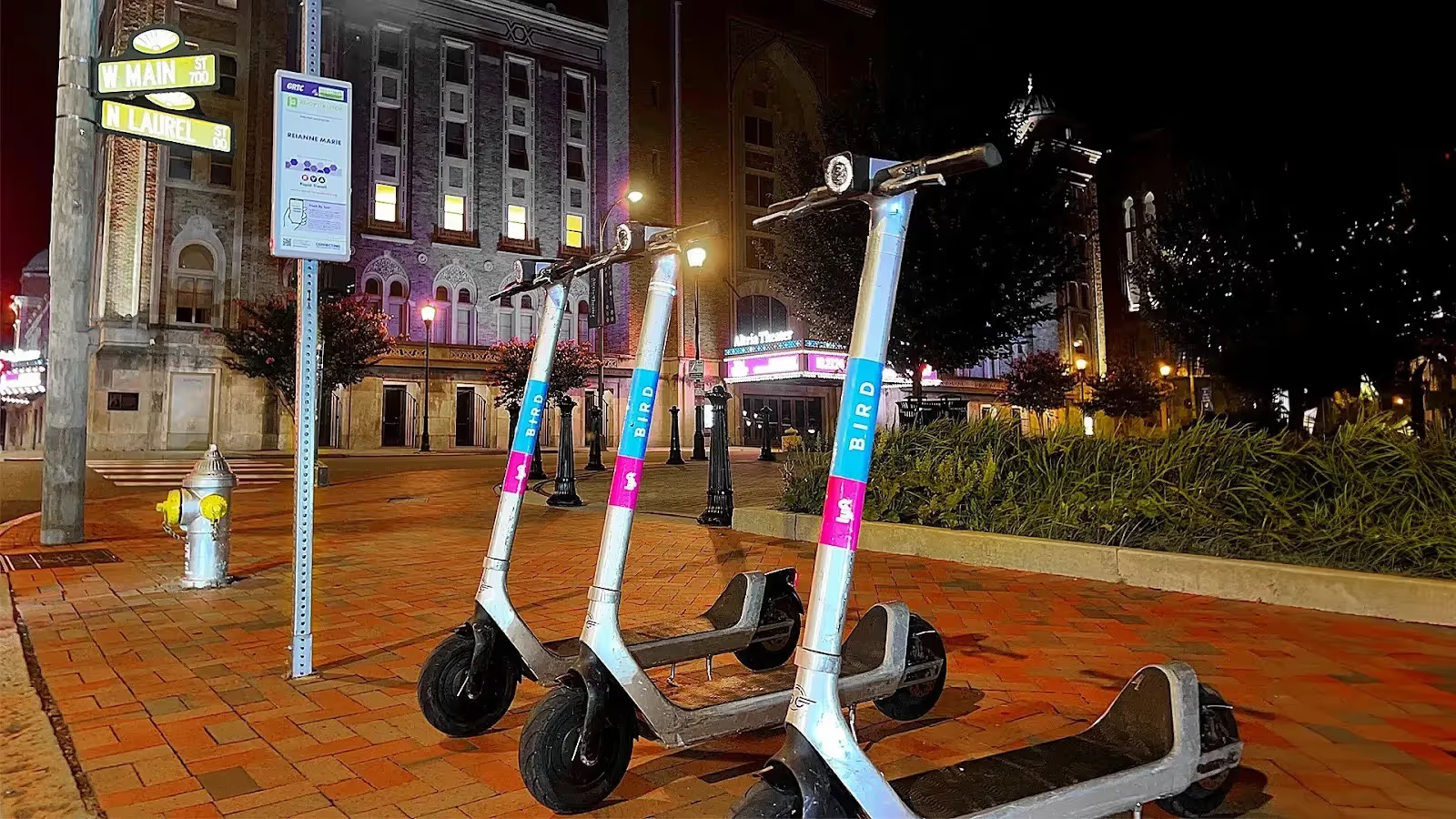
Alongside the US expansion, Bird and Lyft are also piloting a winter-focused collaboration in Canada. In cities where Bird vehicles are seasonally hibernated, users are redirected via Bird notifications to Lyft’s application, offering a seamless fallback during colder months. Cities including Halifax, Edmonton, Ottawa, and Calgary are already part of the pilot.
As per the Multimodal report 2025, in the US, more than a third of shared micromobility riders turn to bikes and scooters when public transit is unavailable, such as during service disruptions.
Bird’s Platform Partnership Strategy
These developments reflect a broader pattern in Bird’s strategy: not just operating vehicles, but positioning itself as a platform partner. A notable example came in late 2024 with Bird’s collaboration with London e-bike operator Forest. In that partnership, Bird enabled its global users to rent Forest’s e-bikes via the Bird app when traveling in London.
Michael Brous, Head of Lyft Urban Solutions, reiterated that, “Lyft is committed to transportation systems that help people move seamlessly.”

Toward Invisible Mode Switching
As shared mobility matures, these integrations point to a future where success may depend less on owning the user interface outright and more on being present wherever urban trips are planned. For Bird and Lyft, the strategy appears clear: meet riders where they already are, and make switching between modes as invisible as possible.