.svg)
%2Bcopy.avif)

.svg)


.webp)
.webp)


Belgium has long been a country shaped by bicycles. For many people, cycling is simply part of everyday life. Over the past decade, however, a new category has quietly changed how many people move across the country, the speed pedelec.
In 2025, this segment reached a major milestone. According to new data published by mobility federation TRAXIO, registrations of speed pedelecs, both new and second-hand, hit their highest level ever. The numbers mark a historic year for fast electric bikes in Belgium.
The 45 km/h difference
They look like bicycles, but they move with the purpose and pace of a motorbike. These are speed pedelecs, electric bikes capable of reaching 45 km/h, significantly faster than standard e-bikes, which are limited to 25 km/h. It allows a rider to cover 20 kilometers in about 30 to 40 minutes, making it a viable alternative to the car.
Belgium was quick to formalize this. In 2016, the government created a legal framework for them. They are classed as mopeds (P-class), meaning riders need a helmet, a license plate, and insurance.
Around the same time, bicycle leasing became popular. Similar to a company car, employees could lease these expensive bikes through their work, paying for them with their gross salary.
The system was further strengthened by the bicycle allowance, which increased to €0.35 per kilometer. Together, leasing and reimbursement created a strong economic case for cycling longer distances.
What began as a niche commuting option gradually became part of everyday corporate mobility planning.
Breaking down the 2025 numbers
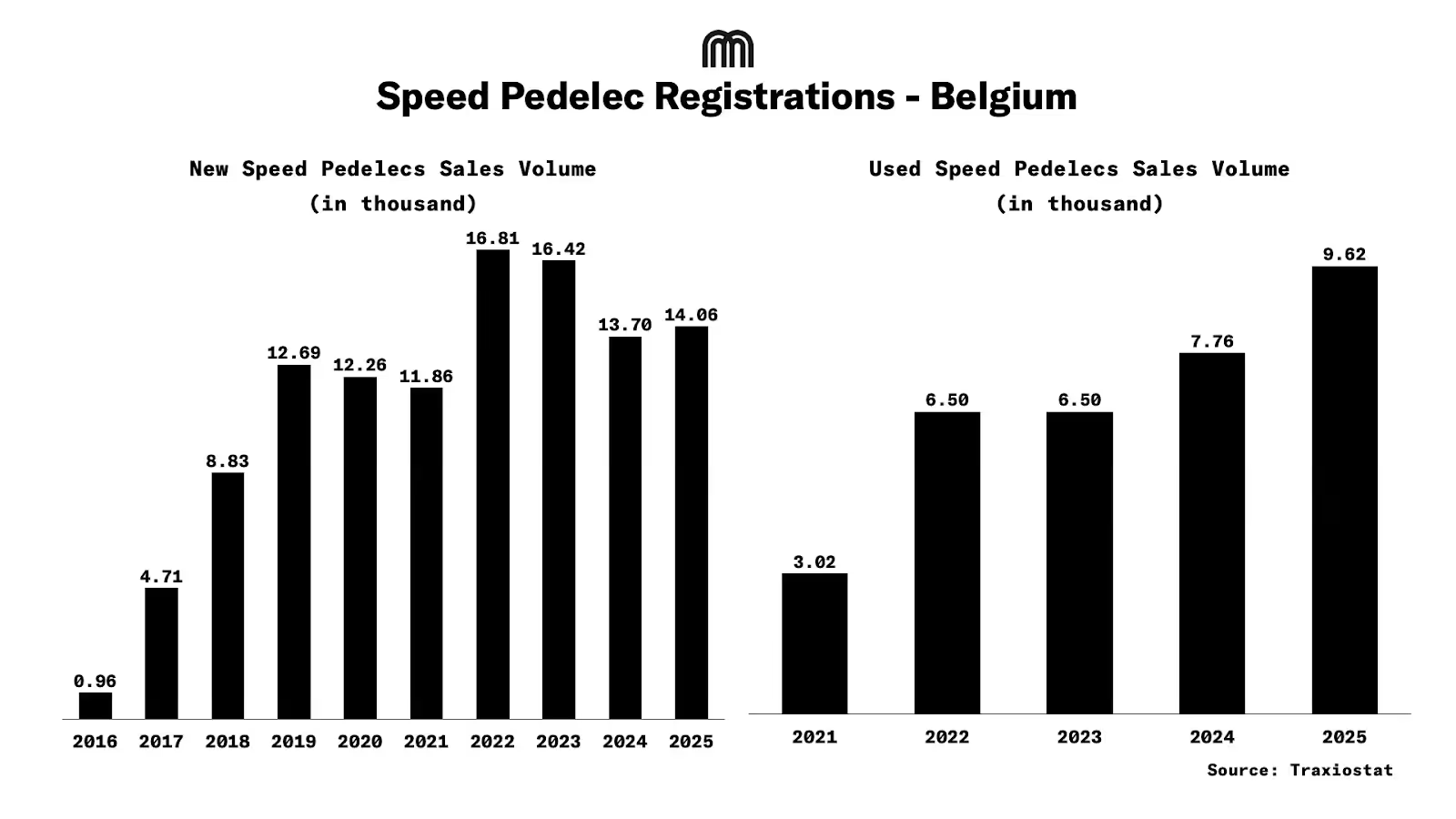
By 2025, the market had reached a new milestone.
According to Traxio, 23.7k speed pedelecs were registered during the year, combining both new and second-hand bikes. This figure surpassed the previous record set in 2022 and marked the highest annual total ever recorded in Belgium.
What makes the result notable is not just the volume, but where the growth came from.
New registrations return to growth
After a period of decline, registrations of new speed pedelecs increased again in 2025. A total of 14.1k new bikes were registered, representing a YoY rise of 2.6%.
The final month of the year stood out. December registrations jumped sharply, with 894 units registered, an increase of 29.8%, as dealers finalized deliveries ahead of new leasing contracts beginning in early 2026.
Second-hand market surges

The most significant movement, however, came from used bikes.
Second-hand registrations reached 9.6k units, an increase of 24% compared to the previous year, the highest level ever recorded for the segment. In total, second-hand bikes accounted for 40.6% of all speed pedelec registrations in 2025.
This growth reflects the natural aging of the leasing market. Bikes leased three or four years ago are now returning and entering a second life. For private buyers, these used models offer access to premium speed pedelecs at far lower prices than new ones.
The shift to leasing
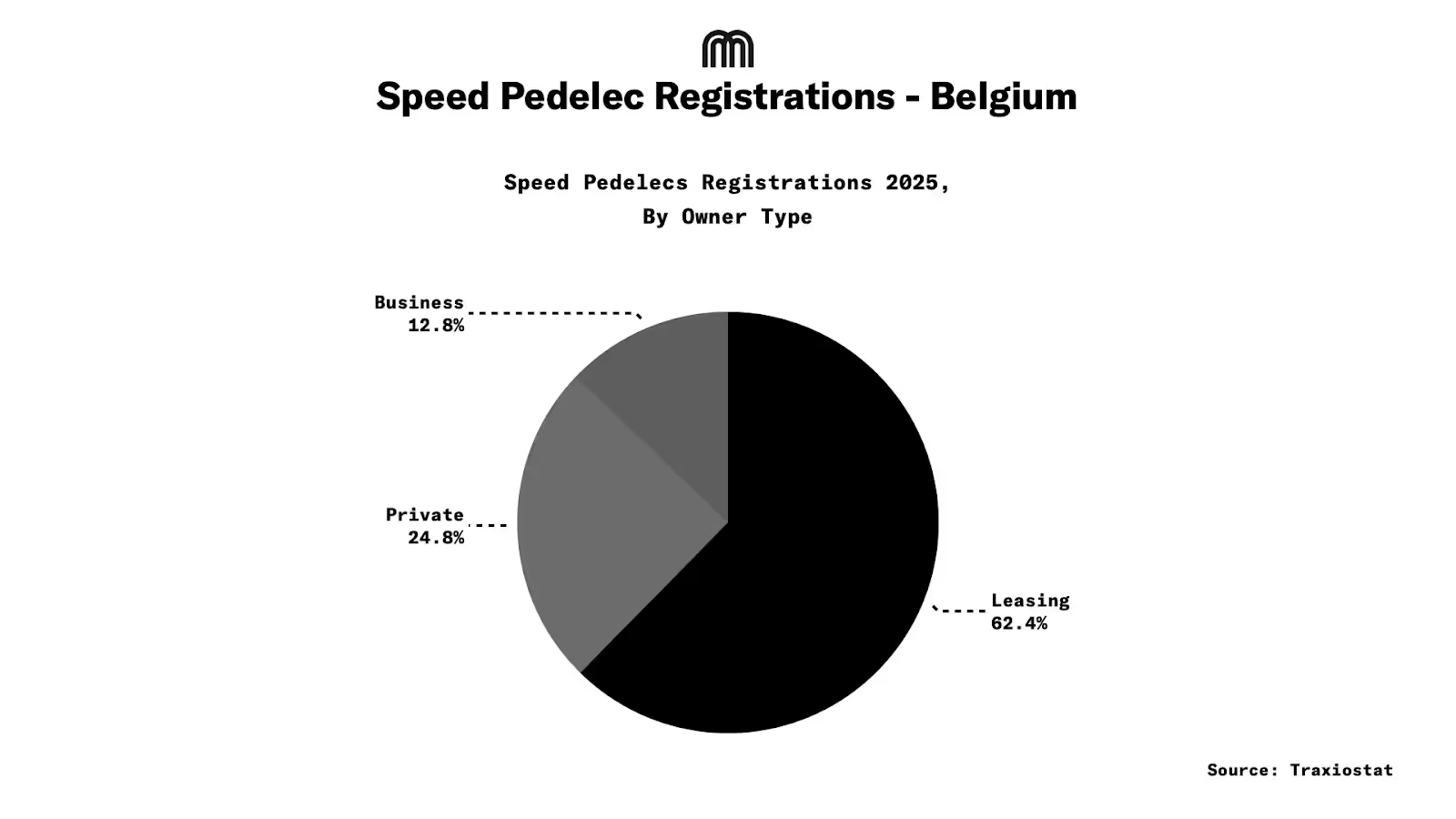
The data also reveals a clear split in who is buying what.
When it comes to new bikes, leasing companies are in charge. They now account for 62.4% of the market. Private individuals are buying fewer new bikes than before. In 2023, nearly half of all new sales were to private buyers. By 2025, that share dropped to just under 25%, following a 22.7% YoY decline in private registrations.
The pattern is simple. Companies mainly lease new bikes and private individuals primarily buy used ones.
The Distinct Flemish market
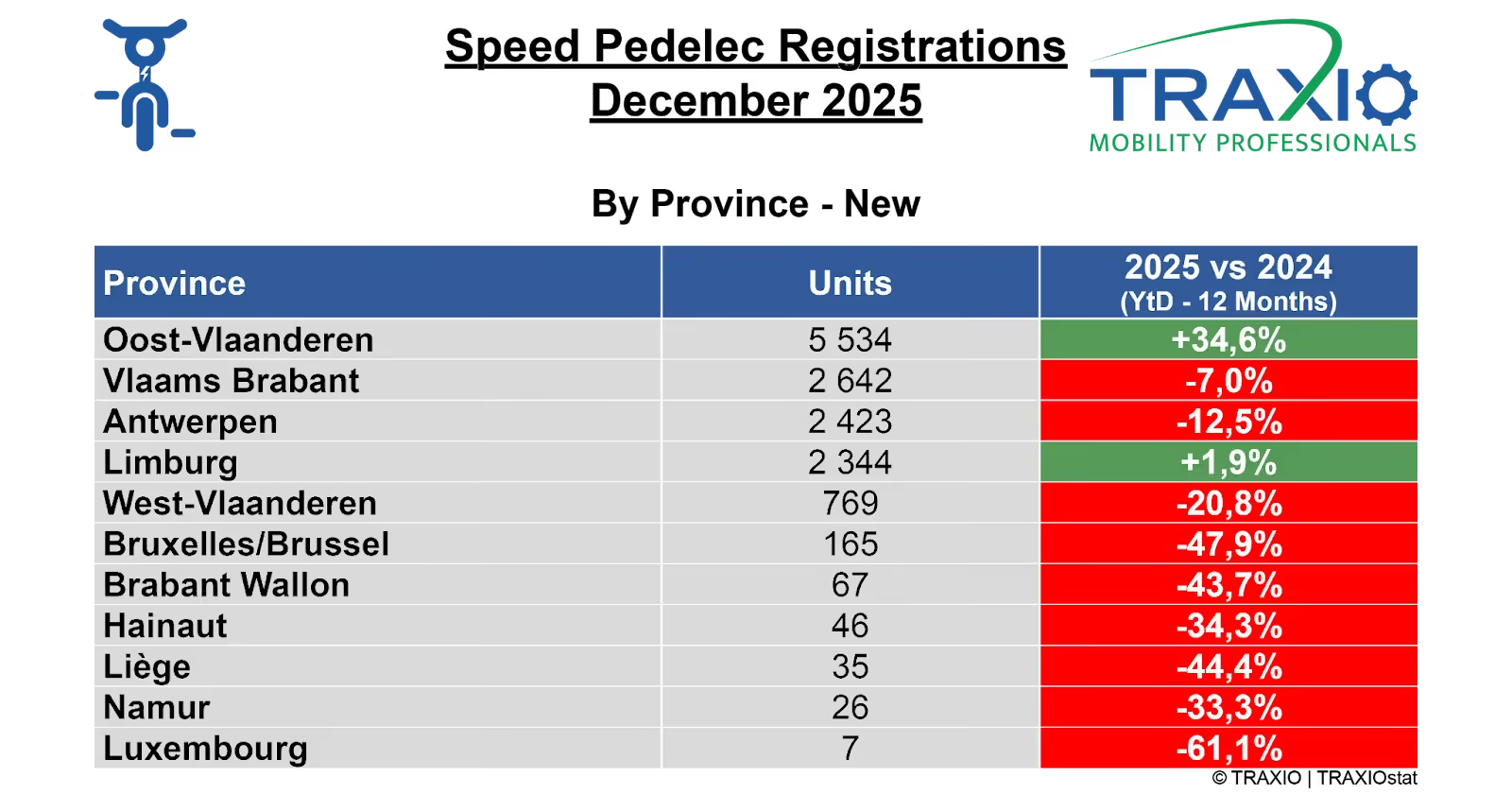
Geographically, speed pedelecs remain heavily concentrated in one region.
In 2025, 97.5% of all registrations took place in Flanders.
This imbalance is influenced by flatter terrain, longer commuting distances, dense traffic corridors, and an extensive network of cycling infrastructure, including dedicated cycle highways, known as fietsostrades.
Within Flanders, East Flanders emerged as the fastest-growing province, recording a 34.6% increase in registrations and overtaking Antwerp as the country’s leading speed pedelec region.
Brussels and Wallonia, by contrast, remain marginal markets. Each accounted for just over 1% of total registrations, 1.3% in Brussels and 1.2% in Wallonia. In Brussels, widespread 30 km/h zones reduce the speed advantage of fast e-bikes, while in Wallonia, limited separated cycling infrastructure continues to restrict adoption.
The market today
The results from 2025 point to a category that has moved beyond experimentation.
Speed pedelecs in Belgium now follow a clear lifecycle. Companies introduce new bikes through leasing schemes. After several years, those bikes re-enter the market and find new owners through second-hand sales.
This circulation has created stability, and that stability is what allowed 2025 to become a record year, even during a challenging period for the wider bicycle industry.
The speed pedelec is no longer a novelty. It has settled into a defined role within Belgian mobility, not as a replacement for all travel, but as a reliable option for longer daily commutes.