.svg)
%2Bcopy.avif)

.svg)


.webp)

.webp)
.avif)

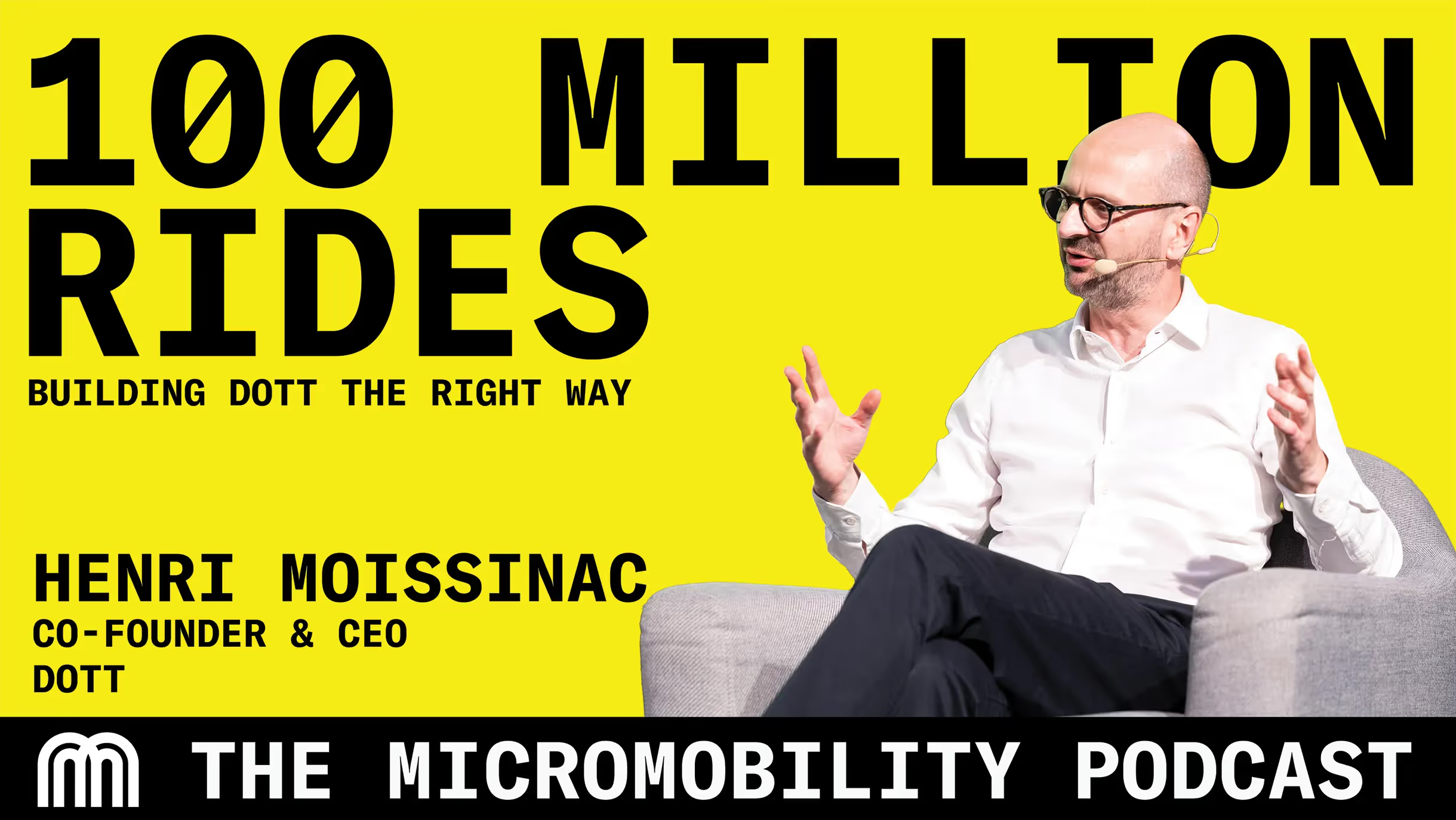
Few founders in micromobility have a background as diverse and technically grounded as Henri Moissinac, the Co-Founder and CEO of Dott. With a PhD in computer science, a dot com exit to eBay, early mobile leadership at Facebook, and global scale work at Uber, Henri has experienced nearly every major technology wave of the past 20 years. Today, he is applying those lessons to one of the world’s largest shared mobility operators.
Dott now operates in more than 20 countries, across roughly 400 cities, with a fleet of over 200,000 vehicles. The company is approaching 100 million annual rides, is EBIT positive, and is nearly free cash flow positive. Yet its path to this point was anything but straightforward.
This is the story of how Dott scaled the right way.
Surviving Before Scaling
When Henri reflects on Dott’s early years, one theme comes up repeatedly: timing. Many competitors were raising enormous amounts of capital and opening multiple cities per week. Dott took a slower, more disciplined route.
Henri recalls advice from his years at Facebook. A great product is not enough. You also need the right timing. MySpace and GeoCities came too early. Facebook arrived just as mobile was taking off. The same pattern, he believes, applied to micromobility.
In the industry’s early days, scooter hardware was fragile, unit economics were weak, and costs ballooned faster than revenue. Scaling too quickly would have killed the company. Instead, Dott focused on longevity. Some people called us the cockroach of the industry, Henri jokes. It never dies and it is always there at the end.
The New Business Model of Micromobility
Fast forward to today and the sector looks completely different. Henri describes three major shifts that have changed the economic foundation of shared mobility.
First, resilience and scale. Dott now has long-term city permits, deep footprints, and a diversified presence. The business can absorb local shocks.
Second, profitable growth drivers. Cities are building more bike lanes. Fewer young people want cars. Software and operational tools are dramatically improving margins.
Third, hardware cycles. Each new generation of scooters and bikes reduces cost per ride and increases reliability. Henri describes a Paris deployment where the same number of rides now requires half the number of battery swaps. The impact on margins is enormous.
This is why modern micromobility can now be financed through debt rather than only equity. Investors trust the future cash flows, something that was unthinkable just a few years ago.
Why Hardware Still Matters
Despite major improvements, Henri believes hardware innovation is far from finished. Better batteries, better saddles, better tires and better durability are all ongoing opportunities. The current generation is the best the industry has seen, but it is only one iteration. Operators now think in cycles, much like airlines refreshing their fleets.
Dott aims to renew about 20 percent of its fleet each year. That pace captures operational gains without the financial strain of replacing everything at once.
Machine Learning Behind the Scenes
One of the biggest levers in Dott’s business today is machine learning. Thousands of simulations run daily to determine where vehicles should be placed, when they should be moved, and how labor should be allocated.
This level of optimization can turn an unprofitable city into a very profitable one.
Dott also uses machine learning to personalize rider incentives, nudging people into passes and predictable usage patterns without sacrificing margins.
The next frontier is what Henri calls AI driven agents. These will automate internal processes, generate daily operations reports, and drive efficiency across the company.
The Biggest Product Friction Today: Parking
When asked about the greatest user experience challenge in micromobility, Henri does not hesitate. Parking.
Finding an empty parking bay is stressful. In some cities, the density is too low. Casual users often do not anticipate the parking step at all. The moment of ending a ride can turn a positive trip into a frustrating one.
Parking is Dott’s major product priority for 2026.
Talking to Users Is a Superpower
One of Henri’s most consistent habits is spending time with riders. Sometimes he introduces himself as the CEO, other times he pretends not to know how the scooter works and asks people to teach him. The feedback he gets powers product and operational insights.
It also helps him stay motivated. When things are tough, he says, talking to users brings energy back.
What Makes Great Founders
Near the end of the conversation, Henri reflects on the people he worked with at Facebook, Uber and other companies. The founders who succeed have two things in common.
They are obsessed in a healthy way. And they are crystal clear about what they want to achieve.
Great communication is part of that clarity. They repeat the same core messages thousands of times. Henri himself is known for sticky sentences like Keep the main thing the main thing and Until the money is in the bank, it is not in the bank.
A Business Development Masterclass
Surprisingly, one of Henri’s superpowers is not product, but business development. He maintains a personal database of fifteen to twenty thousand people he has met over the course of his career. He tracks what each person needs and looks for opportunities to help them.
This is how he has built partnerships, raised capital, and recruited talent. He credits one of his early mentors for pushing him to adopt this practice.
The power of this is empathy. Remembering someone’s needs years later and reconnecting with them creates long term compound impact.
Cities Are the Real Catalysts
Cities like Paris, London and New York show what is possible when political will and infrastructure investment align. What once seemed like a toy is now a fundamental utility.
Every city will eventually look like this, Henri says. Whether privately operated or publicly run, bikes and scooters are becoming essential parts of urban life.
The Road to 100 Million Rides
Dott is close to 100 million annual rides and Henri believes there is enormous room for expansion. Increasing monthly usage per rider, improving reliability, lowering prices through efficiency and making parking effortless are the next big levers.
There is no need for flying bikes or futuristic concepts. The future is in compounding small improvements at scale.
Dott’s journey shows that hyper growth is not the only path to leadership. Sometimes, the companies that win are the ones that remain disciplined, stay close to users, improve relentlessly and survive long enough for the industry to mature.
Building the right company the right way is not glamorous. But it works.