.svg)
%2Bcopy.avif)


.svg)

.webp)

.jpg)
%20(1).jpeg)
.jpg)
If you spend enough time around urban mobility, one thing becomes clear very quickly. The problems are not new. Cities have been talking about congestion, air quality, safety, and climate impact for more than 30 years.
In the 250th episode of the Micromobility Podcast, Prabin Joel Jones speaks with Karen Vancluysen, Secretary General of POLIS Network, about how cities are actually dealing with these long standing challenges in a moment of rapid change.
Karen has spent over 20 years at POLIS and more than 30 years working in mobility. POLIS itself has been around since 1989, bringing together cities to share what works and what does not. That context matters, because this is not a conversation about trends. It is about how cities evolve over time, often slower than expected.
At one point, a policy document from 1999 was revisited. The goals written then sounded almost identical to what cities are still trying to achieve today. That realization sets the tone. Progress is real, but it has been gradual, and sometimes frustratingly so.
When micromobility showed up
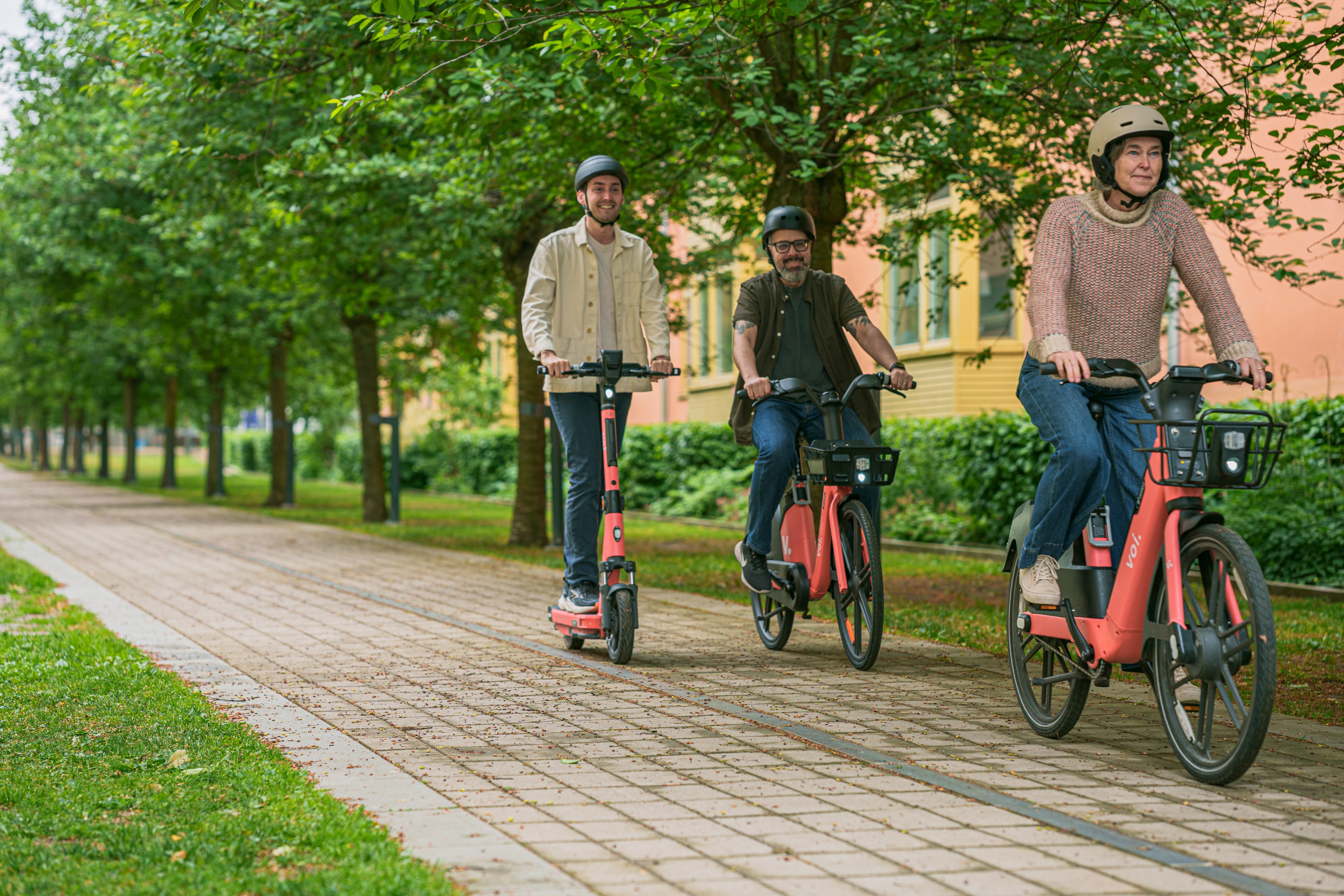
Micromobility did not arrive quietly. Around 2018, shared e scooters appeared across cities, and almost overnight, they became impossible to ignore.
Many assumed they would fade away like earlier devices. But some things stayed. E scooters found a role, and e bikes went even further. They expanded what cycling could mean in a city.
The idea that most bike trips are limited to 5 km started to shift. People were traveling farther, more often, and in a way that felt accessible.
This was not just about new vehicles. It was about changing habits.
The messy early phase
The early days were not smooth. Cities allowed open entry, and operators flooded in.
There were too many vehicles, too many companies, and very few rules. Streets felt cluttered. Parking became a problem. People got frustrated.
Cities responded the only way they could at the time. They reacted.
Over time, things started to change. Cities began limiting the number of operators. They capped fleet sizes. They started using data instead of guesswork.
It became less chaotic, but only after a period of trial and error.
The real problem was space
It is easy to blame a scooter parked badly. But that misses the bigger picture.
The real issue has always been space. Cities have spent decades prioritizing cars. That did not change when micromobility arrived.
What micromobility did was expose that imbalance.
In cities where there were no bike lanes or proper parking, problems showed up quickly. In cities that invested in infrastructure, the same vehicles worked much better.
The difference was not the vehicle. It was the environment around it.
Small shifts that changed things
Some of the most effective changes were simple.
In many streets, one car parking space was removed and replaced with parking for multiple bikes and scooters. It sounds small, but it made a difference.
It reduced clutter. It made parking predictable. It showed a shift in priorities.
Cities also moved away from extremes. Fully free floating systems created disorder. Fully docked systems felt restrictive.
What started to work was a middle ground. Designated hubs with some flexibility. A mix of physical space and digital enforcement.
It was not perfect, but it was better.
Learning how to use data
Data became part of the conversation early on, but cities were not always ready for it.
Some asked for too much without knowing why. Others did not have the tools to use it.
Over time, that started to change. Cities began focusing on what data they actually needed. They used it to manage fleets, enforce rules, and understand how streets were being used.
There is still a gap. Operators are built around data. Many cities are still catching up.
But the direction is clear. Better data leads to better decisions.
The cost question
Micromobility is not cheap. For occasional use, it works. For daily commuting, it adds up.
This raises a bigger question about access.
Instead of subsidizing everything, cities are starting to think about where support is actually needed. Urban centers might sustain themselves, but suburban and regional areas are different.
In Antwerp, a regional system covering 41 municipalities shows what is possible. 2 out of 3 trips happen outside the city center. Around 13% of trips replace car journeys.
That is where micromobility starts to shift behavior in a meaningful way.
What leading cities are doing differently
Some cities have figured out how to move faster.
Antwerp uses data in real time and adjusts fleets based on actual demand. Oslo has expanded its system from 8k to 16k shared e scooters as of April 2025, especially in outer districts.
Rome is focusing on integration, making micromobility part of the public transport experience. Leuven has taken a different approach, investing in infrastructure and subsidies while avoiding free floating systems altogether.
There is no single formula.
But the cities that are doing well tend to think in systems, not just individual solutions.
New vehicles, same questions
New types of vehicles are starting to appear, including microcars.
They are smaller than traditional cars, but they still raise important questions. Where do they fit. How much space should they take. Who should use them.
There is also a risk. If these vehicles replace walking or cycling, especially among younger users, they could push cities in the wrong direction.
Every new form factor brings the same question back. What kind of city are we building.
Looking ahead
The next 10 years will not be straightforward. There is economic pressure, political change, and growing polarization.
But there is also opportunity. Moments of crisis often push cities to move faster.
The biggest lever remains the same. It is not a new technology. It is space.
Cities that continue to take space away from cars and give it back to people will see the biggest impact.
Micromobility will play a role, but only as part of a larger system. It works best when it connects with public transport, reaches beyond city centers, and becomes part of everyday life.
In the end, the cities that win are not the ones chasing every new idea. They are the ones making consistent, deliberate choices about how their streets should work and who they are for.