.svg)
%2Bcopy.avif)

.jpg)
.svg)

%20(1).jpeg)
.jpg)


.webp)
One of the things I love most about micromobility is the variance: it’s a little different everywhere. This isn’t the same for a lot of other consumer-focused technology. Take for example a laptop or amplifier; it’s likely you’ll use these devices in pretty much the same way whether you’re in Amsterdam or Adelaide.
The same isn’t true of e-bikes.
Of course, if you’re being glib, the nature of these vehicles is the same wherever you are: you sit on them and move the pedals to go forward. But that’s not really telling the full story. Because e-bikes operate in conjunction with the local geography and culture, their usage and uptake is subtly different from market-to-market.
Getting and riding an e-bike in the Netherlands is very different from doing so in the U.S., for example.
And one of the joys of writing about micromobility is you can dive into this journey and look at, say, the evolution of e-bikes in Australia. So we’re going to do precisely that.
E-bikes in Australia: A brief history
The Australian e-bike market traces its origins back to 1999 with the arrival of the first commercial shipments of e-bikes. At first the market was a little bit “everything goes,” but it wasn’t long until regulations came in. One of the most important of these occurred in 2005, which saw an introduction of a 200W limit for throttle-operated cycles.
The real turning point arrived in 2012 with the introduction of the "Pedelec" category. This shift raised the power limit to 250W for pedal-assist systems. Eventually, this led to the 2014 adoption of the EN15194 standard from Europe, which mandated a motor cut-out speed of 25km/h.
Australia is an interesting example because although there was a lot of regulation in the country, e-bikes weren’t particularly popular. In fact, they were a niche concern, so much so that there were roughly 9,000 e-bikes imported into the country in 2017.
Things, though, were set to change - and change they did.
The e-bike boom
By 2022, the Australian e-bike industry had witnessed a staggering 2,100% surge in growth from 2017, with import volumes skyrocketing to nearly 200,000 units.
Figures from Bicycle Industries Australia (BIA) and the Federal Chamber of Automotive Industries (FCAI) showed that in the financial year 2021/22, adult bike sales exceeded new car sales by 12% - the first time this happened since 2011.On top of this, e-bike purchases in Australia rose by 322% between 2020 and 2022.
Would you like some more stats? Well, you’re in luck, because e-bike sales also tripled from 2016 to 2019, growing faster than any other bike segment.
This rapid expansion prompted even stricter federal oversight, including the 2021 limitation of start-assist throttles to 6 km/h, as well as a 2023 crackdown on high-powered machines that exceeded the 250W threshold.
To sum that up: around the time of the pandemic and much like many other parts of the world, the Australian e-bike market exploded. The question, then, is did it continue.
The current state of things
Without wanting to destroy the suspense too much, the answer is yes: the Australian e-bike market is in rude health at the moment. In 2024, for example, over 260,000 e-bikes were imported into Australia, a 60,000 rise from 2022. The sector is still growing.
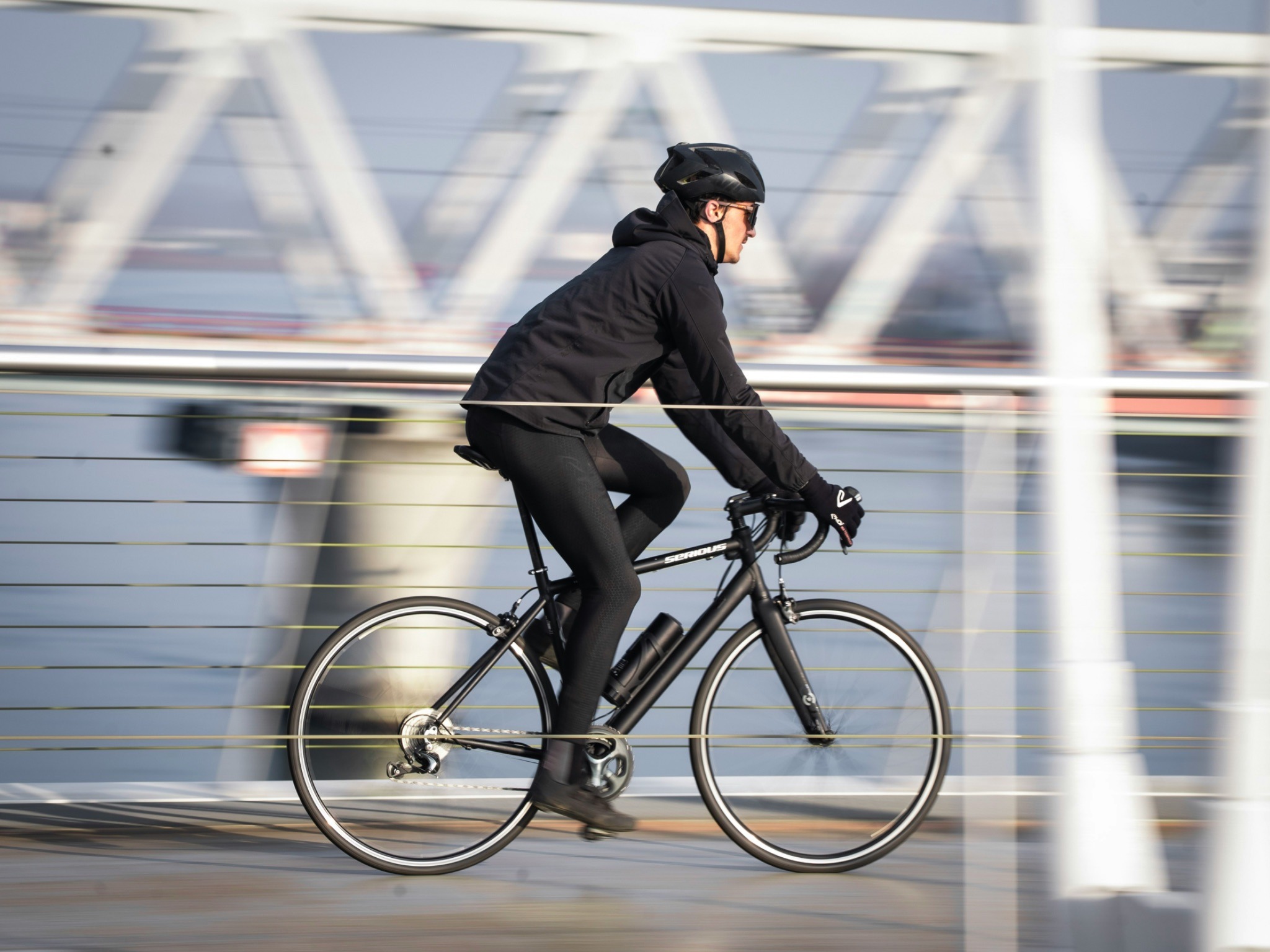
Personal use leads the Australian e-bike market. Precise figures are hard to get down specifically, but some position this as between 35% and 45% of e-bikes being used by people. This is broadly similar to Europe, which according to some reports puts “personal and family riding” to make up 52% of e-bike share.
It’s unsurprising, of course, that the areas that e-bikes are popular in are the built-up areas, with Sydney, Melbourne, and Brisbane dominating the market.
A big portion of this success comes from the fact that the Australian government is supporting this shift. We’ve seen before in places like Canada that for biking to be successful there needs to be a collaboration between the public, companies, and government - and this is something that appears to have happened in Australia.
For example, there’s Adelaide’s ongoing $500–$1,000 e-bike rebates, or Queensland’s 2024 E-Mobility Rebate Scheme. While initiatives like the National Electric Vehicle Strategy, are encouraging a shift to low-carbon transport. The ingredients are all there for future growth.
What comes next?
Estimates for the coming years for e-bikes in Australia are strong. The e-bike market generated a revenue of $1,029.2 million in 2025, and is expected to reach $3,414.2 million by 2033. Alongside this, it’s expected to grow at a CAGR of 15.5% from 2026 to 2033.
Ultimately, although it took a little longer than Europe for e-bikes to take off, the combination of consumer hunger and government support catapulted this mode of transport into the heart of Australian cities. Of course, it’s hard to predict precisely what’s going to happen anywhere, but all the ingredients are there for the Australian e-bike market to go from strength-to-strength.
And that’s another joy at the heart of micromobility: we’re only just getting started.
Cover image credit: Unsplash