.svg)
%2Bcopy.avif)


.svg)


.jpg)

.webp)
.webp)

Living in the Netherlands, one of my favourite games to play is “Spot the Difference.” Not so much about cultural differences (although you’re unlikely to see pickled herring on street corners in many other nations), but rather what is it about Dutch cities that makes biking so prevalent?
It’s a question that’s endlessly intriguing, and one that’s a key theme in much of my writing. The boring answer is “lots of things make the Netherlands a micromobility hub,” but that doesn’t really scratch the itch. Yes, there are lots of factors, but it’s the specifics that help create the full picture.
Like parking.
It’s something I noticed on a recent trip back to London. After spending a couple of days around the city, I realised something: there aren’t many bikes around. Sure, there are plenty on the roads, but not the streets themselves. There’s nowhere to put your bike.
Whenever you go out in Amsterdam, you’ll be hard pressed to find a street that doesn’t have an entire segment devoted to bicycle parking. The city doesn’t just have bike racks dotted along every road, but also huge complexes in places like Centraal Station or Leidseplein that can deal with thousands of vehicles.
So, could this be the secret sauce? Maybe bike parking is what separates a good city for biking from a great one.
How can bike parking help?
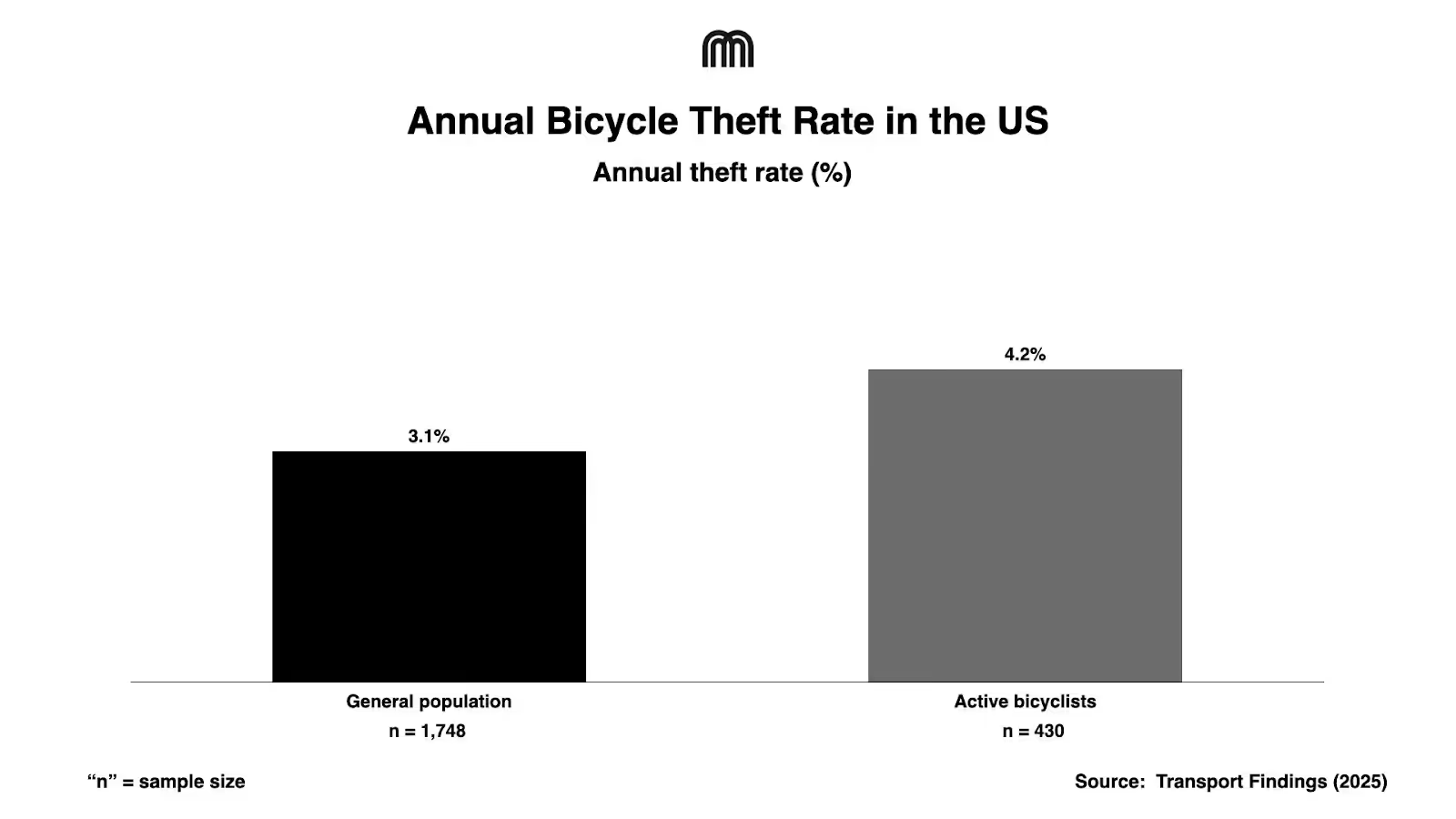
Often, one of the most talked about elements of providing good parking is reducing thefts — an issue that has a huge impact on bike owners. It’s estimated that in the US, the average annual impact of bike theft is around $1.4 billion, with about 2.4 million bicycles stolen each year.
That, readers, is a lot of money and hassle.
It’s not solely a US phenomenon either. London also suffers from a lot of bike theft, as this graph covering January to July in 2023 shows:

On average, in London there are around 20,000 bikes stolen every year. Undoubtedly this has a financial impact, but the real negative comes on how it impacts people’s behaviour. For example, a 2024 study from the Journal of Sustainable Transportation found that 45% of people either reduced or stopped cycling altogether post bike theft.
The question, then, is whether or not bicycle parking has an influence on bicycle theft.
Can bike parking stop theft?

Answering this question is tougher than it seems. There are some studies, such as this paper entitled Bicycle parking security and built environments, which appears to suggest the opposite: more bicycle thefts happen at sites where there are bike racks installed. It’s somewhat of a honeypot effect, where a high concentration of an item attracts professional thieves.
Further research highlights the complexity of this issue. For example, research from the European Cyclists Federation found that while bikes are more likely to be stolen in public places, these are often in areas that aren’t solely dedicated to bike parking, such as lampposts and fences. But bikes are still stolen. Seemingly in higher concentrations when there is parking.
In all honesty, it appears that security isn’t actually a benefit of bicycle parking infrastructure. Maybe, then, it’s not that important.
Oh, but there are some benefits to bike parking though
While we may think of security as the key reason to lock a bike up, there’s more going on beneath the surface. For example, a study from Sustrans found that 47% of people on low incomes said they would start cycling or cycle more if they had a place to park at home that was convenient and secure. In a sense, because parking locations feel secure, people feel more comfortable using them.
There are also some economic benefits in this mix. Research from Transportation Alternatives (TA) found that converting one car parking space into a "bike corral" (parking for 10-12 bikes) generated 3.6 times more spending at local businesses. Fundamentally, it allowed more people to easily shop at a location than a single car could.
What this comes down to is people like being able to park their bikes somewhere. This not only has statistical backing from the studies above, but there’s a colloquial element here too: it’s nice putting your bike in a dedicated spot when you go out. It makes it feel like the city wants you to cycle, and makes your life easier.
Parking culture is cycling culture
It’s likely a chicken-and-egg situation, but it’s little surprise that the places with the biggest biking cultures also tend to have the best bike parking infrastructure.
The Copenhagenize Index 2025 - EIT Urban Mobility Edition report ranks the world's most cycle-friendly cities. The top three overall were, in order, Utrecht, Copenhagen, and Ghent. What’s interesting is that two out of these also topped the list for cities with the most secure bicycle parking, with Utrecht offering 89 spaces per 1,000 inhabitants, Osaka with 78, and Ghent with 68.
Of course, the best cities for cycling will also have the best cycling infrastructure, but that doesn’t mean you can overlook how important bike parking is.
We’ve mentioned before that if you want people to cycle, you have to build bike lanes. This is undoubtedly true, but I think there’s a deeper element to this. Bike lanes are a key tool for commuting, but they aren’t so useful for creating a bike-friendly city. For that, you need to make it possible to go anywhere in an urban environment on a bike, which means you need somewhere to park.
Bike parking alone might not create a cycling city, but you won’t find many cycling cities without good bike parking.
Cover image credit: Garrison Gao, Pexels