.svg)
%2Bcopy.avif)

.svg)


.webp)

.webp)
.avif)
More residents across Flanders are choosing bicycles for everyday trips. According to the latest data, the region now sees about 40k extra cycling journeys every single day. This growth comes as bicycle use rose to 18.5% of all trips in 2025, up from 18% just 3 years ago.
A key indicator of this success is the growing public approval of the local infrastructure. Currently, 44% of people living in Flanders now rate their cycling infrastructure at 7 out of 10 or higher. This is a notable increase from 40% in 2022. The findings are part of the FietsDNA 2025 survey by Fietsberaad Vlaanderen, which gathered responses from more than 3k residents and shows that more people are cycling more often.
“We are setting the goal for a 50/50 modal shift in Flanders. We want half of our journeys to be sustainable,” wrote Flemish Minister of Mobility Annick De Ridder in the report. “By 2040, 30% of journeys should be by bike. We are already on the right track, but we must continue to invest in our infrastructure.”
To support this goal, governments across Flanders currently spend about €300m each year on cycling projects. Furthermore, the Bicycle Fund for local authorities is set to increase to €25m annually starting in 2026.
A Habit on the Rise
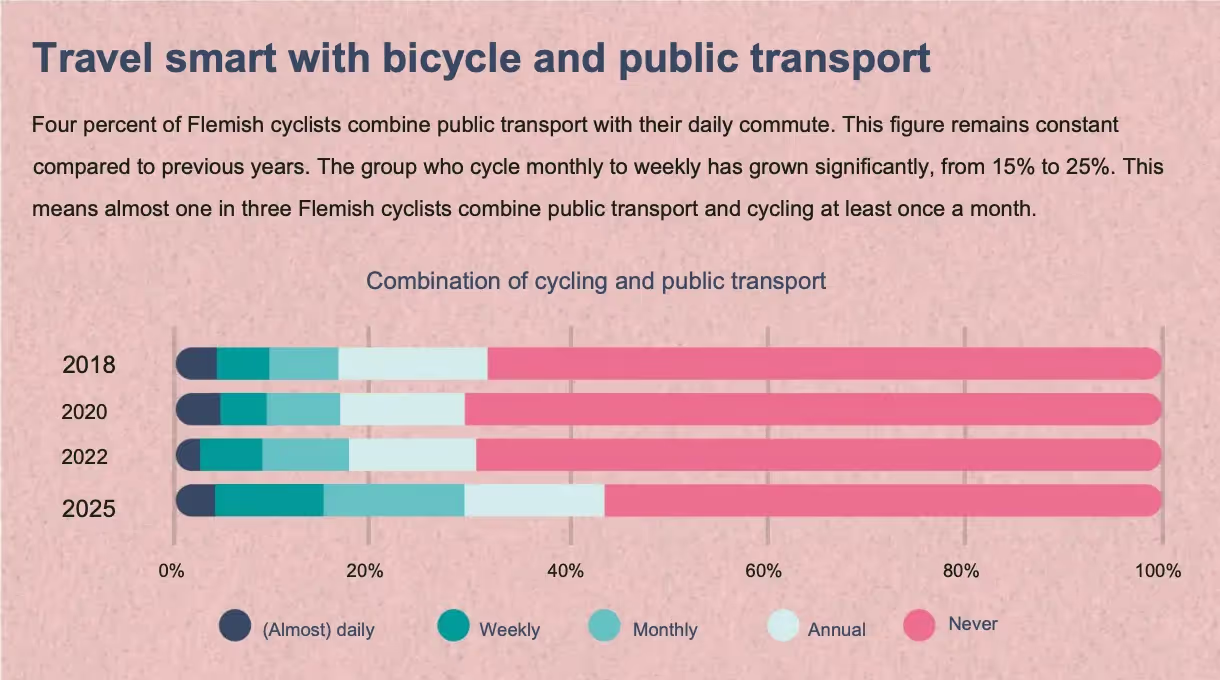
The data shows that cycling is becoming a regular part of life for more people. The group of residents who cycle at least once a week has jumped from 15% to 25% since 2022.
What people are riding is also changing. For the first time, electric bicycles account for more than half of all new bike sales at 51%. These e-bikes are no longer just for certain age groups; they are popular across the board and play a massive role in long-distance commuting.
This shift is also reflected in the wallet. On average, residents now pay €3.9k for an electric bike and €1.6k for a traditional bicycle. The streets are also seeing more variety, with cargo bikes, folding bikes, and racing bikes becoming common sights.
Infrastructure Success and Growing Pains

One of the biggest successes in recent years is the expansion of cycle streets, where bicycles have the right of way. The total length of these streets grew from only 54 km in 2019 to 1.1k km in 2024. Currently, 240 municipalities have at least one of these priority roads.
Despite this progress, there is still pressure to do more. Only 4 in 10 people are fully satisfied with the width of existing cycle paths. Parents especially worry about having enough space to cycle side by side with their children.
The mix of fast e-bikes and slower traditional bikes is another concern. Half of the residents worry about safety when bikes of different speeds share the same lane. As a result, some traditional cyclists say they avoid certain routes to stay away from faster riders.
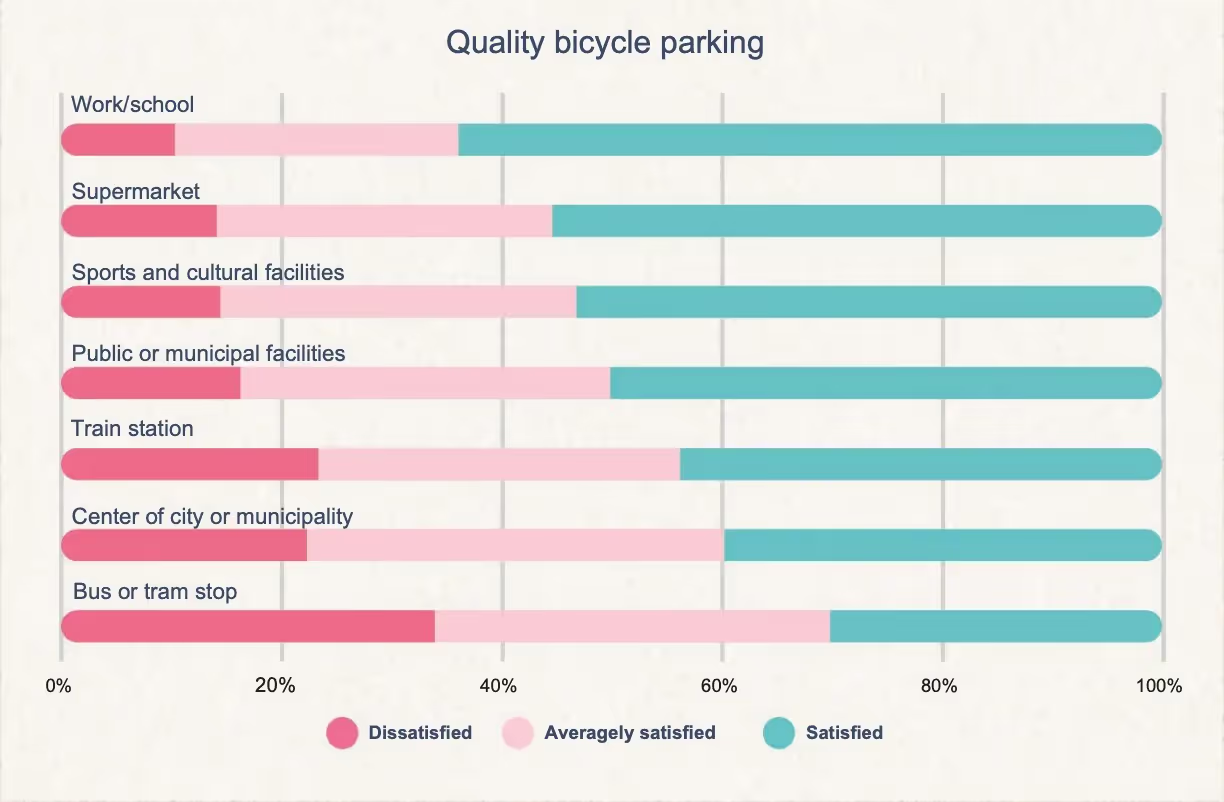
Parking is also a major hurdle. As bikes become more expensive, the need for secure, high-quality parking grows. Satisfaction remains lowest at train stations and bus stops, where many feel their bikes are at the highest risk.
Safety and the Problem of Theft
On the positive side, cycling safety is improving. The risk of a fatal accident per kilometer has dropped by 30% since 2017. People are also taking personal safety more seriously; helmet use has risen to 30%, up from 18% 3 years ago.
However, theft remains a significant issue. In 2023, about 13% of households with a bicycle experienced theft. Since only 68% of these crimes are reported, the real number is likely much higher. A national registration system is proving to be a useful tool, as registered bikes are 3.5 times more likely to be recovered.
Road culture is also slowly getting better. In 2025, 39% of people reported positive behavior by other cyclists. While the atmosphere is improving, the relationship between drivers and cyclists is still the primary source of stress on the road.
"As local authorities, we see the high demand for bicycle parking. Cycling must become more important when we design public spaces," said Jan Vanderstraeten, chairman of Fietsberaad Vlaanderen. "This gives us a chance to add more green to our streets. These investments encourage even more people to cycle."
Flanders is making progress toward its 2040 goals. While more people are on the road than ever before, the focus now turns to keeping those riders safe, protecting their property, and ensuring the infrastructure grows as fast as the demand.
Image credit: visitflanders.com