.svg)
%2Bcopy.avif)


.svg)

.jpg)
%20(1).jpeg)
.jpg)


.webp)

Dott reached a major financial milestone in 2025, recording its first year of profitability on an adjusted basis. The company generated €173m in revenue and delivered an Adjusted EBITDA of €7m.
This financial turn follows a period of streamlining after Dott merged with TIER in early 2024. The merger helped the company cut annual costs by roughly €60m. While Dott reported an overall EBITDA loss of €4m due to one-time restructuring costs, the underlying business stabilized in the second half of the year. The company ended 2025 with €31m in cash and total net interest-bearing debt of €53m.
Expanding the Fleet and Winning Key Tenders
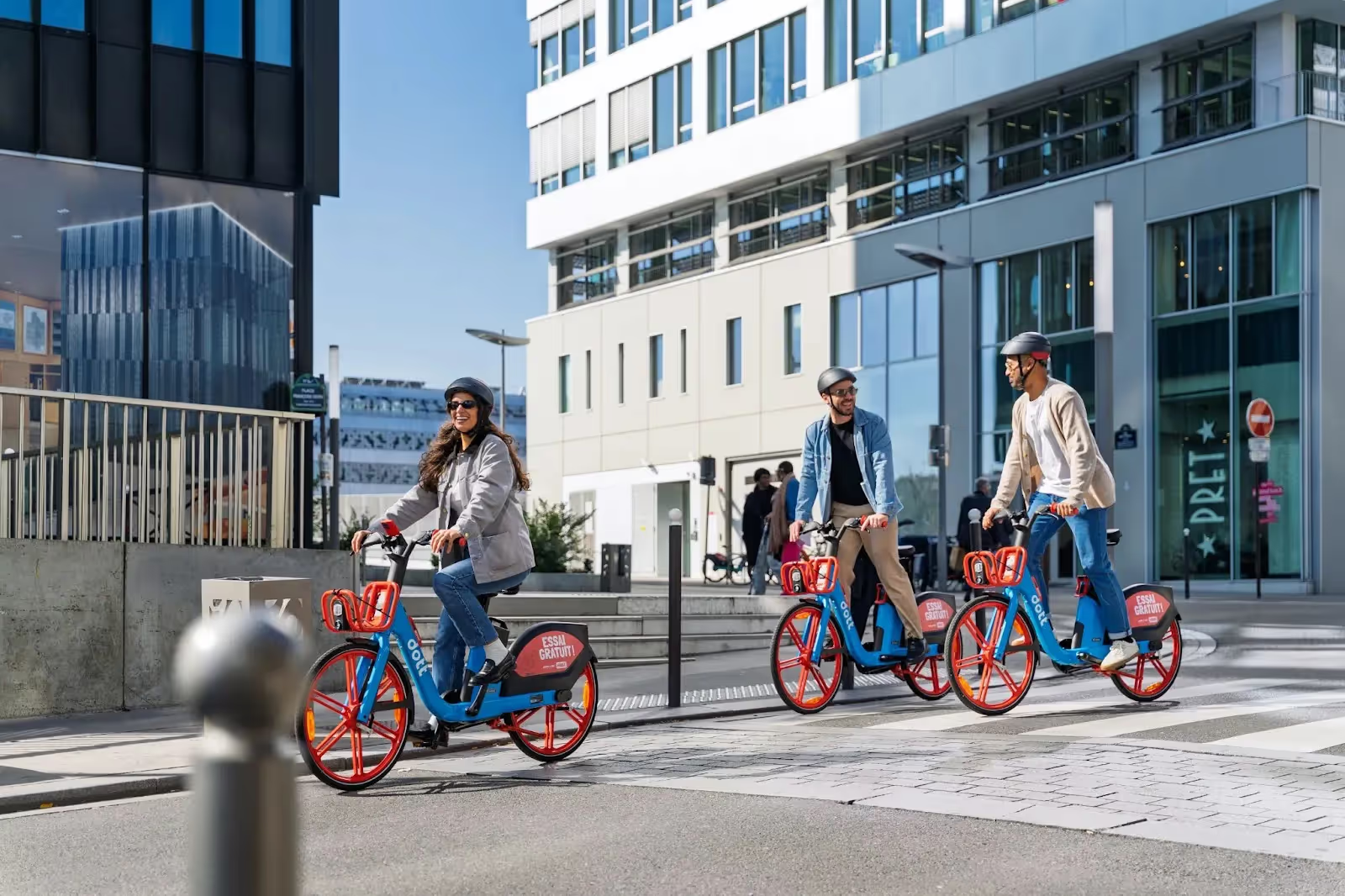
Throughout 2025, Dott secured several long-term contracts and launched new hardware to improve the rider experience.
In October, Dott rolled out its next-generation Segway Urban B200 e-bikes in Paris. These new bikes feature a lighter frame, puncture-resistant tires, and a battery that lasts up to 120 km on a single charge. Paris remains Dott’s largest market, and the company recently won a four-year contract to operate up to 6k e-bikes there.
Dott also won a major four-year tender in Bordeaux. Starting in late 2025, the company began operating 1k e-bikes and 1k e-scooters across 24 municipalities in the region.
User loyalty grew throughout the year, with a 10% increase in rides per rider. Subscription-style passes now account for 50% of all trips.
Funding and plans for 2026
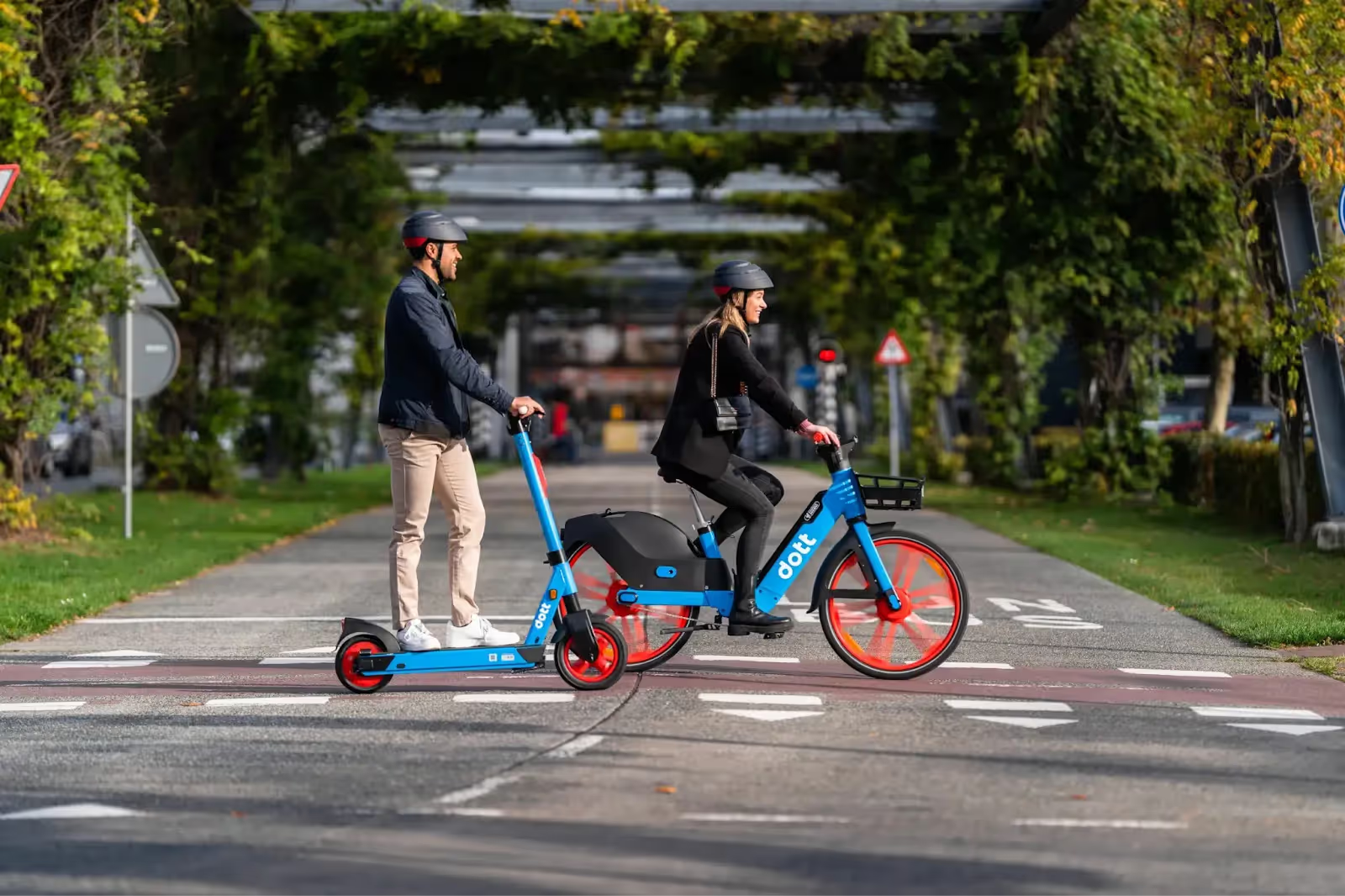
In late 2025, Dott raised €85m to strengthen its balance sheet. This included €70m in Nordic bonds and a €15m extension of its Series D equity round. The company also entered into a €10m super-senior revolving credit facility with Rabobank, a long-term banking partner.
These funds are financing a massive fleet refresh. Dott has ordered 45k new vehicles, 13k e-bikes and 32k e-scooters, which are currently shipping and expected to hit the streets by the second quarter of 2026.
Chief Financial Officer Raoul Gatzen said the funding marked a key step for the company’s financial position:
“We are very satisfied to have delivered the first positive Adjusted EBITDA in Dott’s history, while strengthening our balance sheet through the Nordic Bond issuance and equity raise.”
To lead this next phase, Dott adjusted its leadership in January 2026. Co-founder Maxim Romain, who previously served as COO, took over as CEO to focus on operational execution. Fellow co-founder Henri Moissinac moved into the role of Executive Chairman to handle long-term strategy. The company has reaffirmed its goals for 2026, expecting an Adjusted EBITDA between €30m and €40m.
Commenting on the year, CEO Maxim Romain said:
"2025 was a transformational year for Dott, as we simplified the organisation and reduced costs to create a leaner, more scalable platform. Q4 performance in Paris was a highlight, with our new e-bike model significantly improving user experience and vehicle economics. We plan to replicate this across further markets in 2026."
Additionally, Dott’s leadership has also discussed the company’s operating approach publicly. In an episode of The Micromobility Podcast, Henri Moissinac, co-founder and Executive Chairman of Dott, spoke about scaling the business to nearly 100m rides per year across more than 400 cities, with a focus on timing, product-market fit, and operational discipline.
He also discussed fleet renewal, the use of machine learning in operations, and the shift of shared micromobility toward a cash-flow-driven business model.
Image Credits: Dott